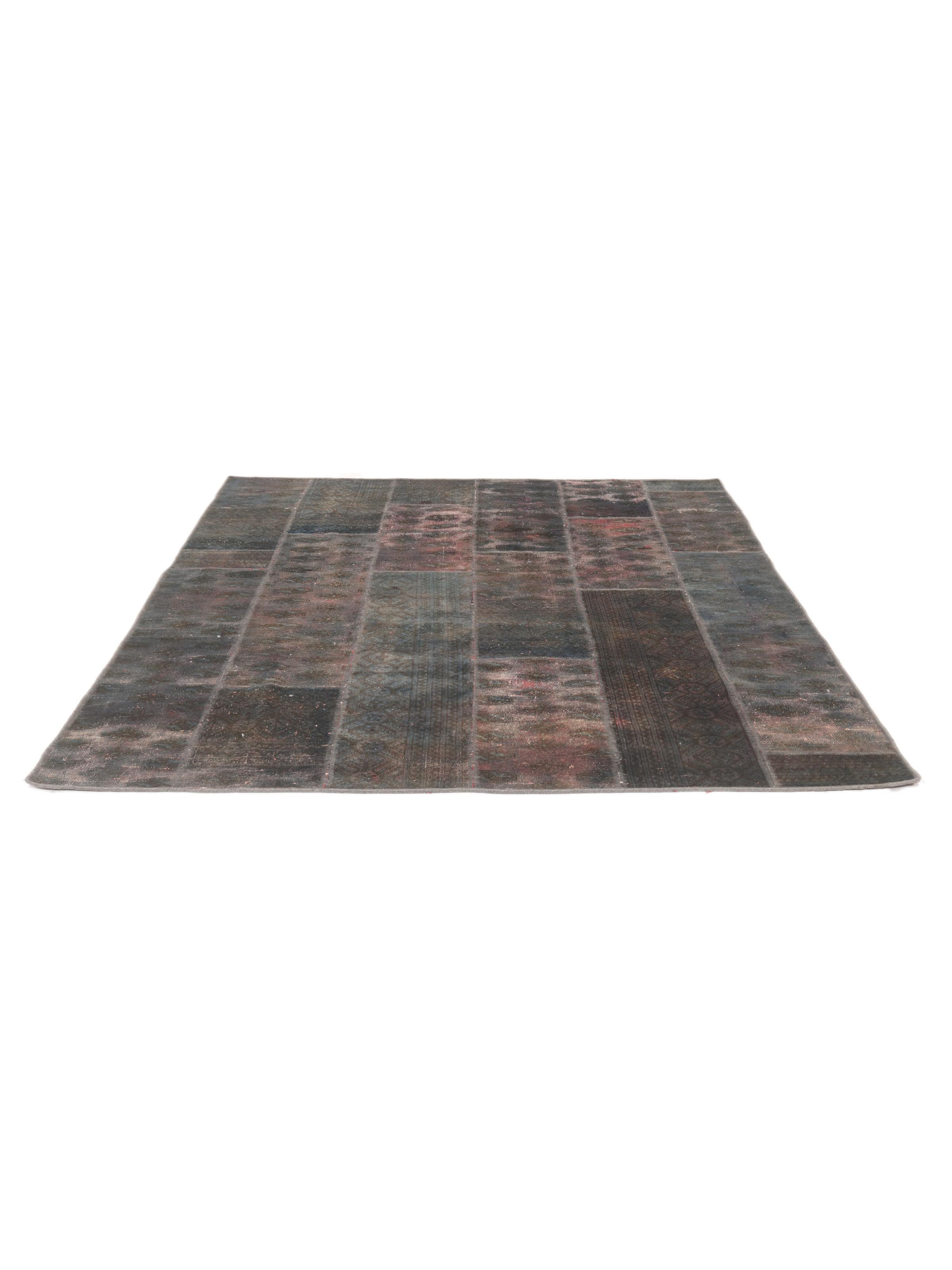
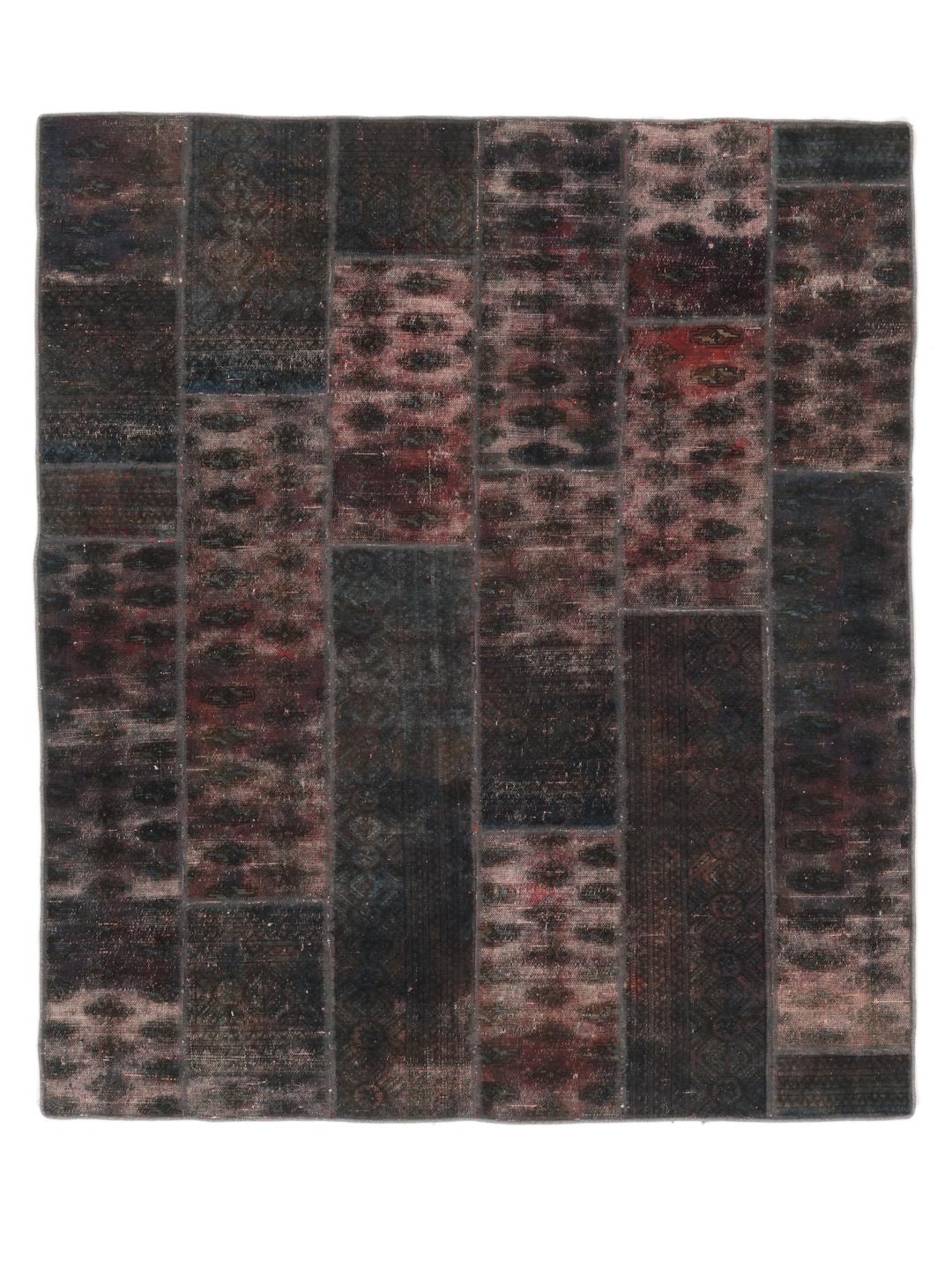
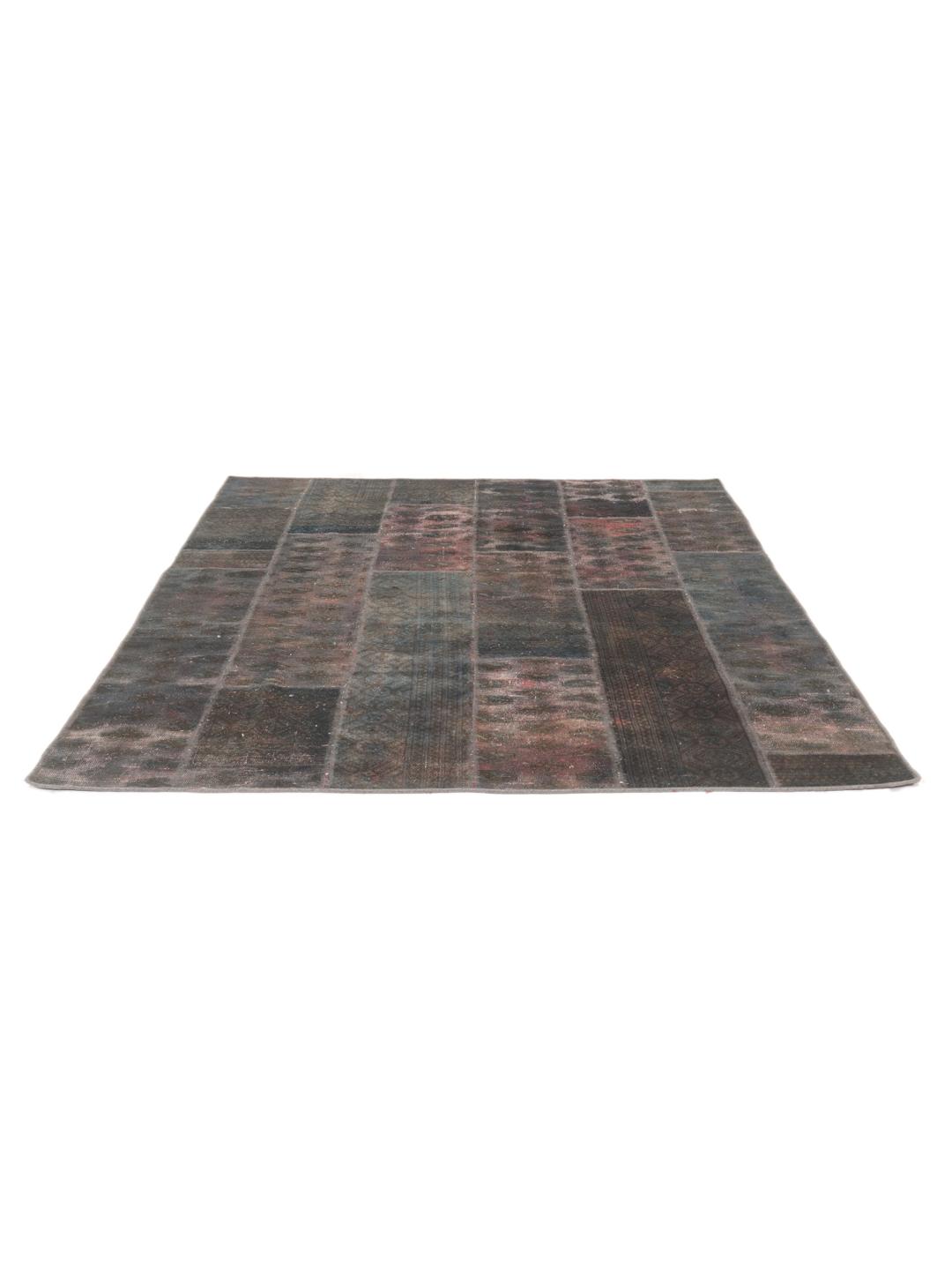
The art of the patchwork rug is a modern evolution of the long-standing tradition of textile preservation in the Middle East. For generations, weavers have valued the durability of their work, ensuring that even as a rug aged, its components remained robust. Patchwork allows these remnants of history to be repurposed rather than discarded, giving new life to fragments that carry the cultural heritage of their original regions.
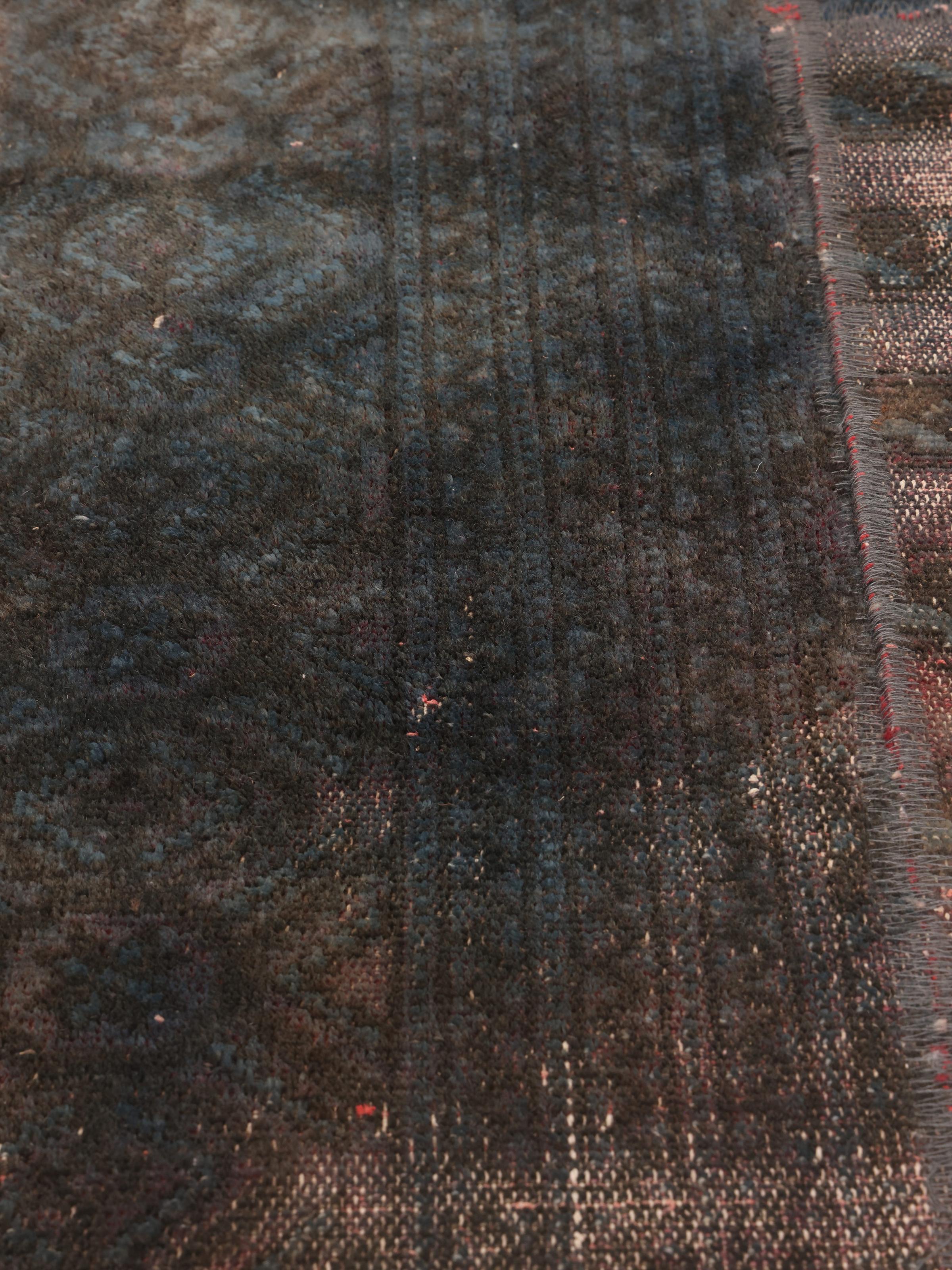
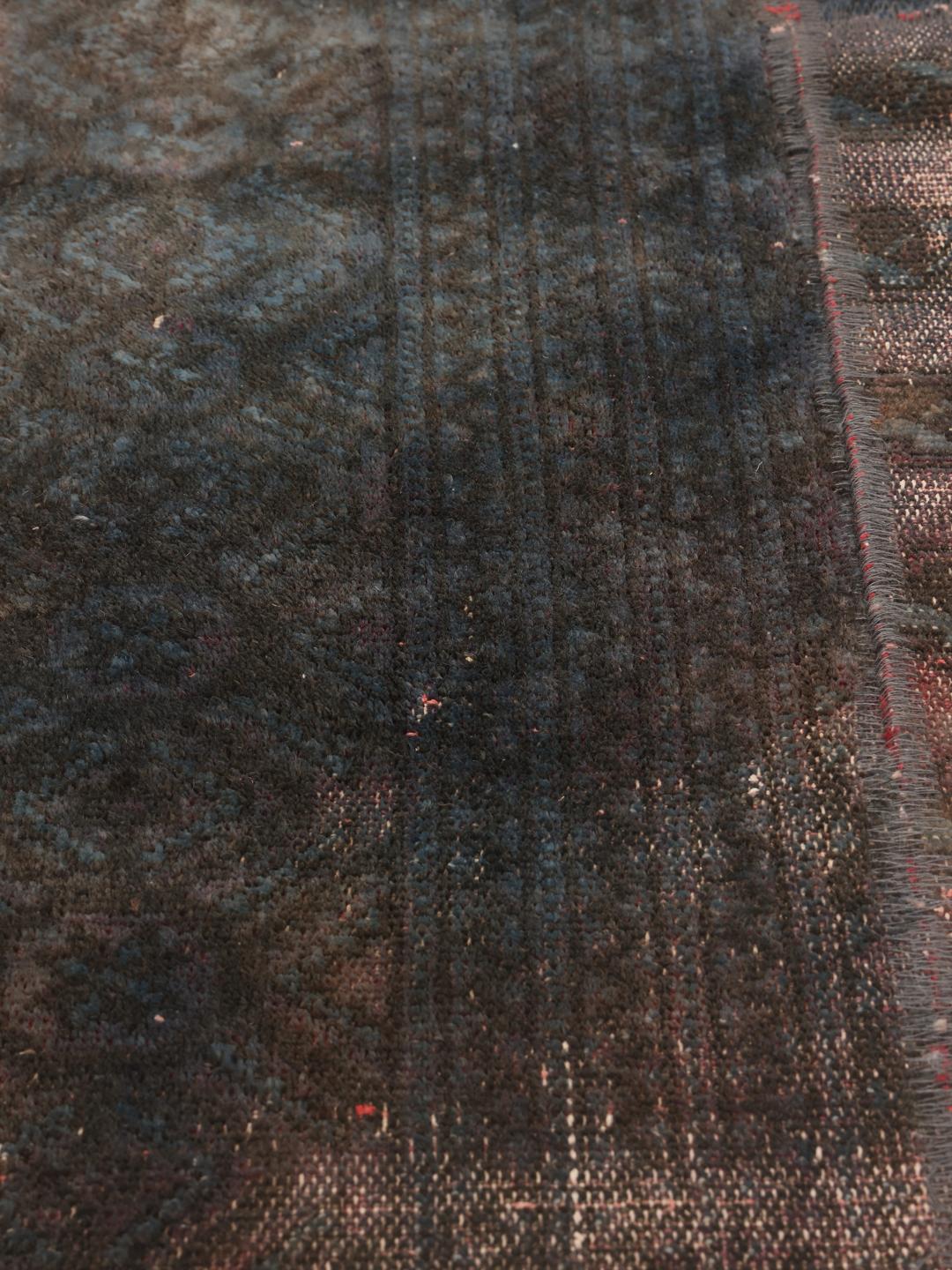
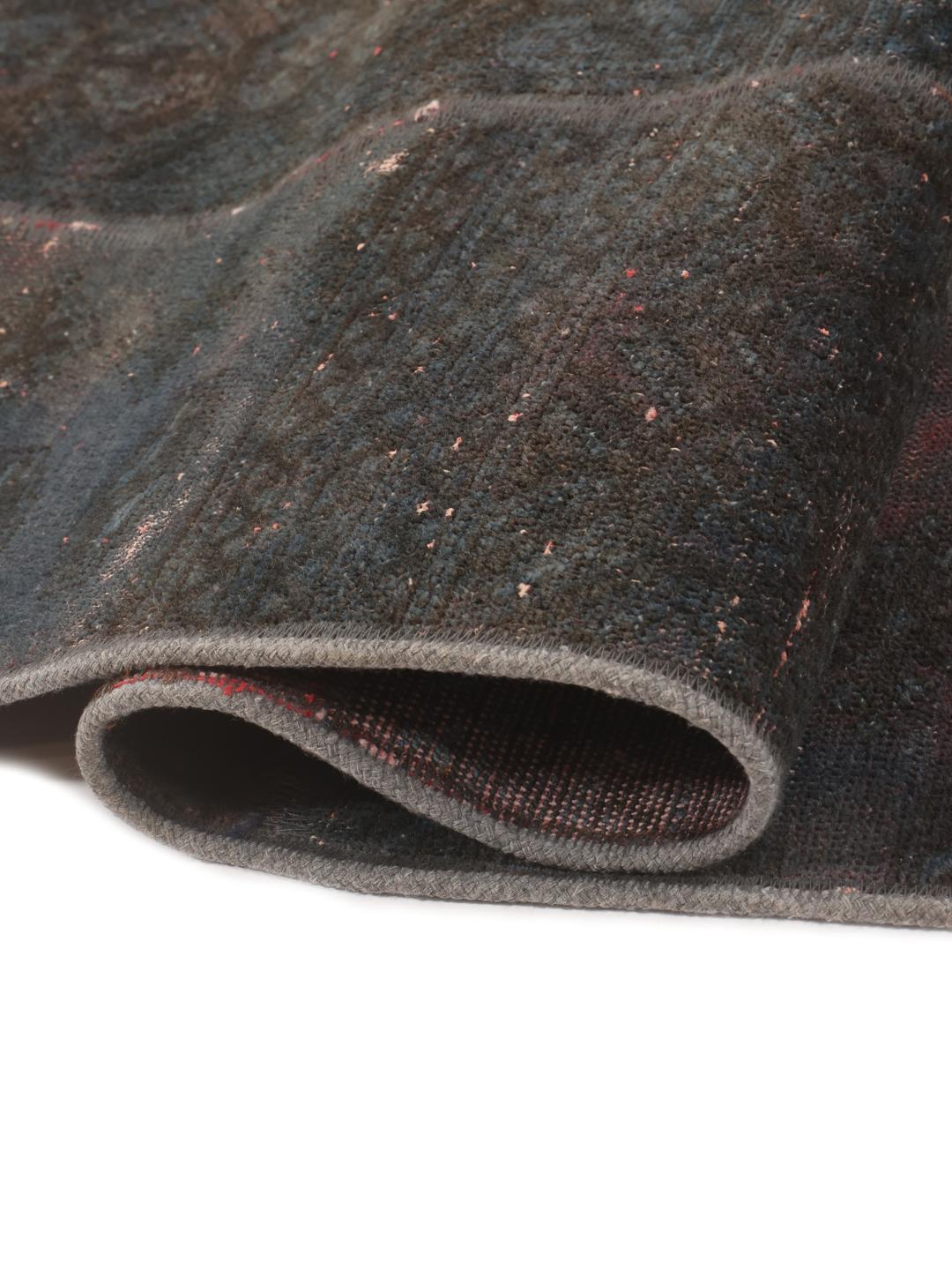
Technically, the beauty of a patchwork piece lies in the curation of its parts. By combining diverse knotting styles and pile heights, the artisan creates a new texture that is both complex and harmonious. This process requires an expert eye to balance the different patterns and colour palettes, ensuring that the final composition feels balanced despite its varied origins.
The design language of this piece draws on classic motifs found in traditional Middle Eastern weaving. You will often see echoes of geometric, tribal, or medallion patterns within the individual squares, now reorganised into a contemporary grid. This juxtaposition of traditional craftsmanship with a modern, modular layout makes the rug a bridge between the past and the present.
Collecting a patchwork rug is an act of preserving craft. Because each segment is a remnant of a different weaving tradition, owning the piece is akin to owning a mosaic of regional styles. It is highly valued for its ability to bring a sense of collected history into a home, offering a level of depth and narrative that few other floor coverings can provide.