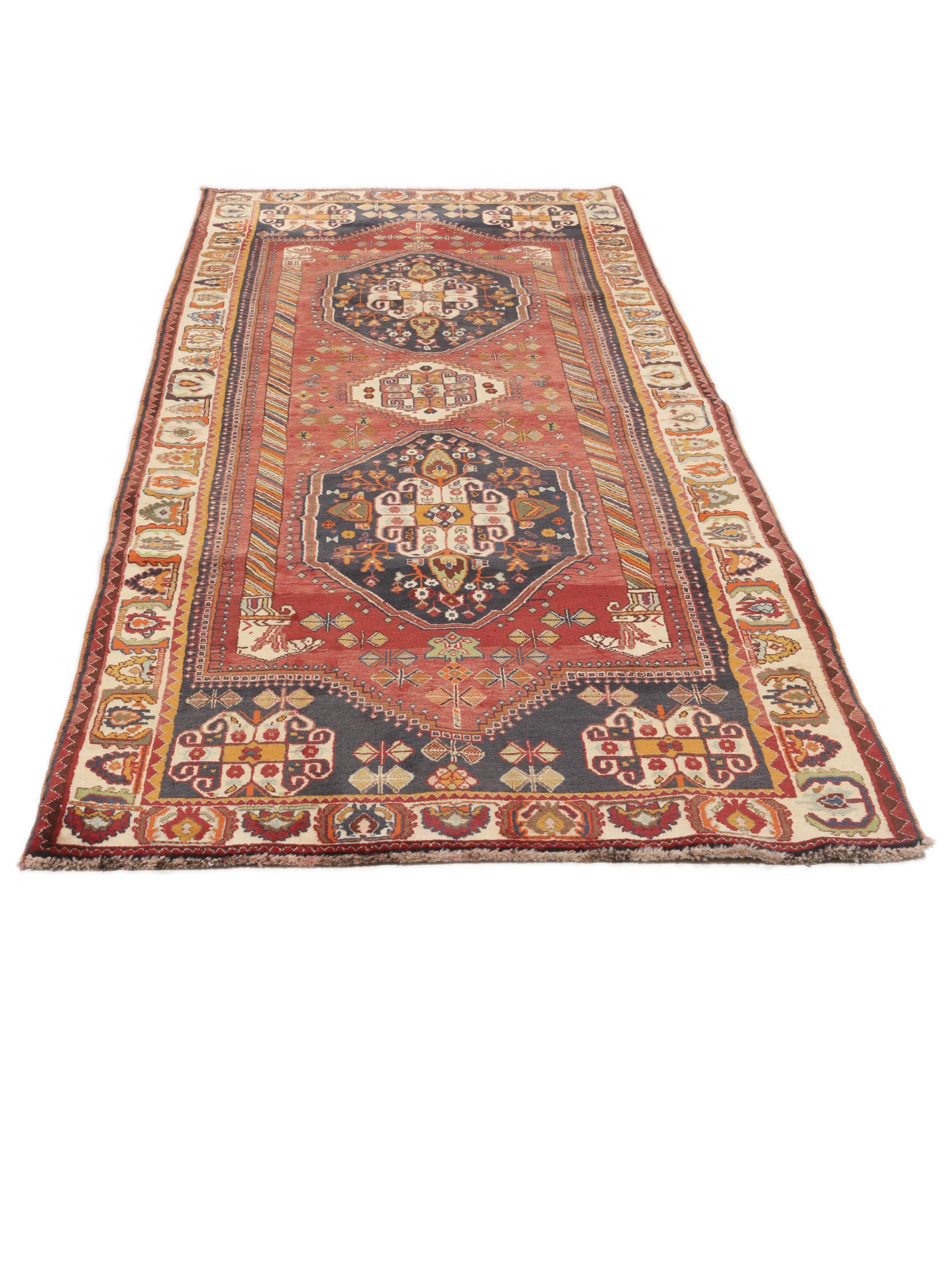
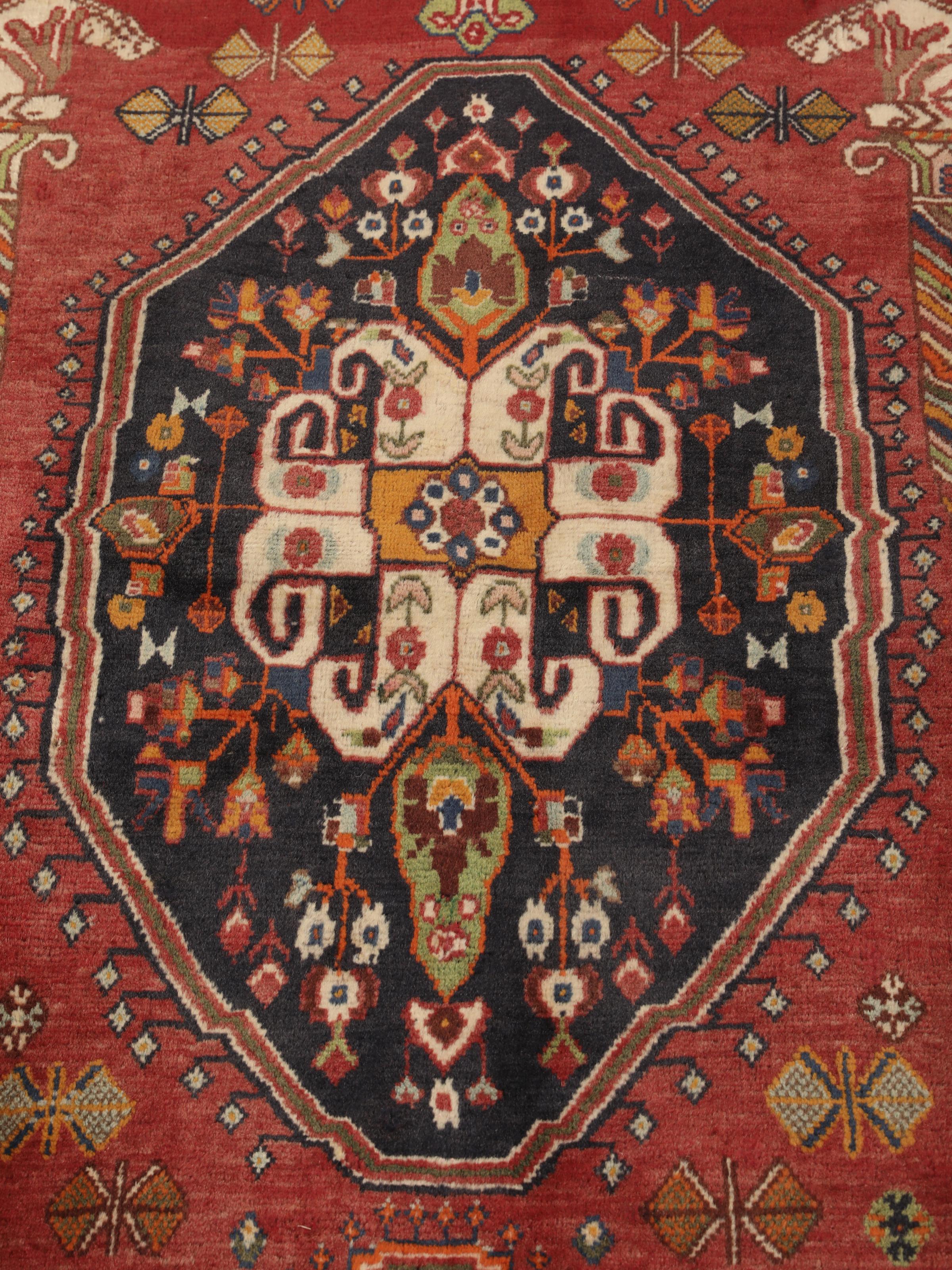
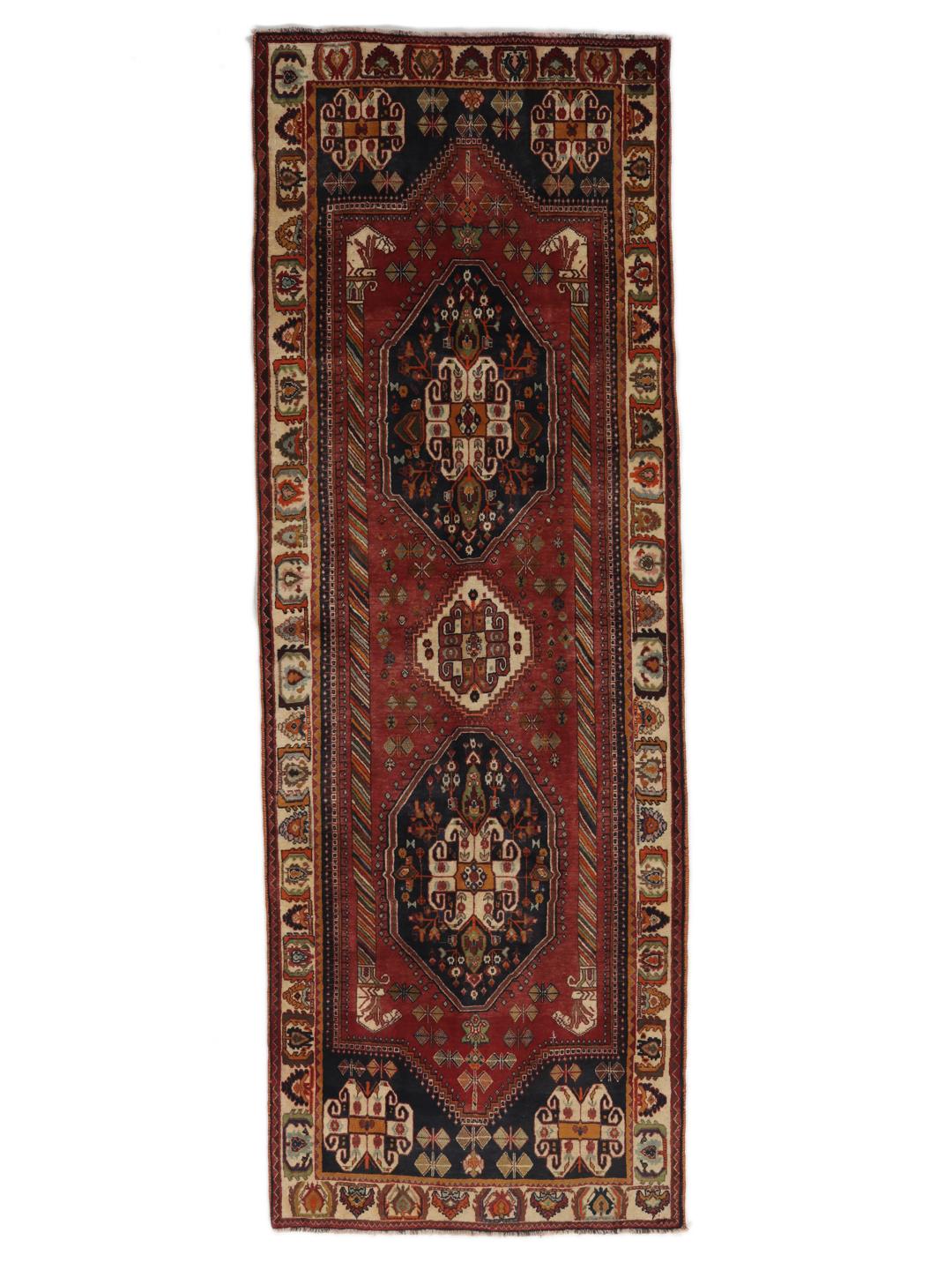
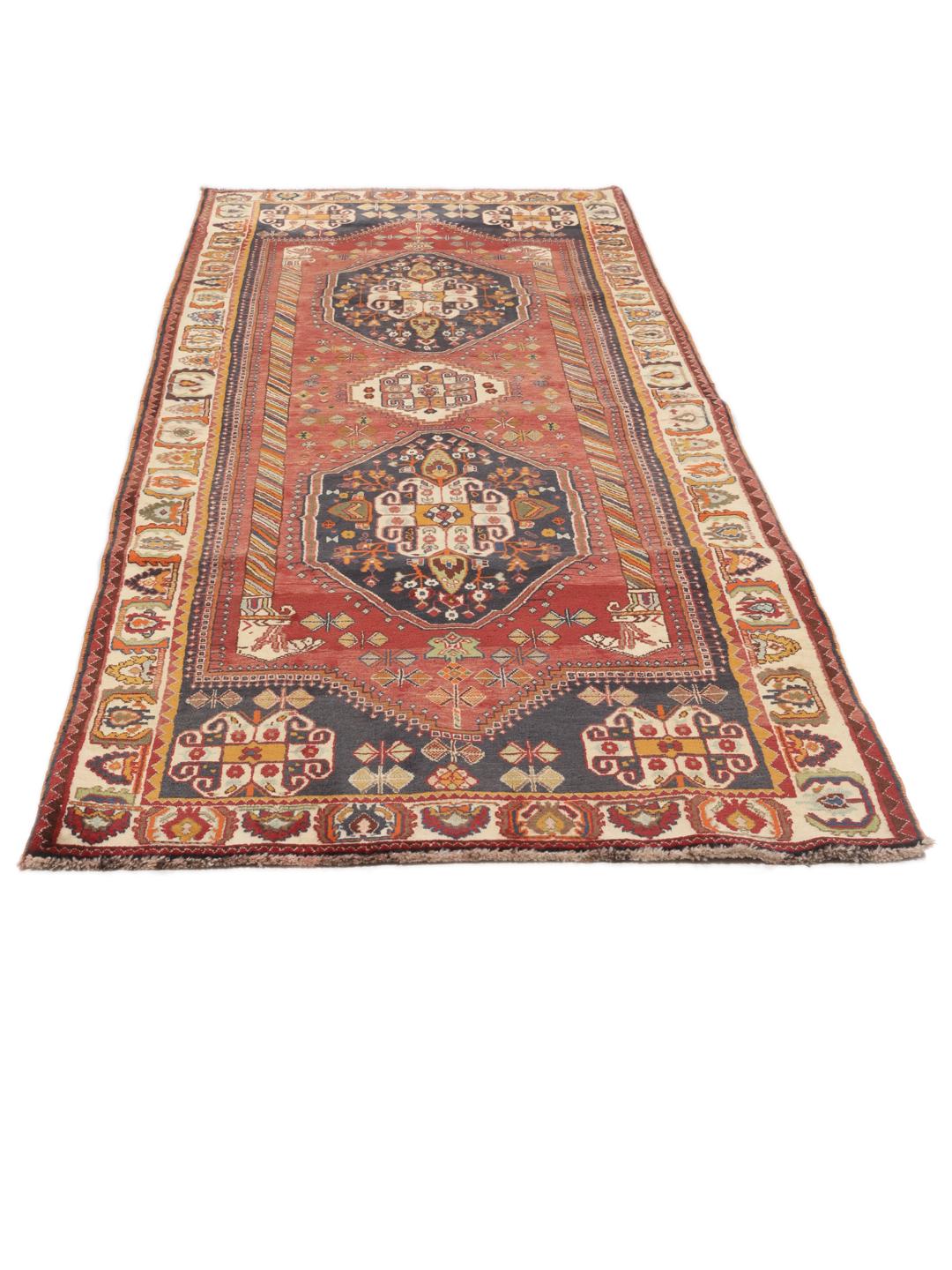
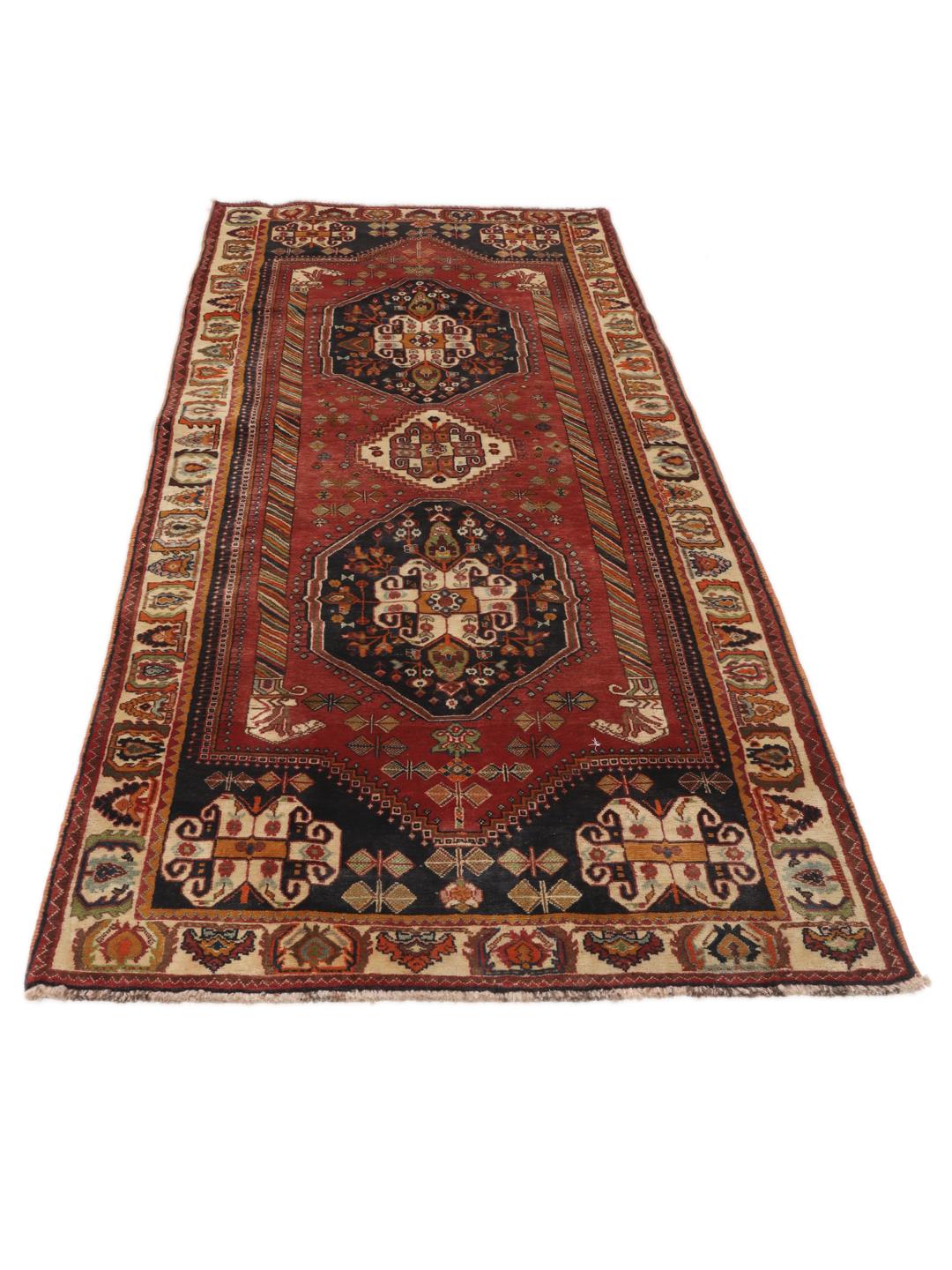
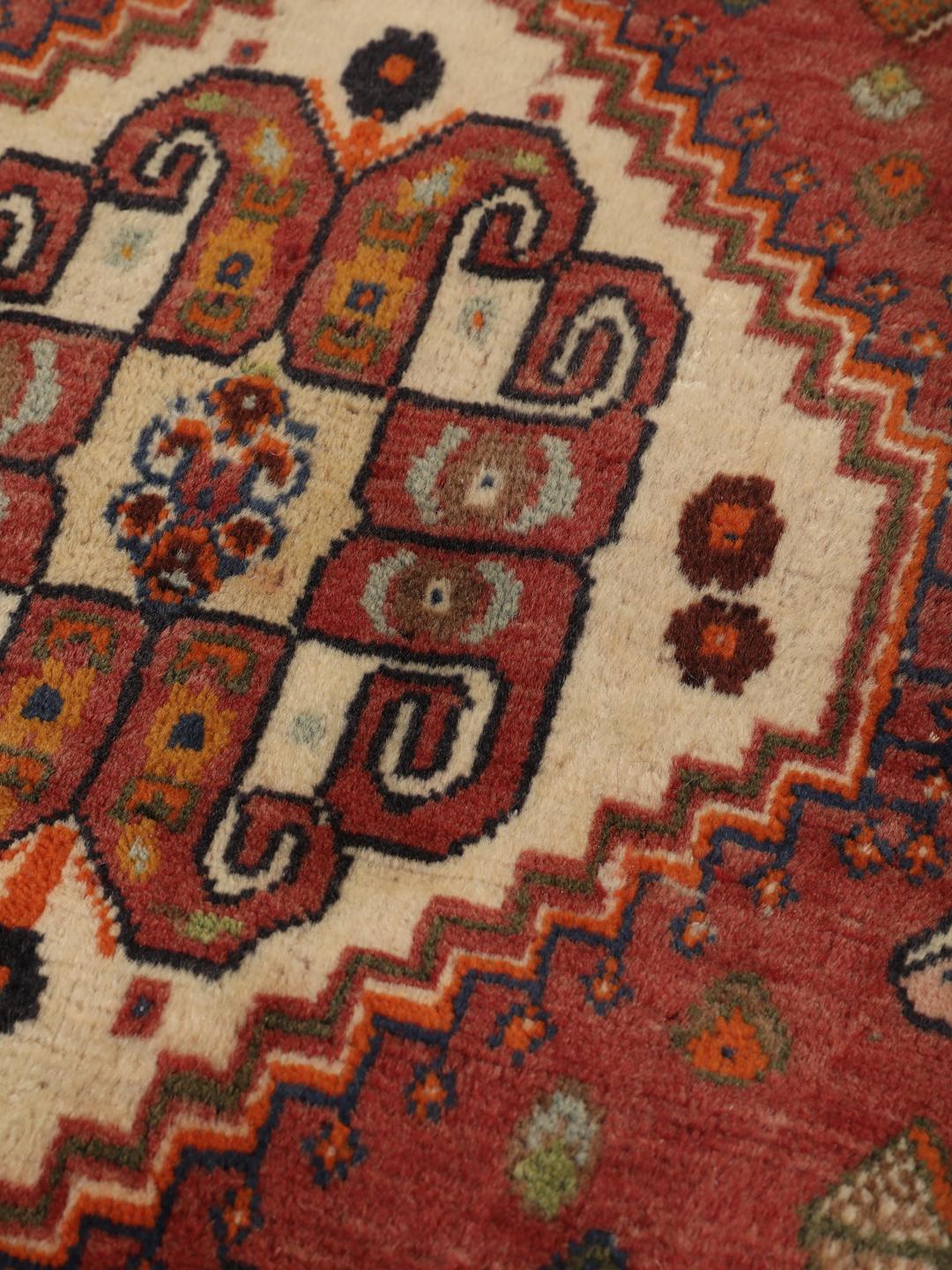
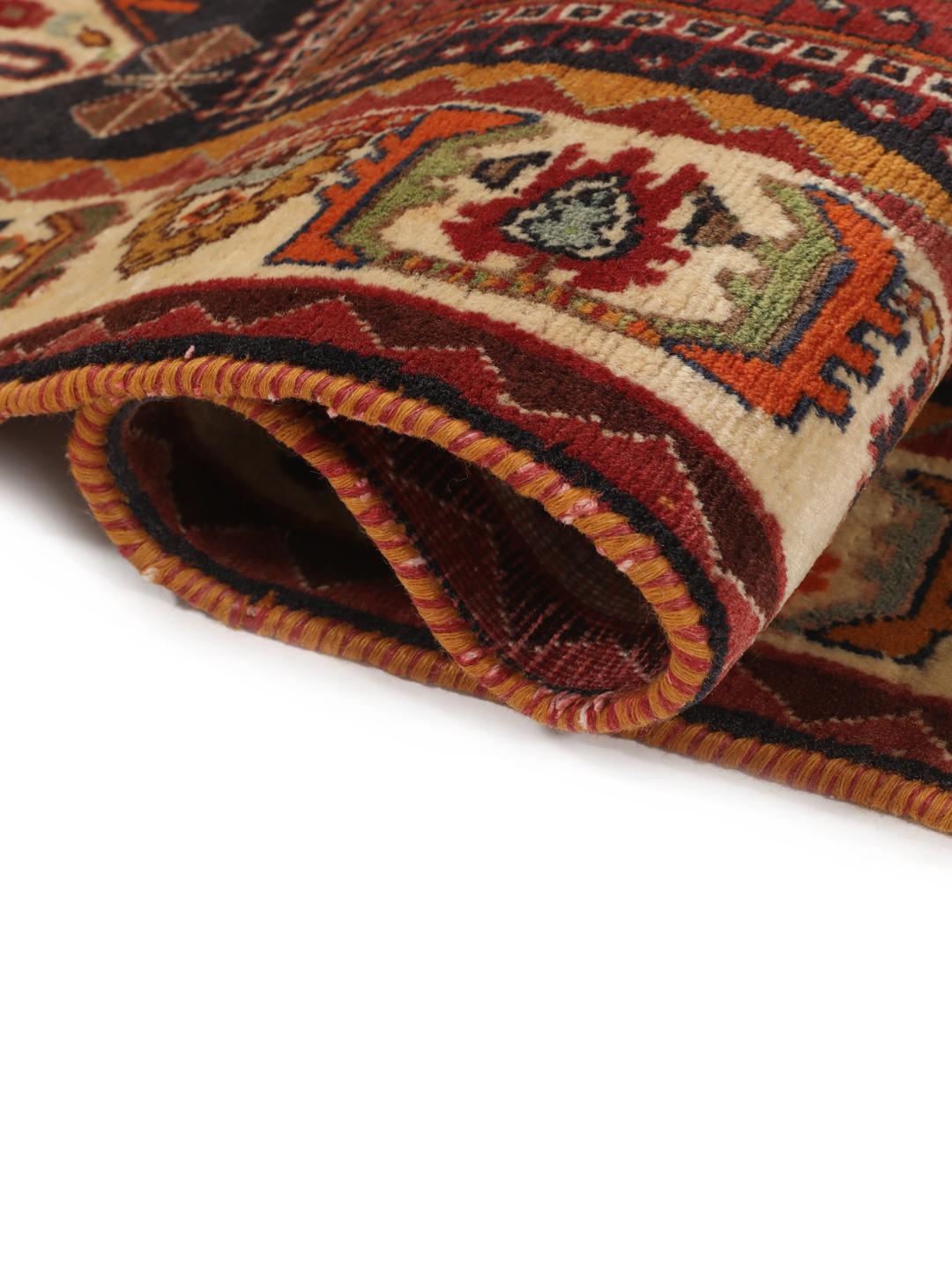
The Qashqai rugs originate from the nomadic tribes of the Middle East, specifically the Zagros Mountains. For centuries, these communities have travelled across the landscape, carrying their looms with them. This nomadic lifestyle is deeply reflected in their weaving, which is known for its spontaneity, bold use of colour, and the incorporation of symbols that represent the tribe’s environment and heritage.
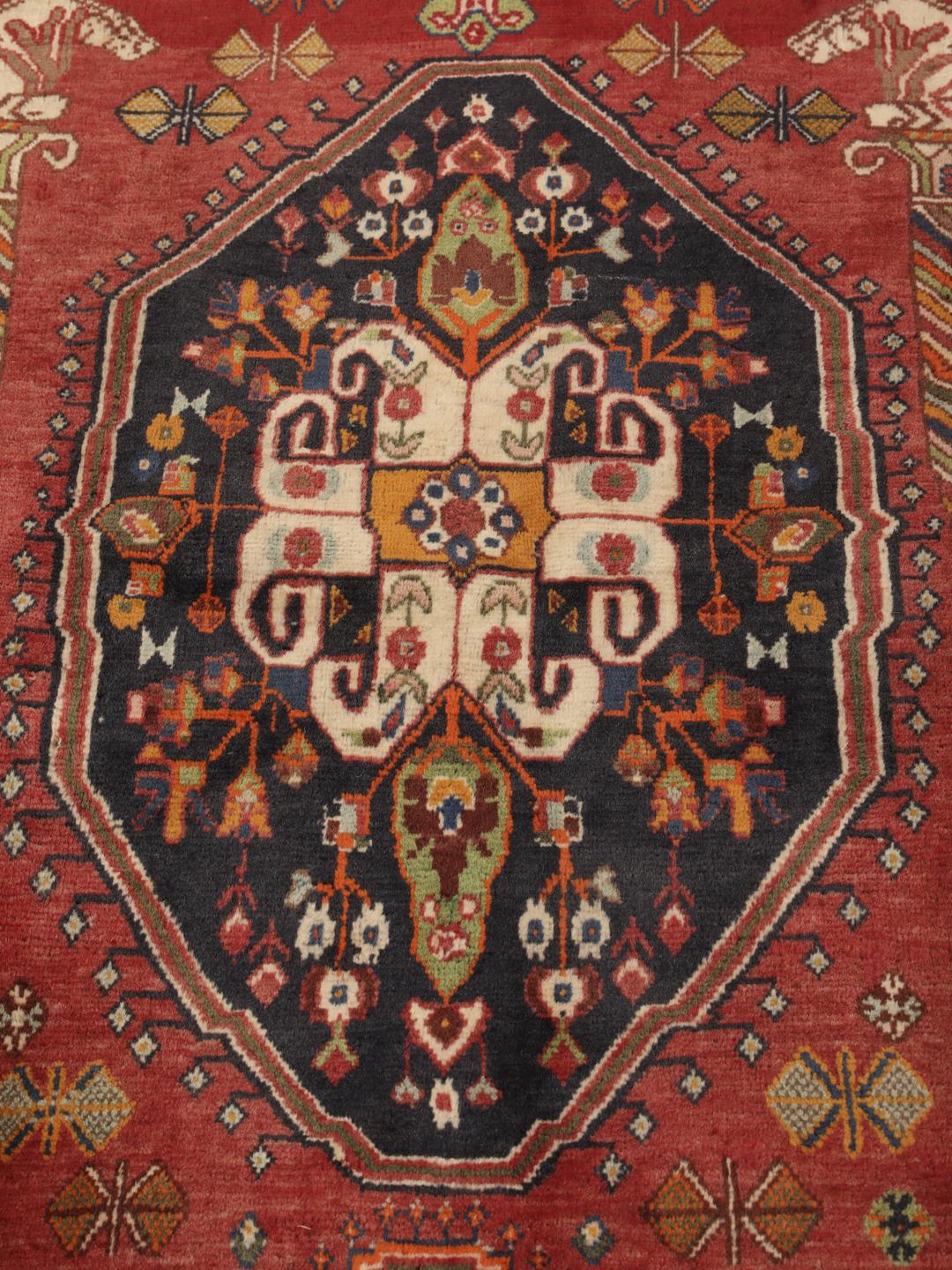
What sets these rugs apart is the use of distinct, evocative motifs. You will often see the 'hebatlu' or the 'boteh'—a stylised tear-drop shape—as well as geometric representations of animals, birds, and flowers. These are not merely decorative; they are a language of the weaver, telling stories of tribal identity and the natural world. The use of a deep, saturated red as a base is a classic hallmark of the tradition, symbolising vitality and tradition.
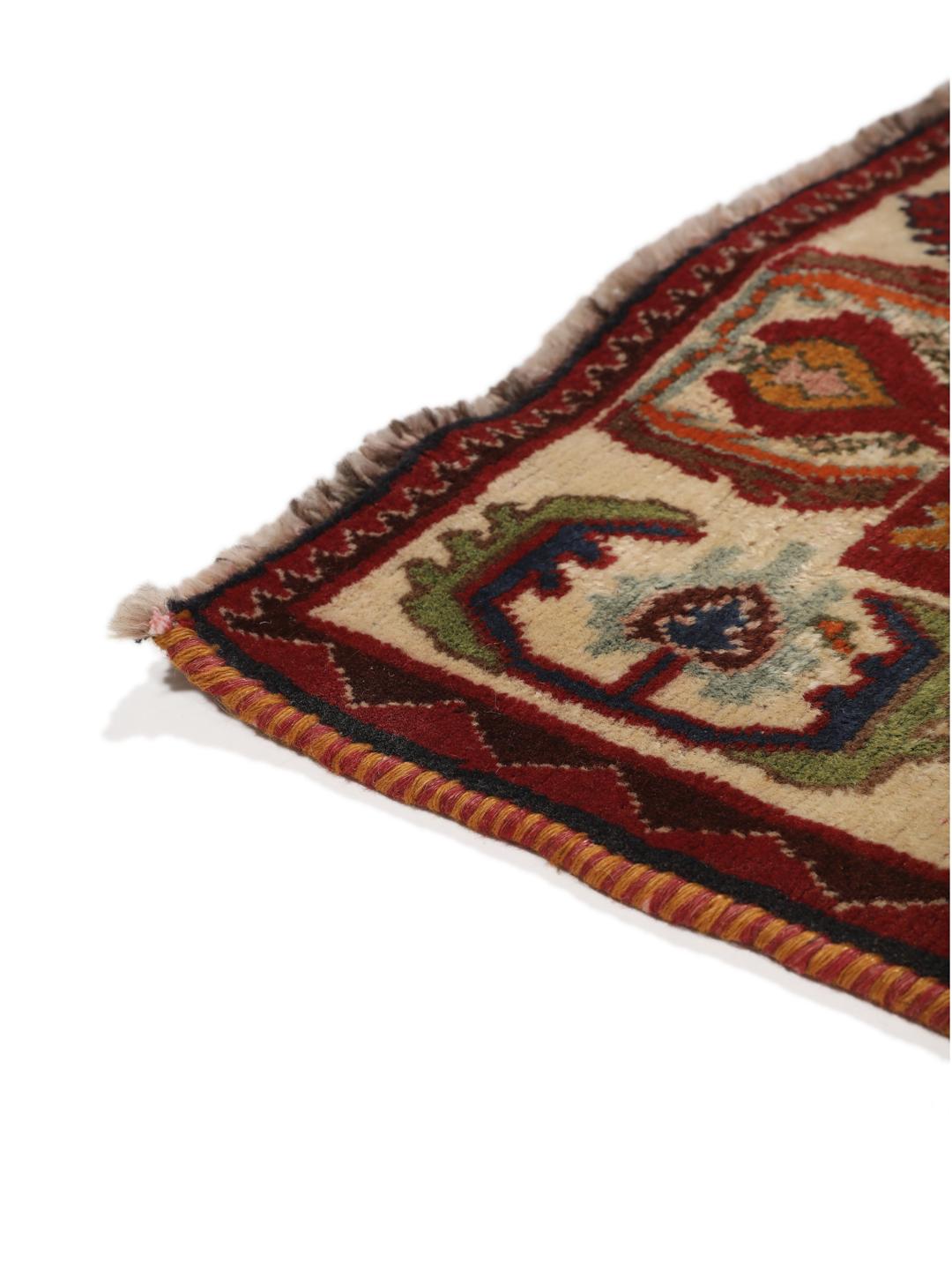
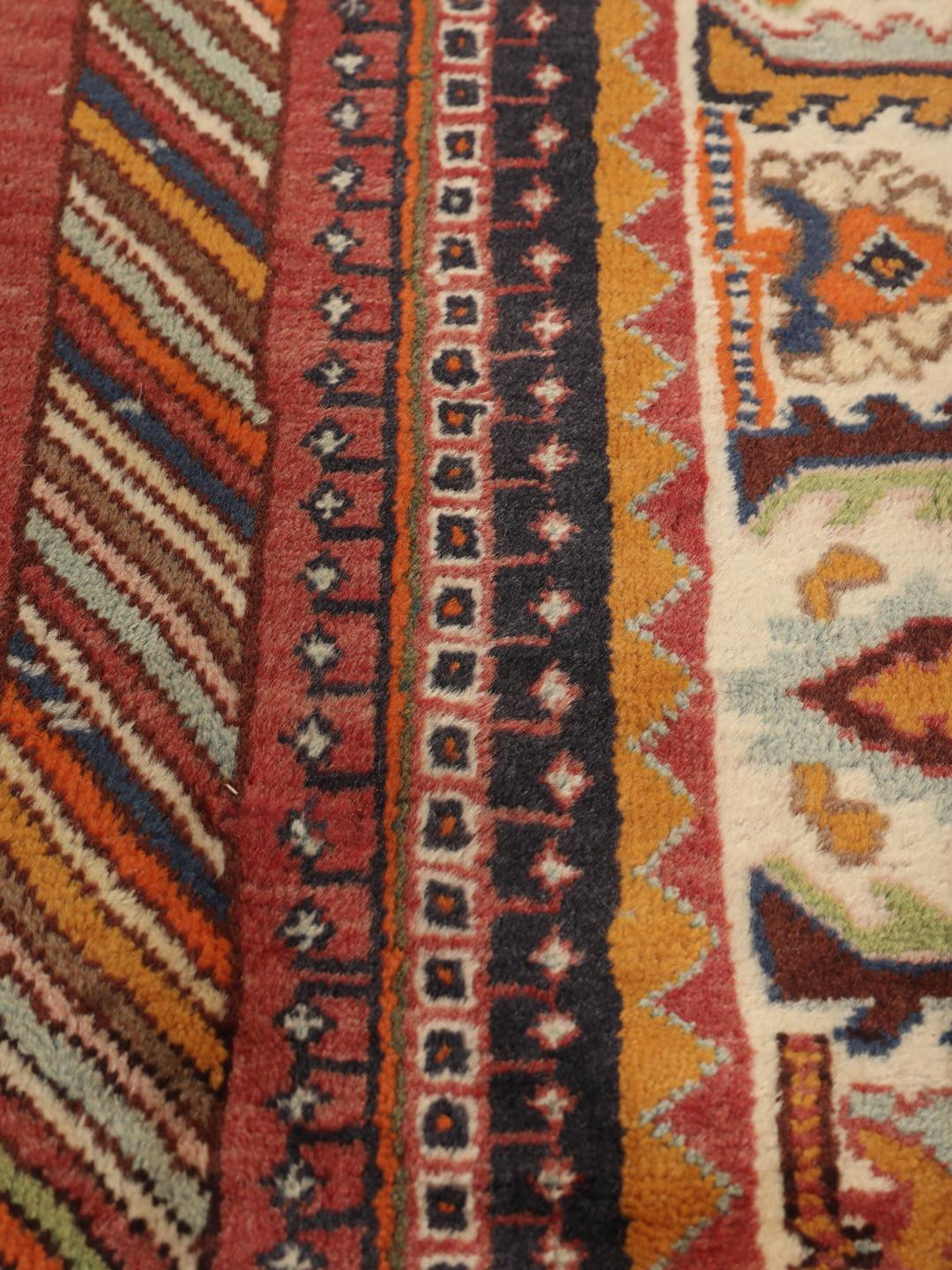
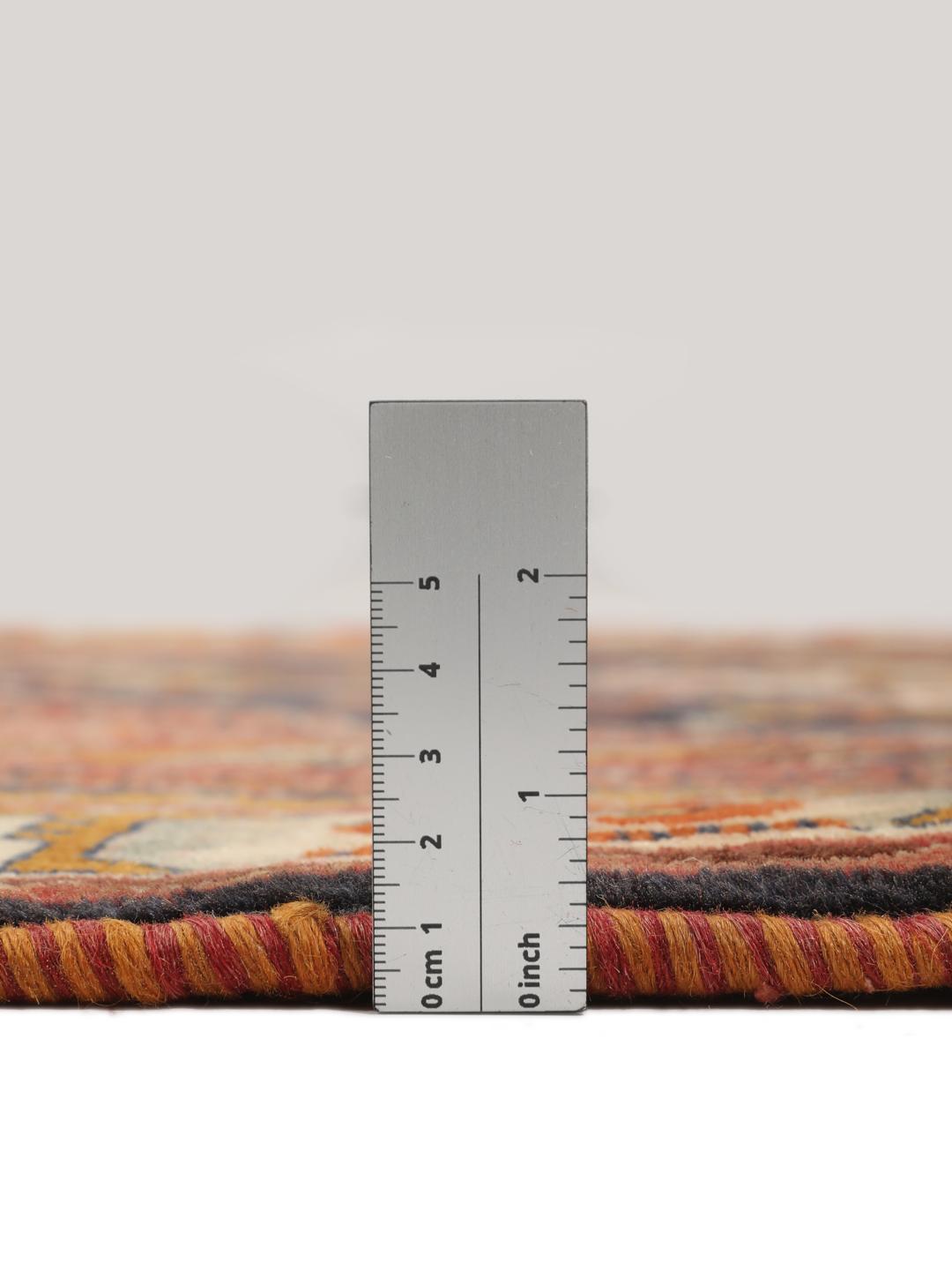
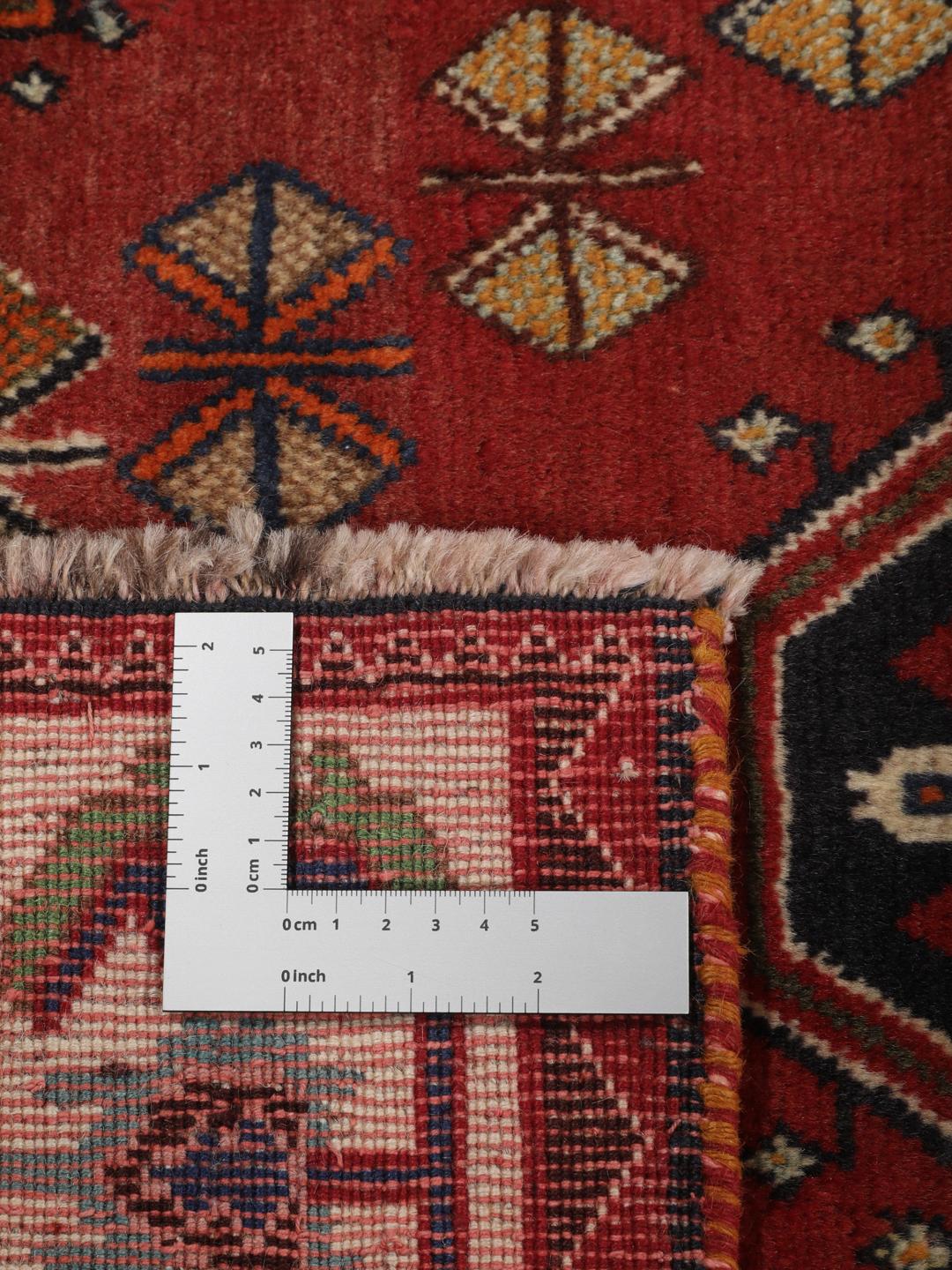
The craft of Qashqai weaving is passed down through generations, with techniques that prioritise both aesthetic beauty and functional strength. The wool used is often sourced directly from the tribe's own flocks, resulting in a lanolin-rich fibre that is naturally water-repellent and incredibly soft. This connection to the source material ensures that each rug is not only a decorative object but a functional tool designed for the rigours of nomadic life.
Collectors value these rugs for their authenticity and the human element present in every fibre. Owning a Qashqai rug is a way to preserve a link to a fading way of life, where each piece is a unique expression of the weaver's mood and memory. Because no two rugs are ever identical, acquiring one is a commitment to heritage, skill, and the lasting quality of traditional hand-knotted artistry.