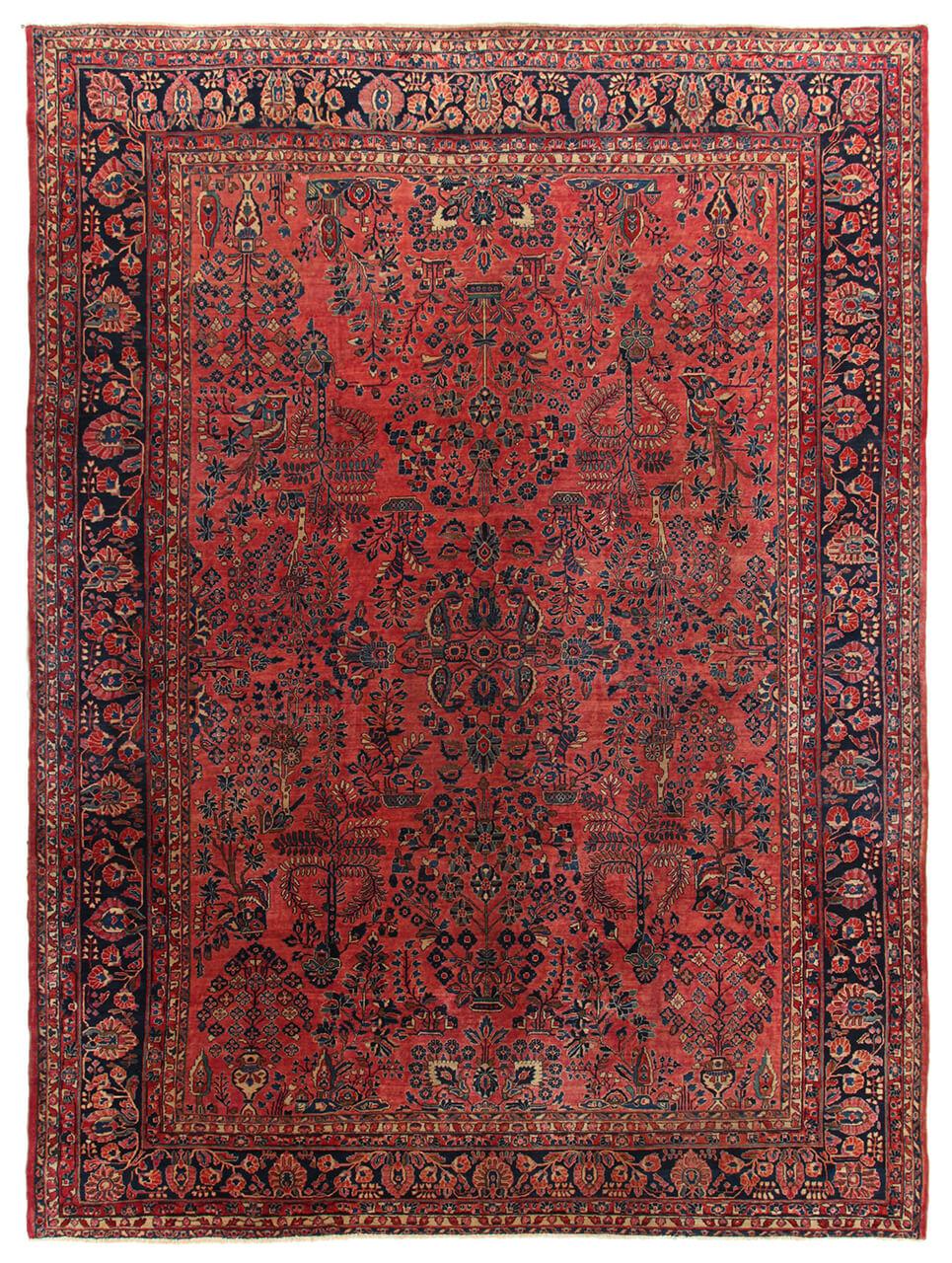
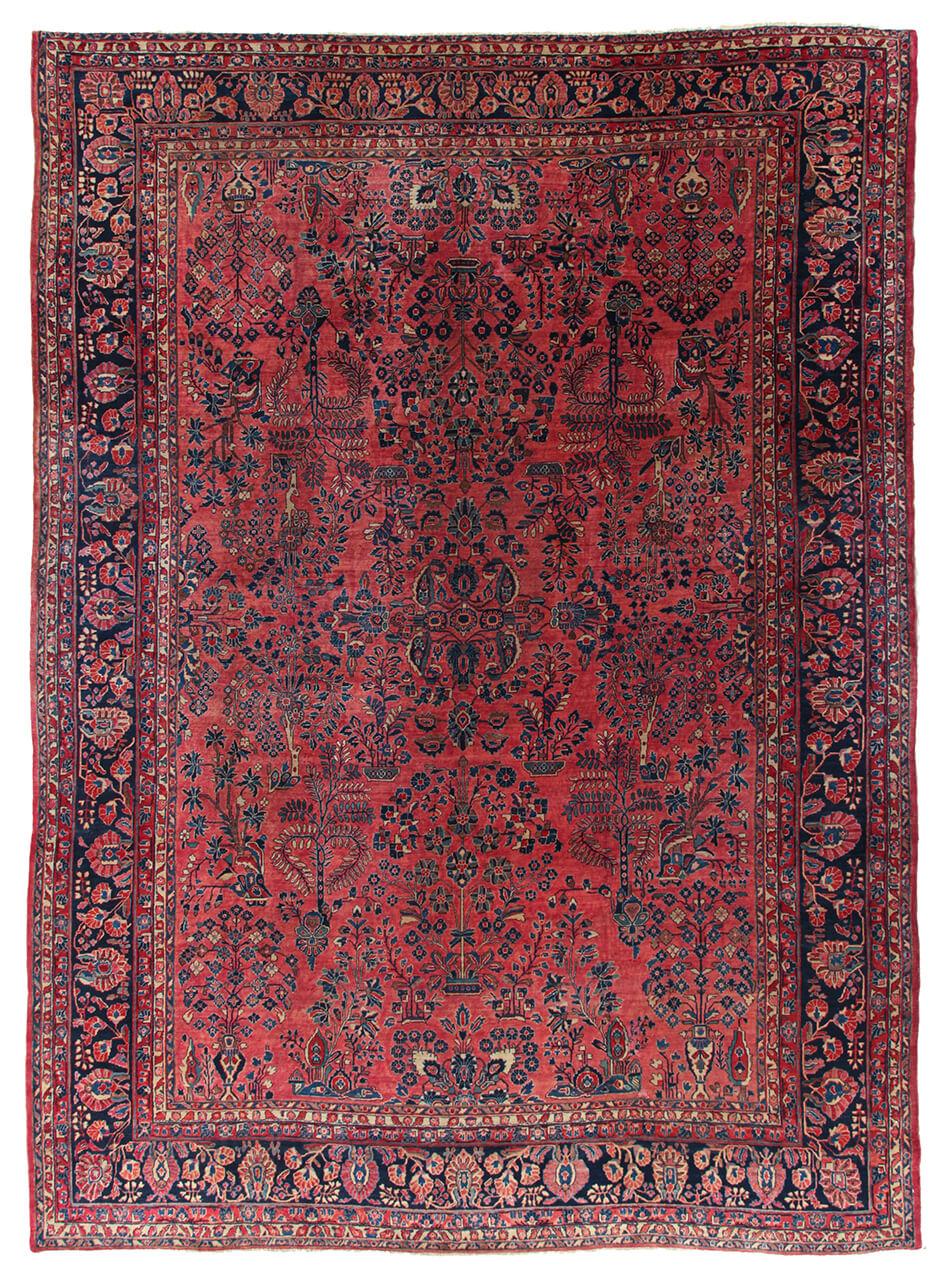
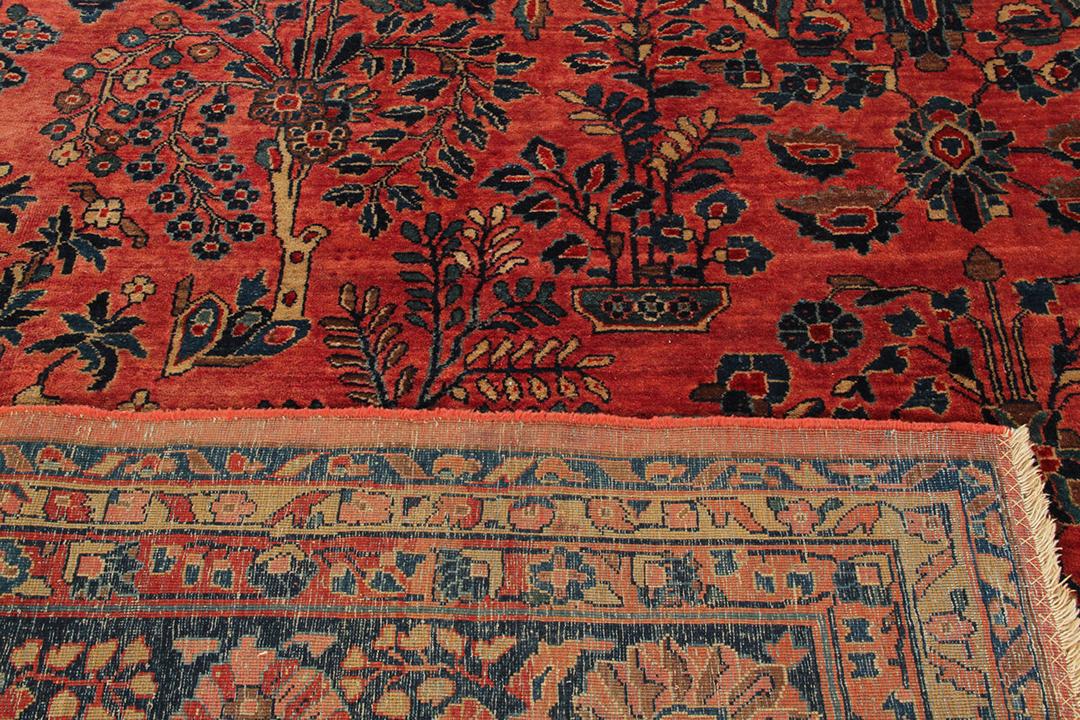
Sarouk rugs originate from the village of the same name in the central region of the Middle East. Historically, this area became famous for producing some of the most sought-after rugs in the world during the late 19th and early 20th centuries. These rugs are highly regarded for their robust construction and their ability to withstand the rigours of time, making them a staple in fine homes across the globe.
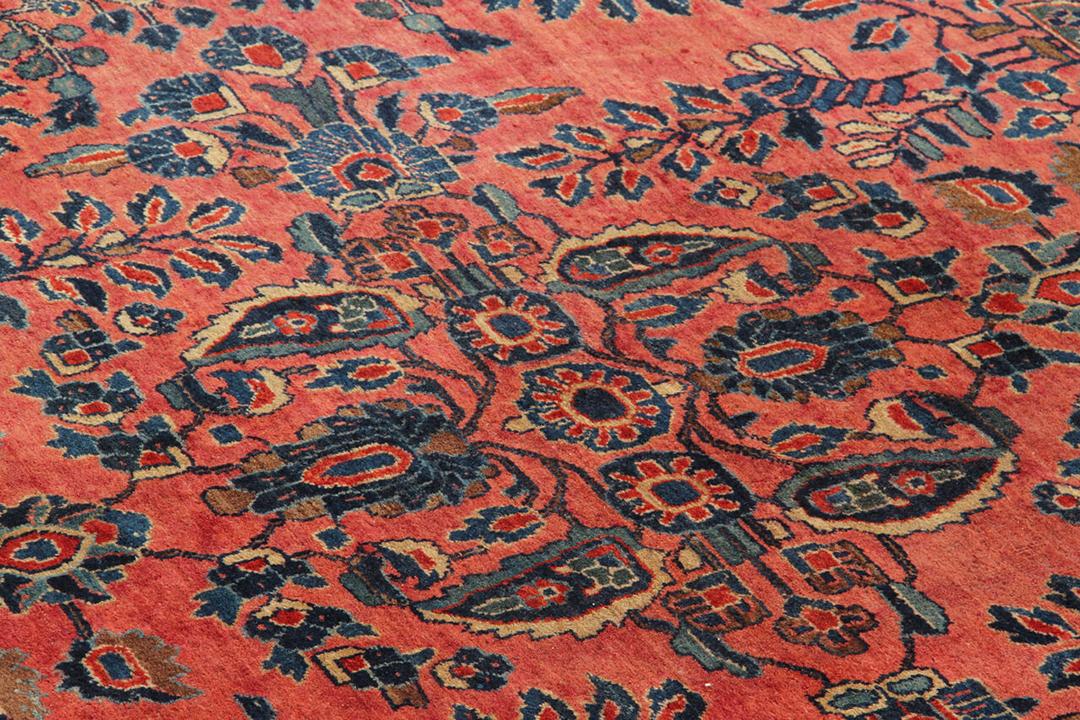
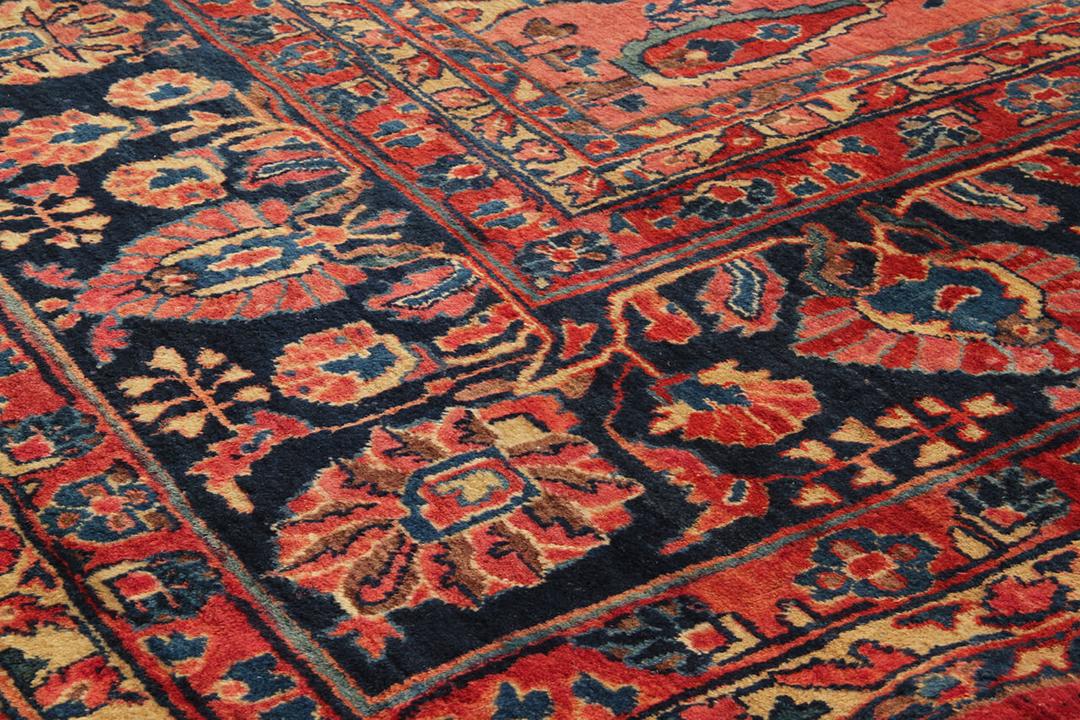
The term Sarouk refers to a specific tradition of weaving that often utilises a high-quality, resilient wool. This wool is known for its slight sheen and durability, which allows the intricate designs to remain clear and vibrant for generations. The technical expertise involved in creating these rugs includes a specific approach to knotting that ensures the pile stays dense and upright, contributing to the rug's longevity.
Visually, these rugs are celebrated for their elaborate floral and garden-inspired patterns. Unlike the rigid geometric designs found in other nomadic traditions, the Sarouk style typically features flowing, curvilinear vines, palmettes, and floral sprays that appear to float across the field. The use of deep red and dark blue is characteristic of the classic aesthetic, providing a bold contrast that highlights the complexity of the motifs.
Collecting antique rugs from this tradition is a pursuit of heritage and skill. Because they were created before the era of mass production, each piece represents the unique vision of its weaver, reflecting the cultural values and artistic sensibilities of the time. Owning such a rug is not merely an acquisition of furniture, but a preservation of a craft tradition that has been passed down through centuries.