Tabriz rugs originate from the historic city of Tabriz, one of the oldest rug-weaving centres in the Middle East. Located along the ancient Silk Road, the city has long been a hub for trade and artistic exchange, which has allowed its weavers to refine their techniques and adopt diverse influences over centuries. This rich cultural history is reflected in the technical precision and artistic complexity that define the Tabriz tradition.
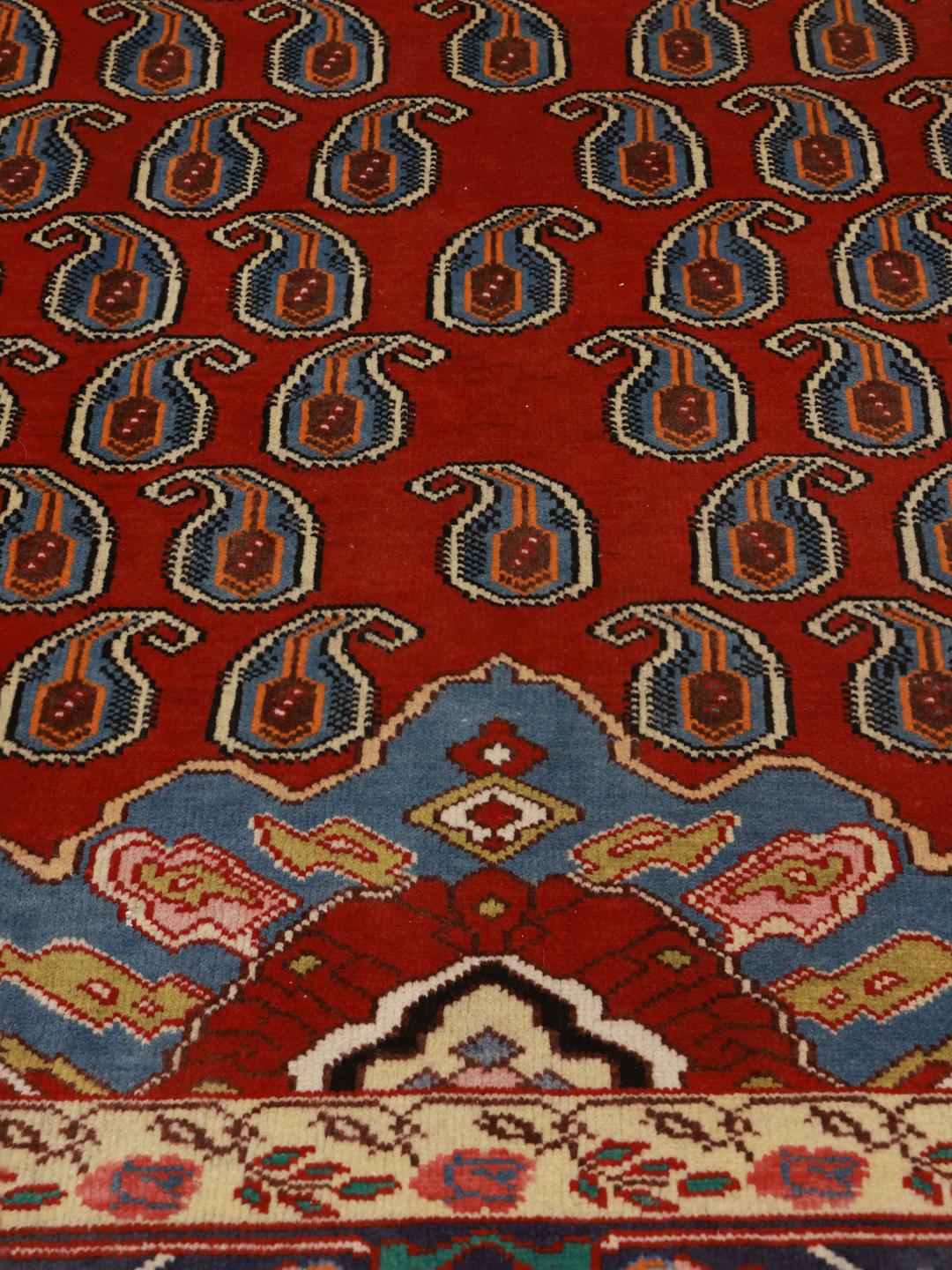
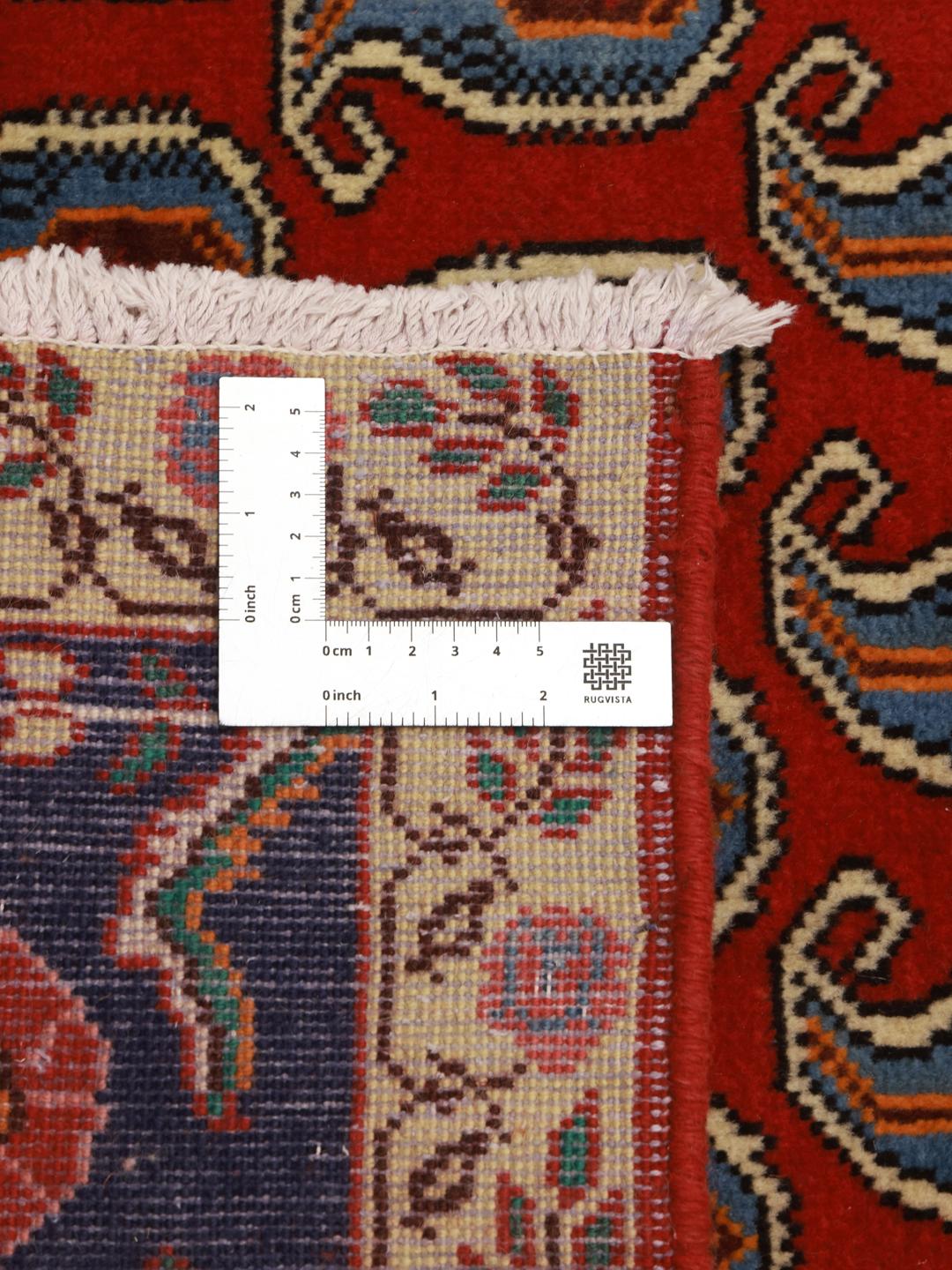
The craft of these rugs is characterised by a mastery of construction, often utilising a very stable foundation that allows for intricate designs. A defining feature of high-quality Tabriz work is the ability to render fine details with clarity, a result of the disciplined approach to knotting that has been passed down through generations of families in the region.
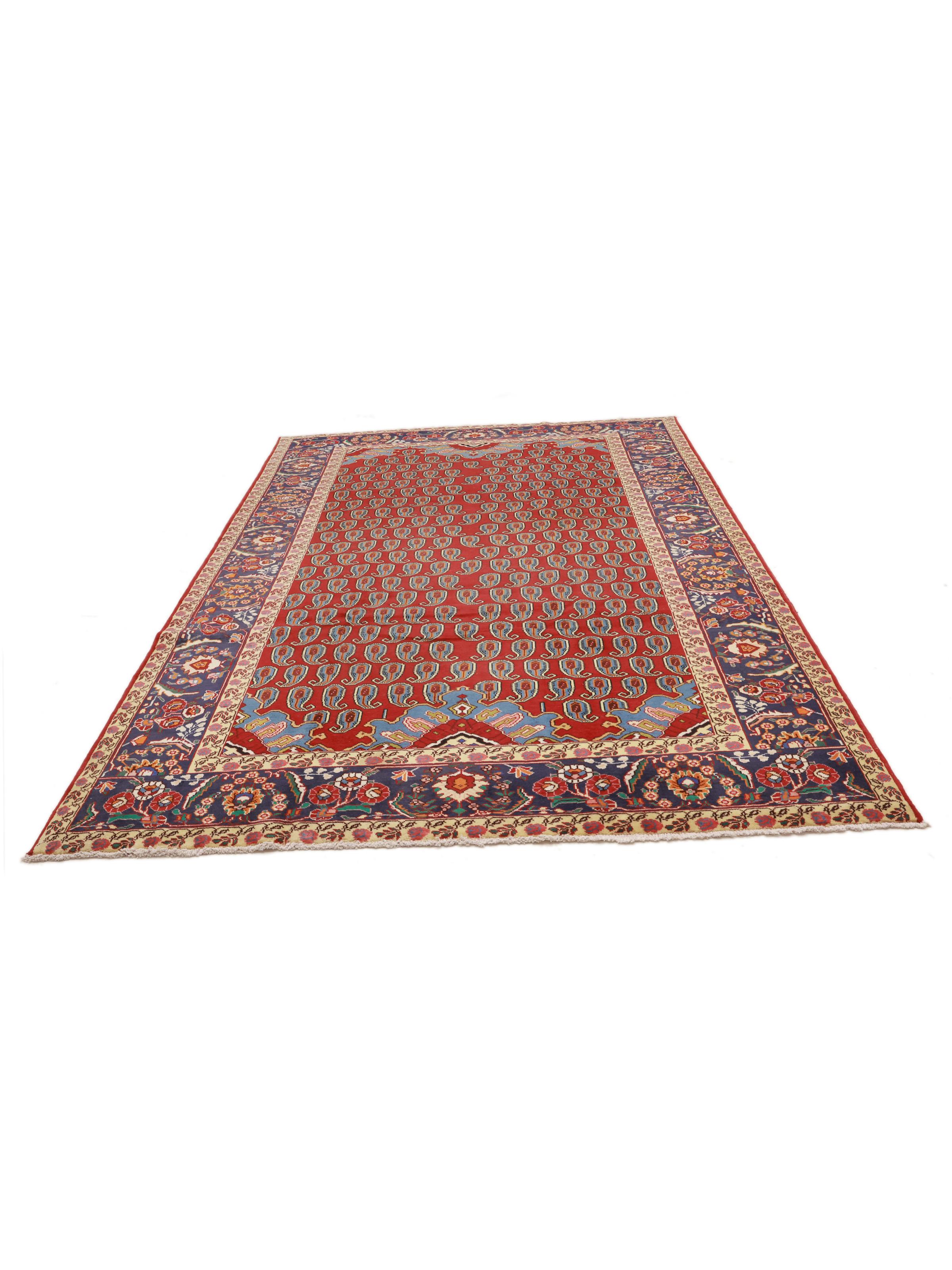
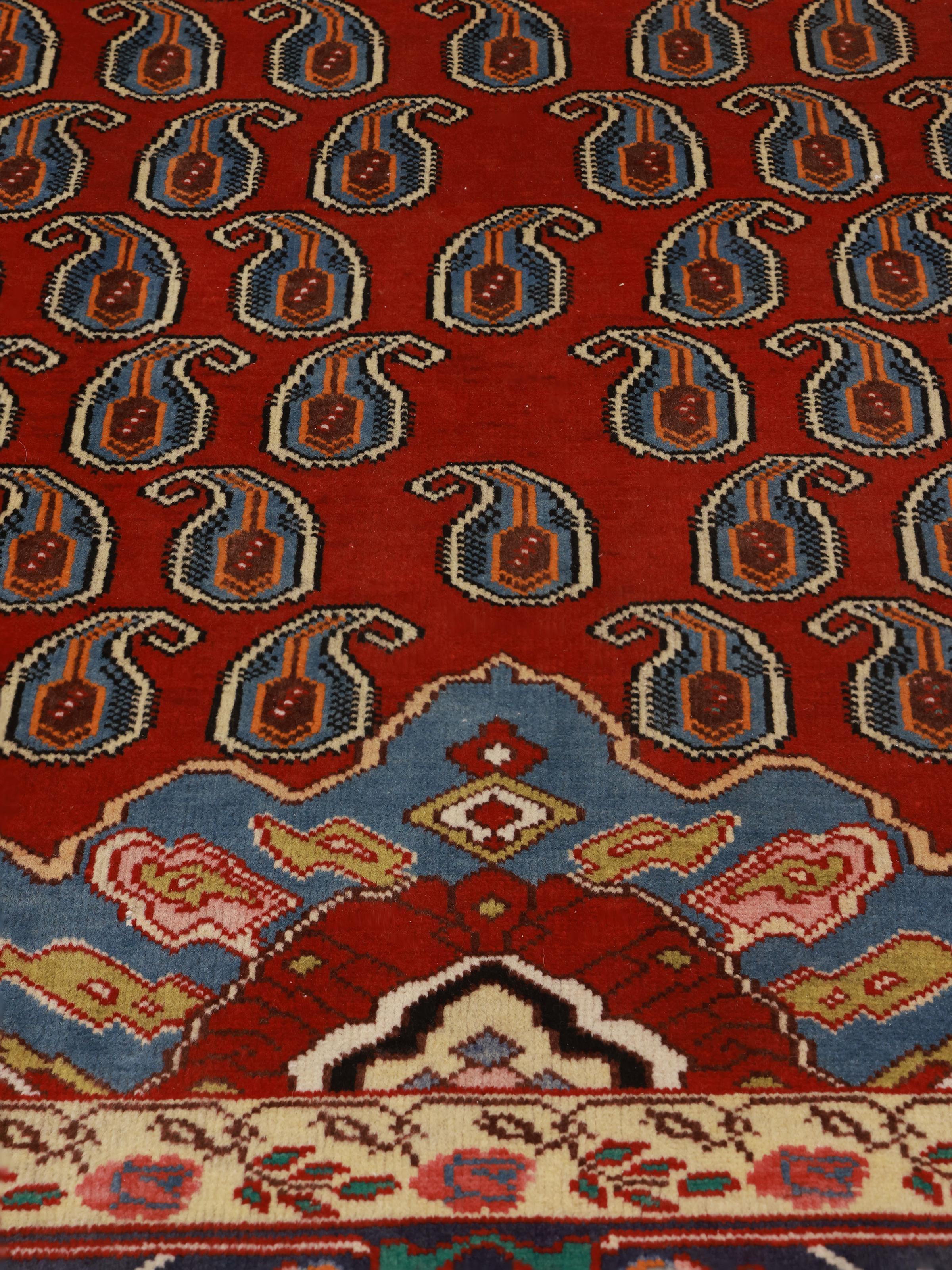
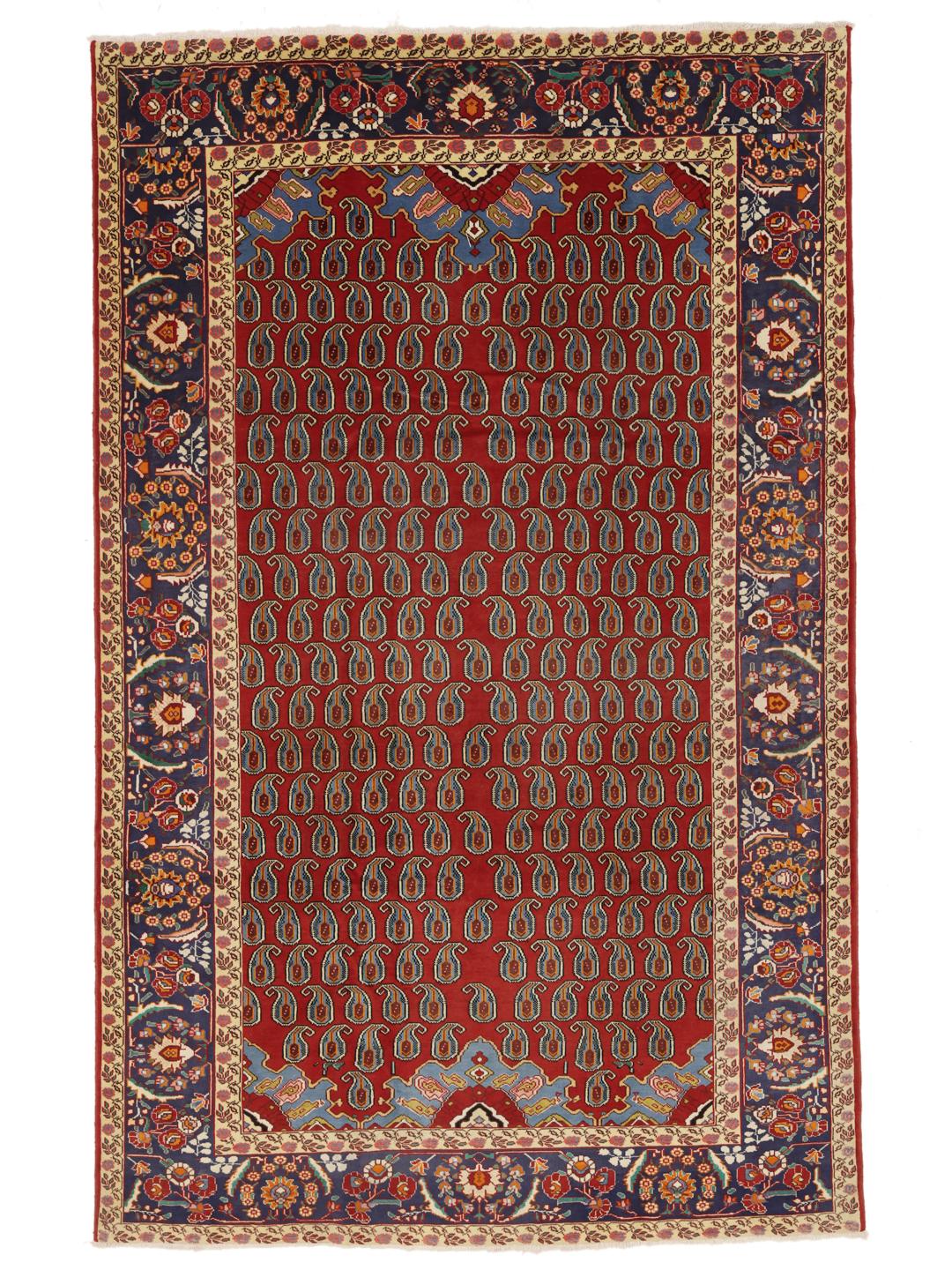
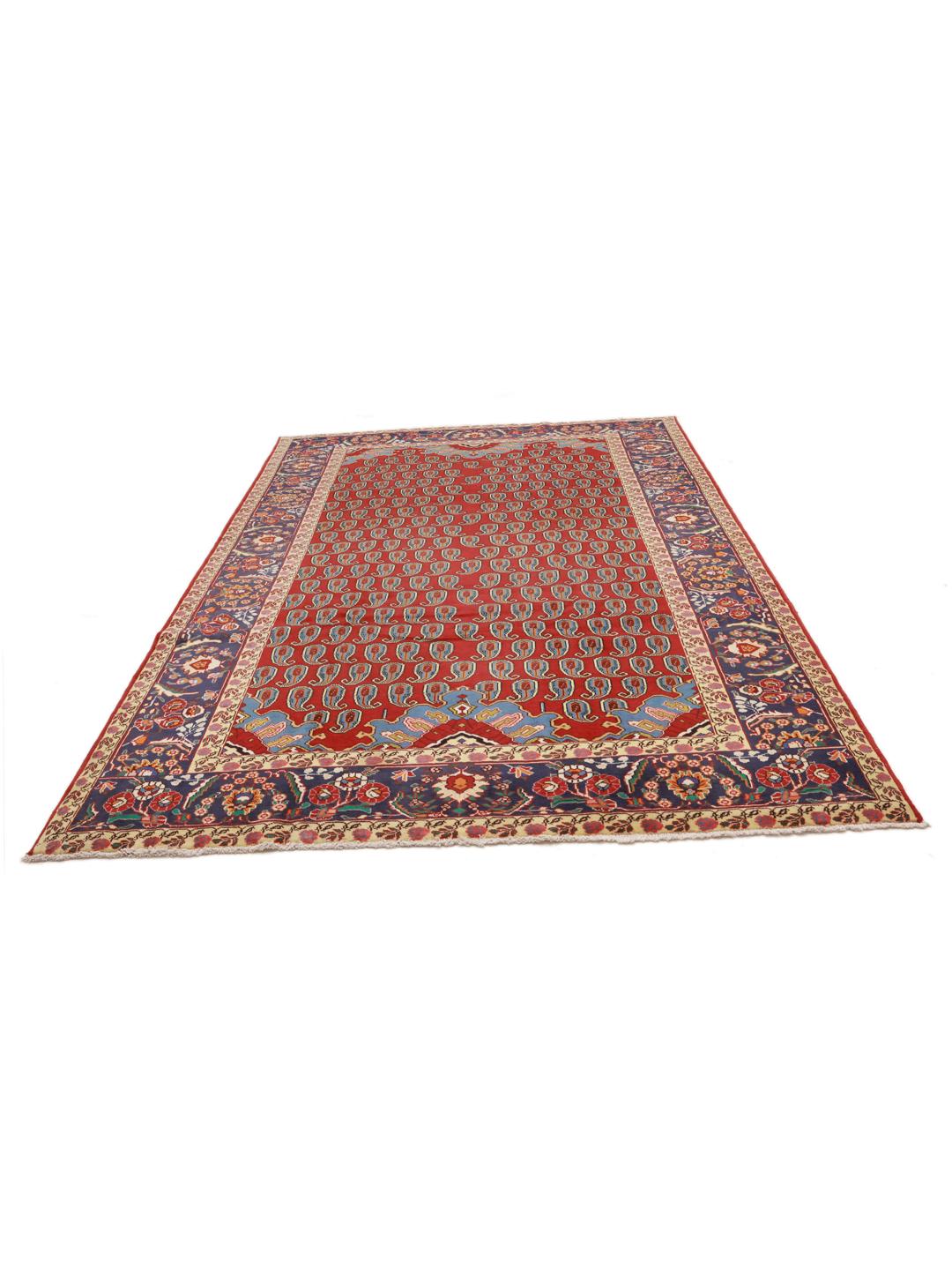
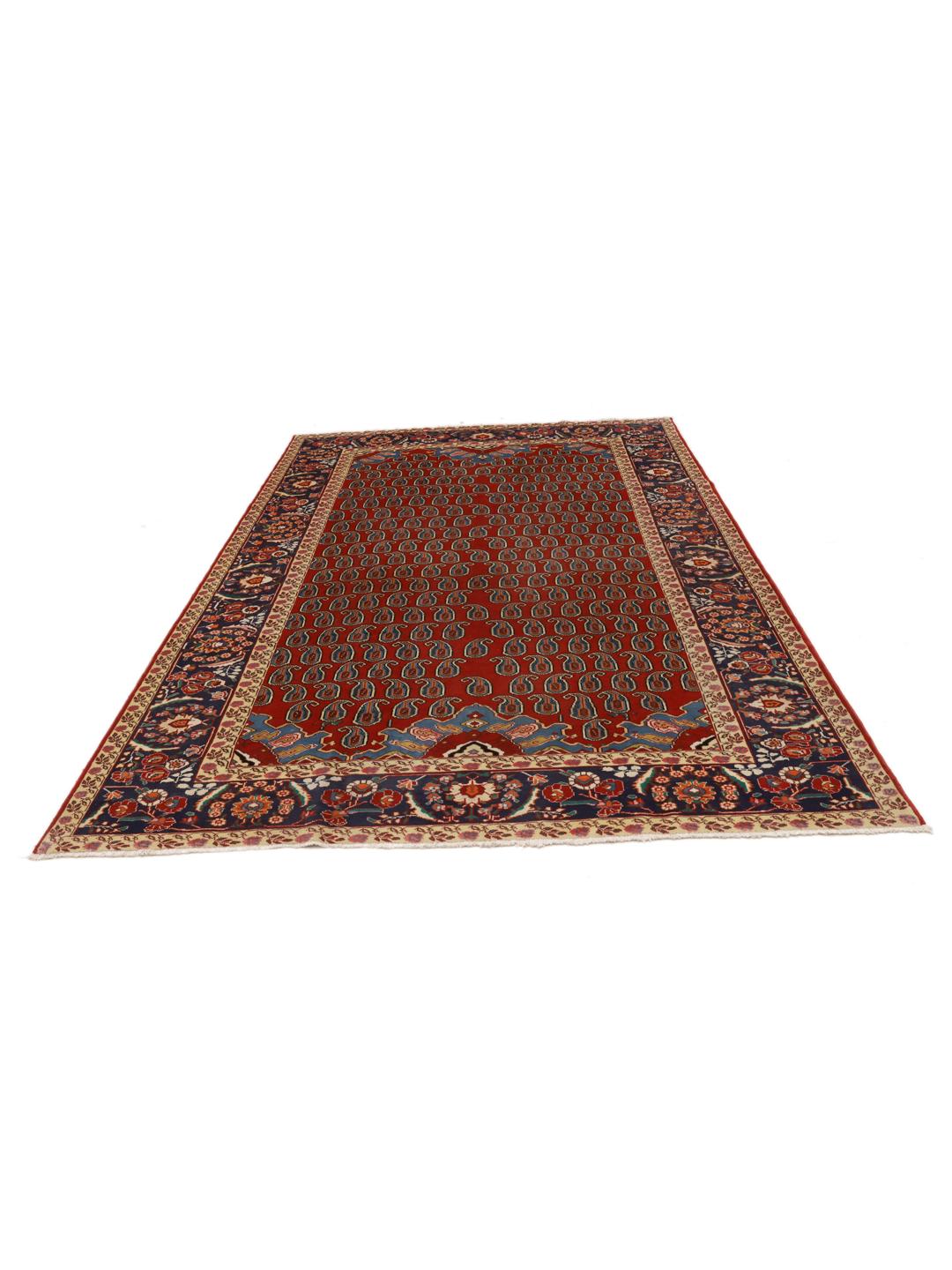
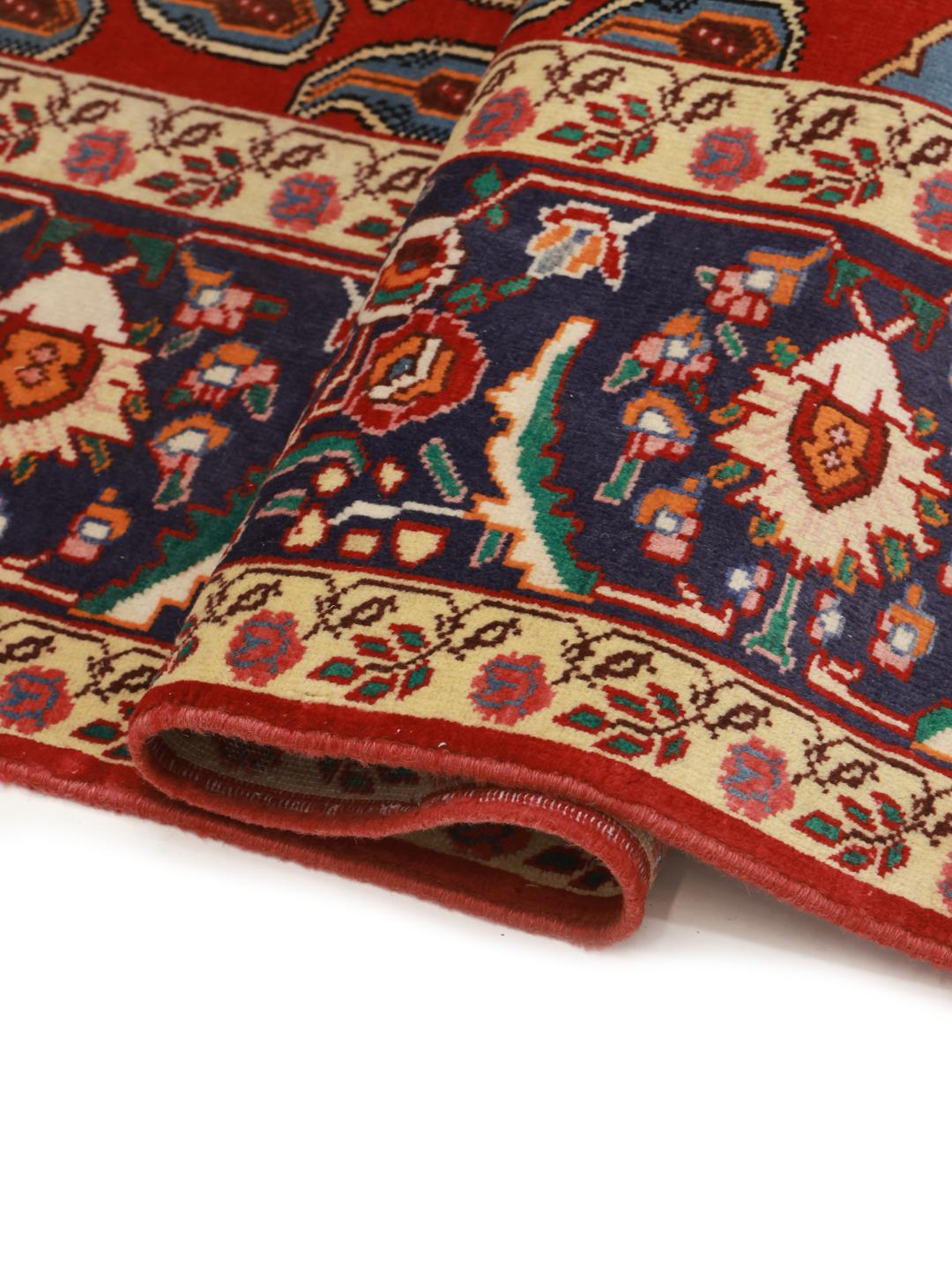
The visual language of Tabriz rugs is diverse, ranging from elaborate, large-scale floral medallions to the rhythmic, repeating boteh motifs seen here. The boteh, an ancient symbol often resembling a teardrop or a stylised cypress tree, represents growth and life. The use of deep red and dark blue tones is a hallmark of the region, creating a sophisticated contrast that highlights the intricacy of the patterns.
Owning a Tabriz rug is more than just a decor choice; it is an acquisition of a cultural legacy. These rugs are highly valued by collectors and enthusiasts for their durability, artistic expression, and the dedication required to produce them. By preserving these traditional designs, owners participate in a long-standing history of artistry that continues to be celebrated worldwide.