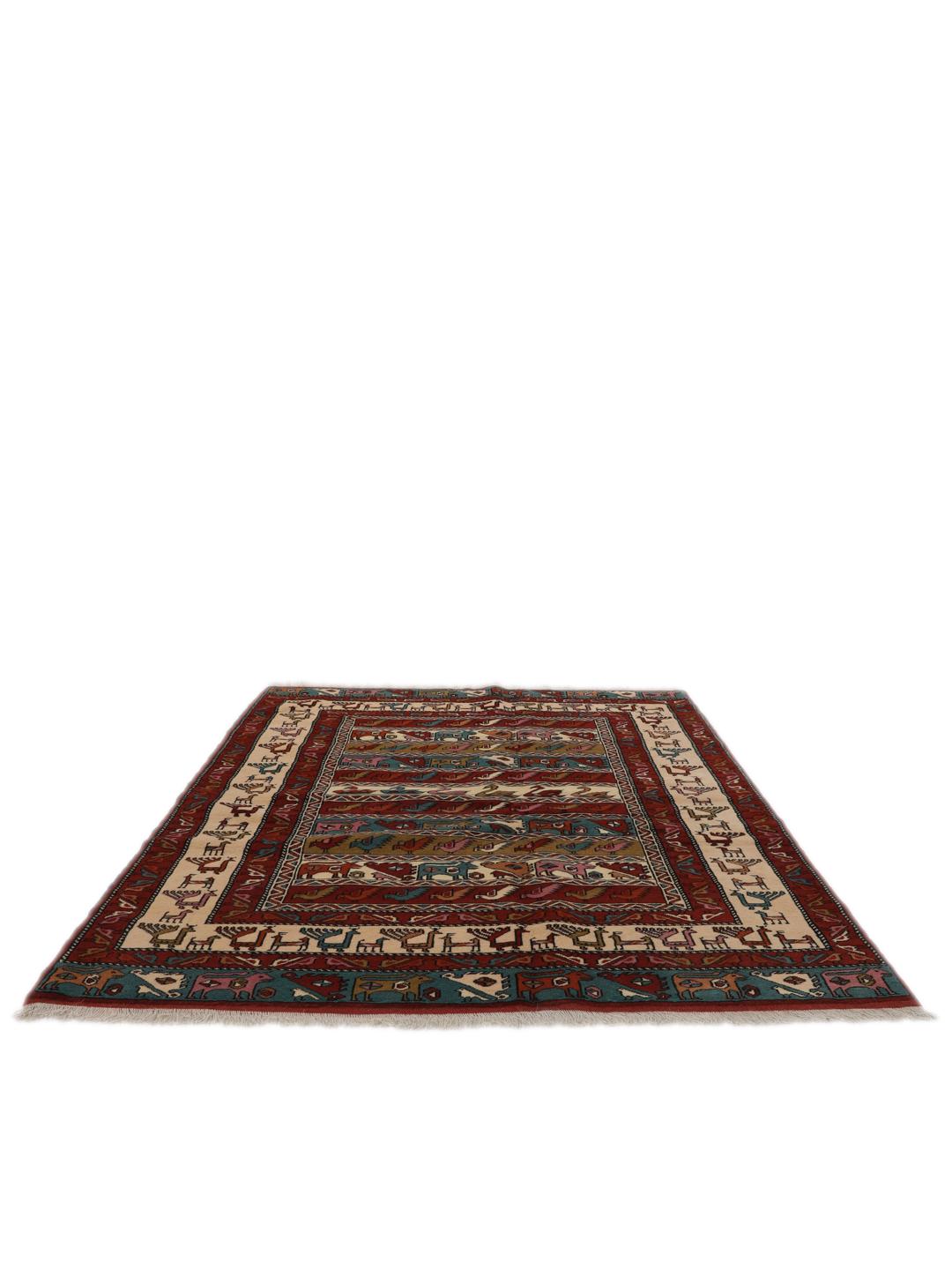
The Turkaman rug tradition originates from the nomadic tribes of the Middle East, whose weaving practices have evolved over centuries into a highly sophisticated art form. Historically, these rugs were essential to nomadic life, providing insulation, warmth, and artistic expression in portable form, eventually becoming prized exports known for their durability and distinct aesthetic.
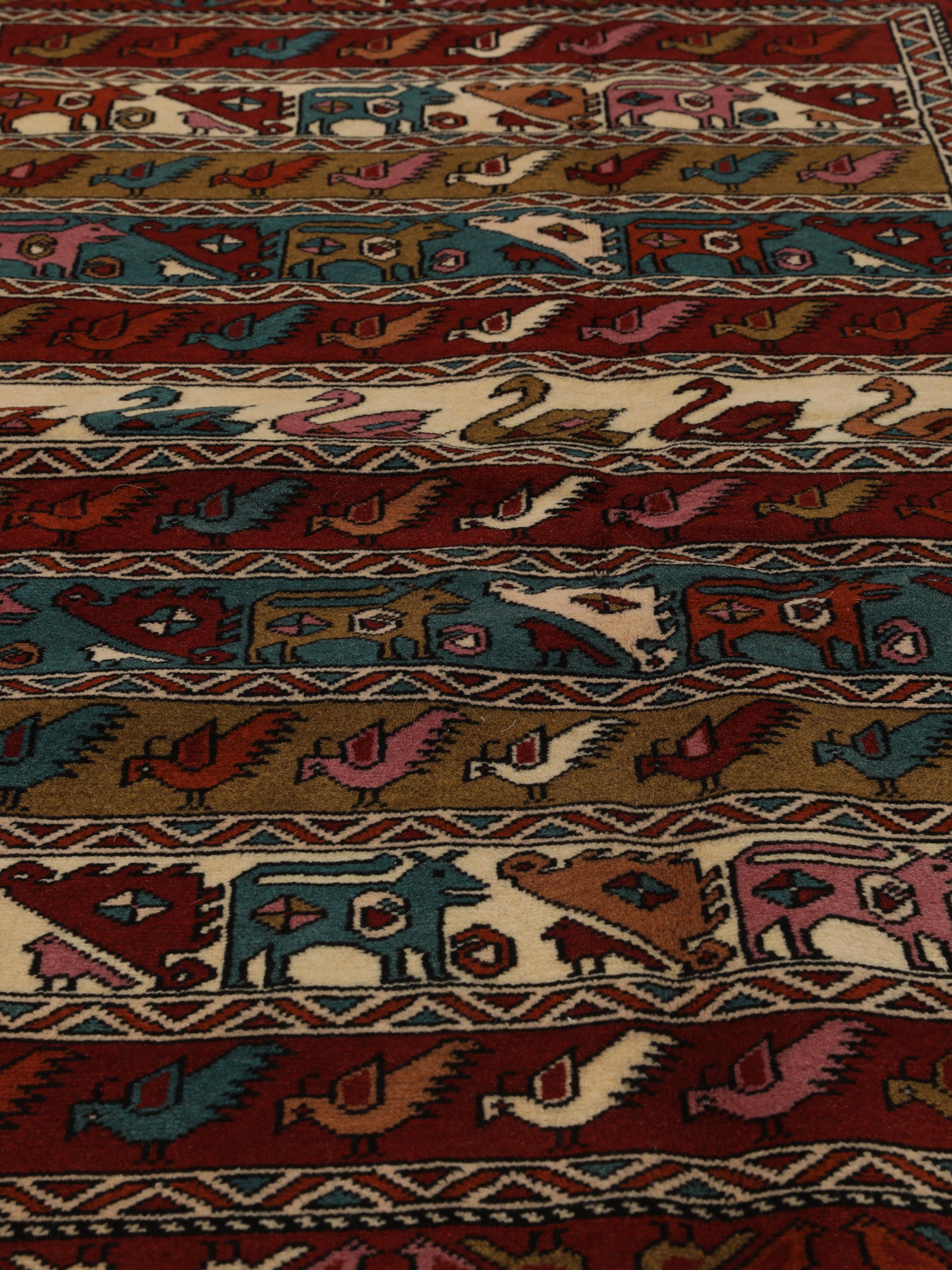
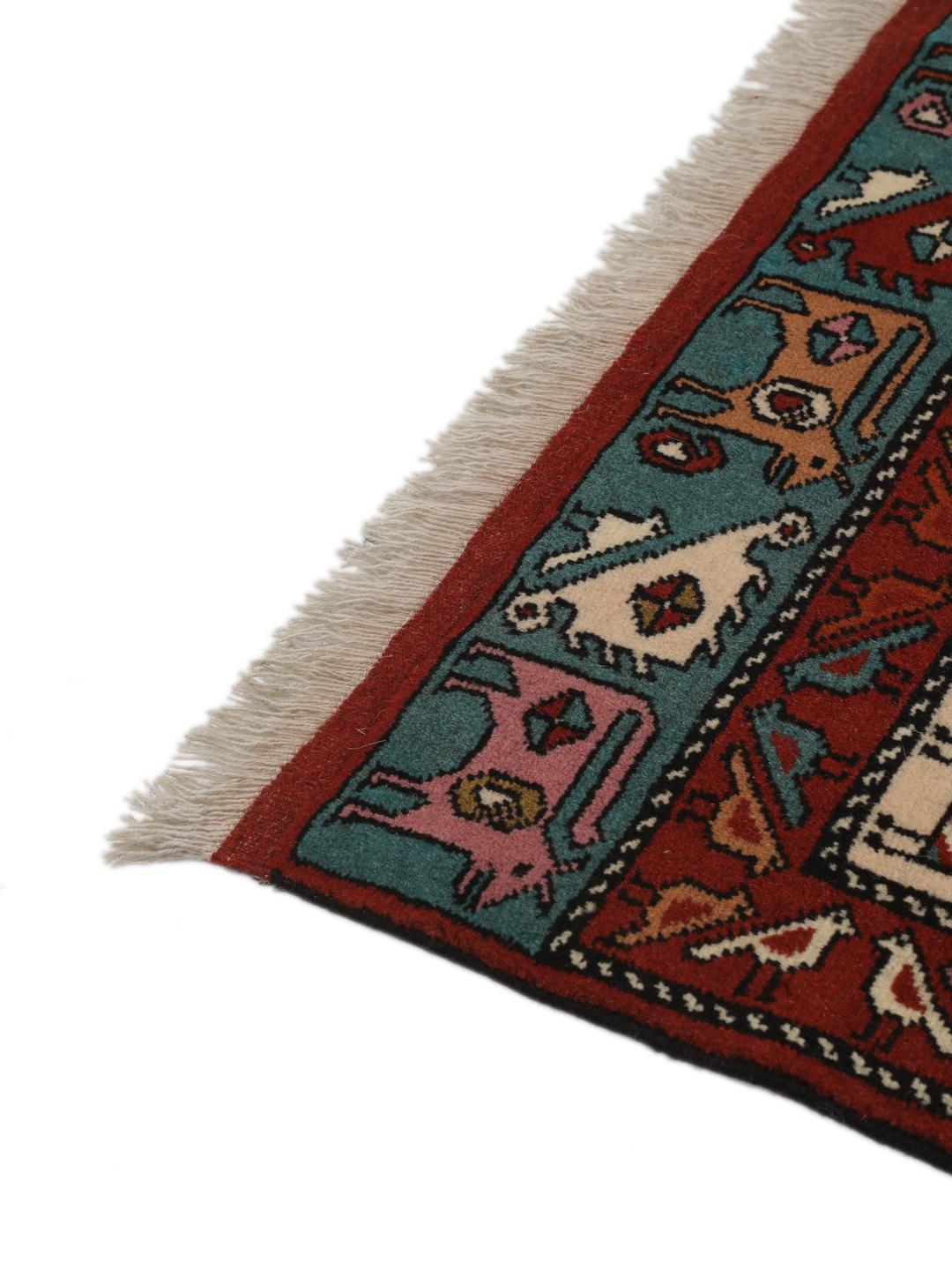
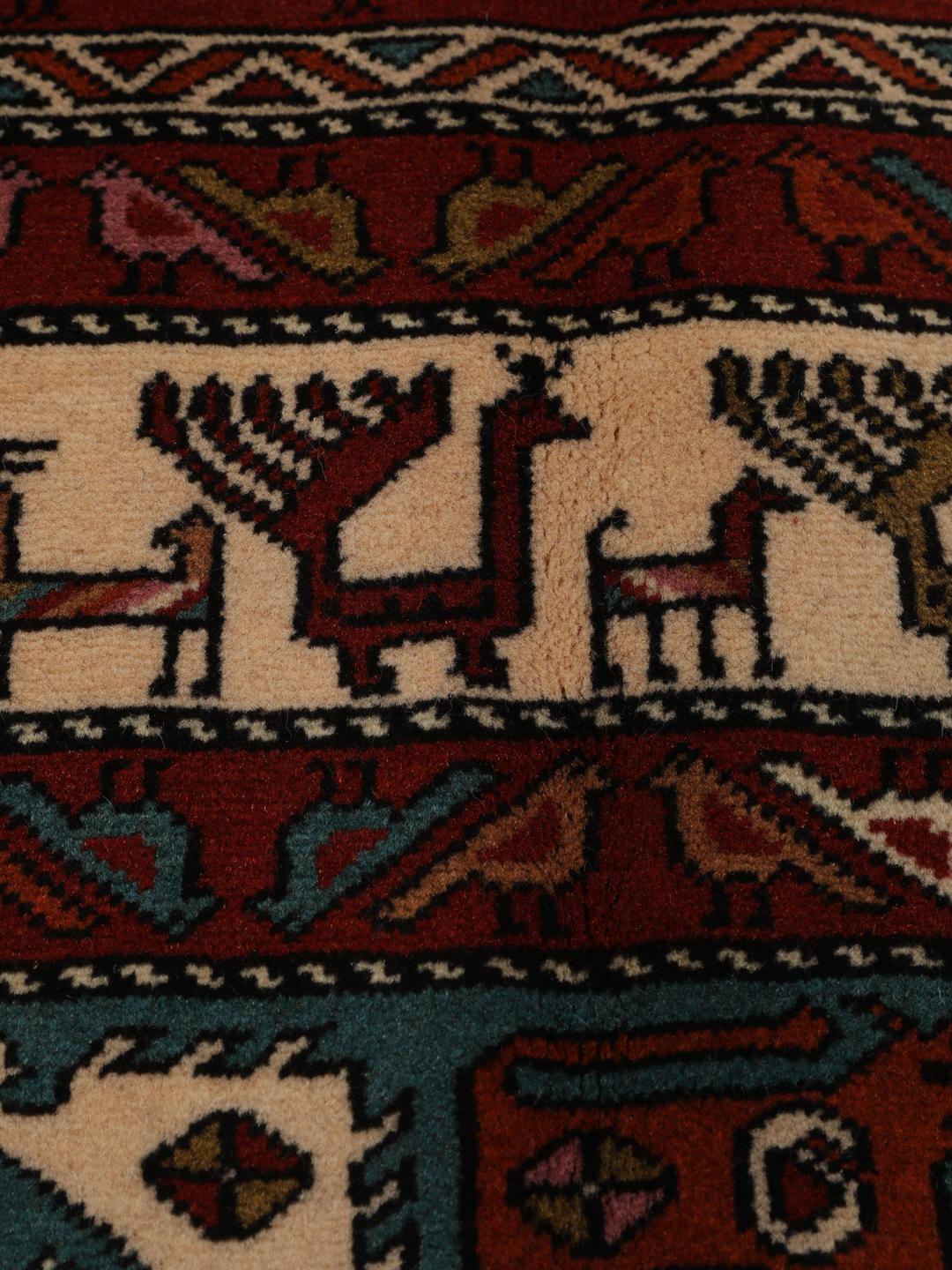
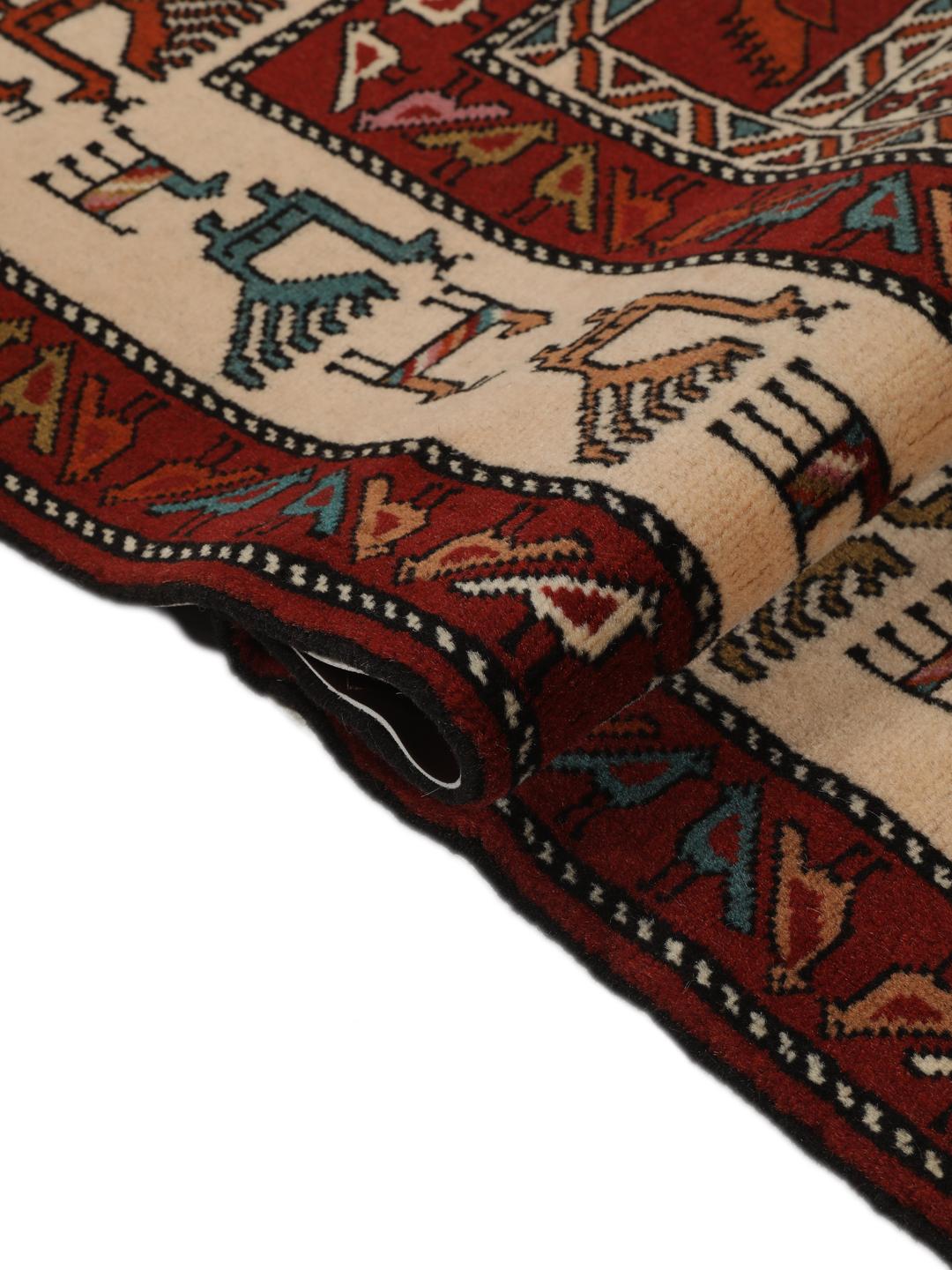
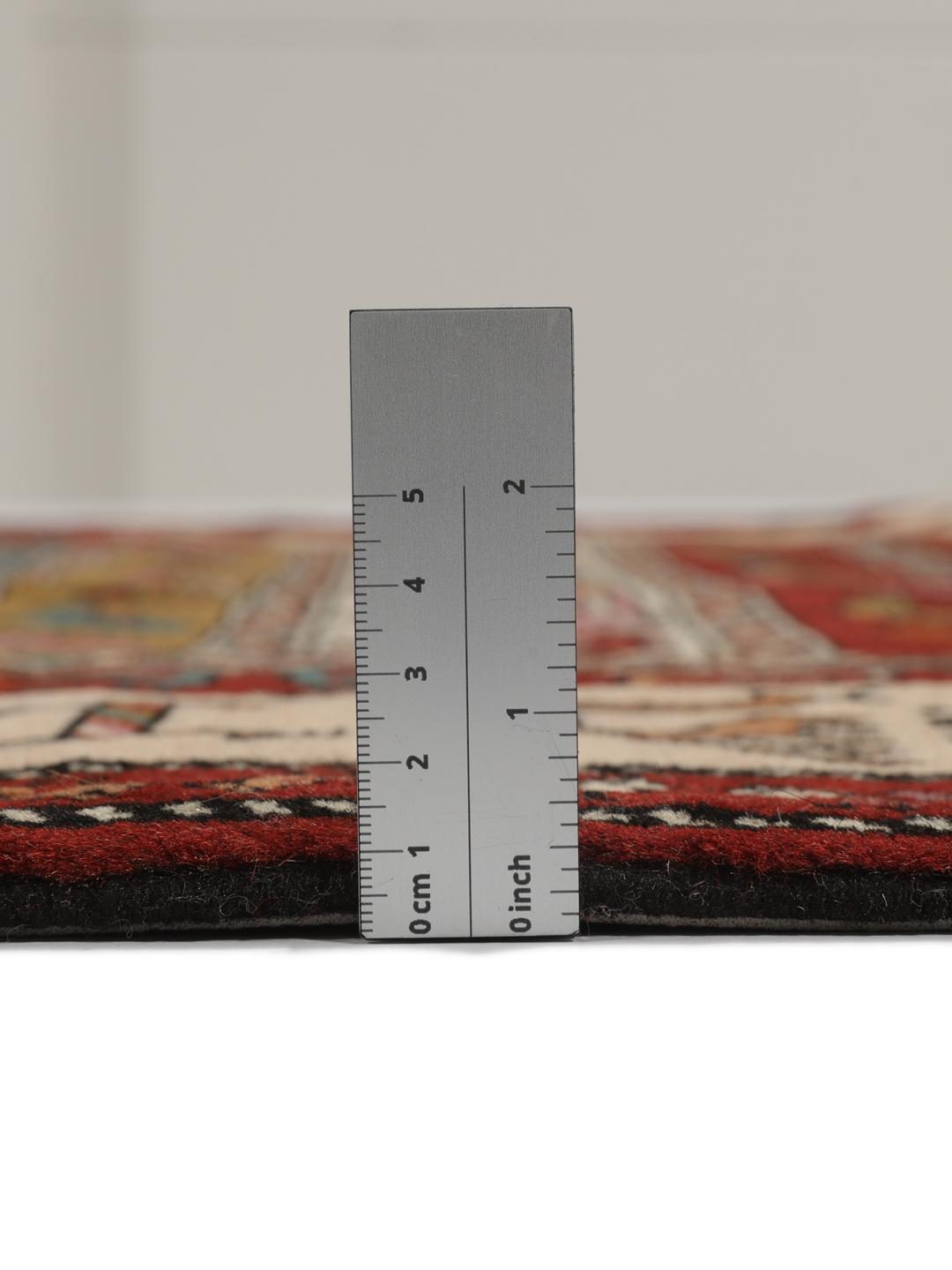
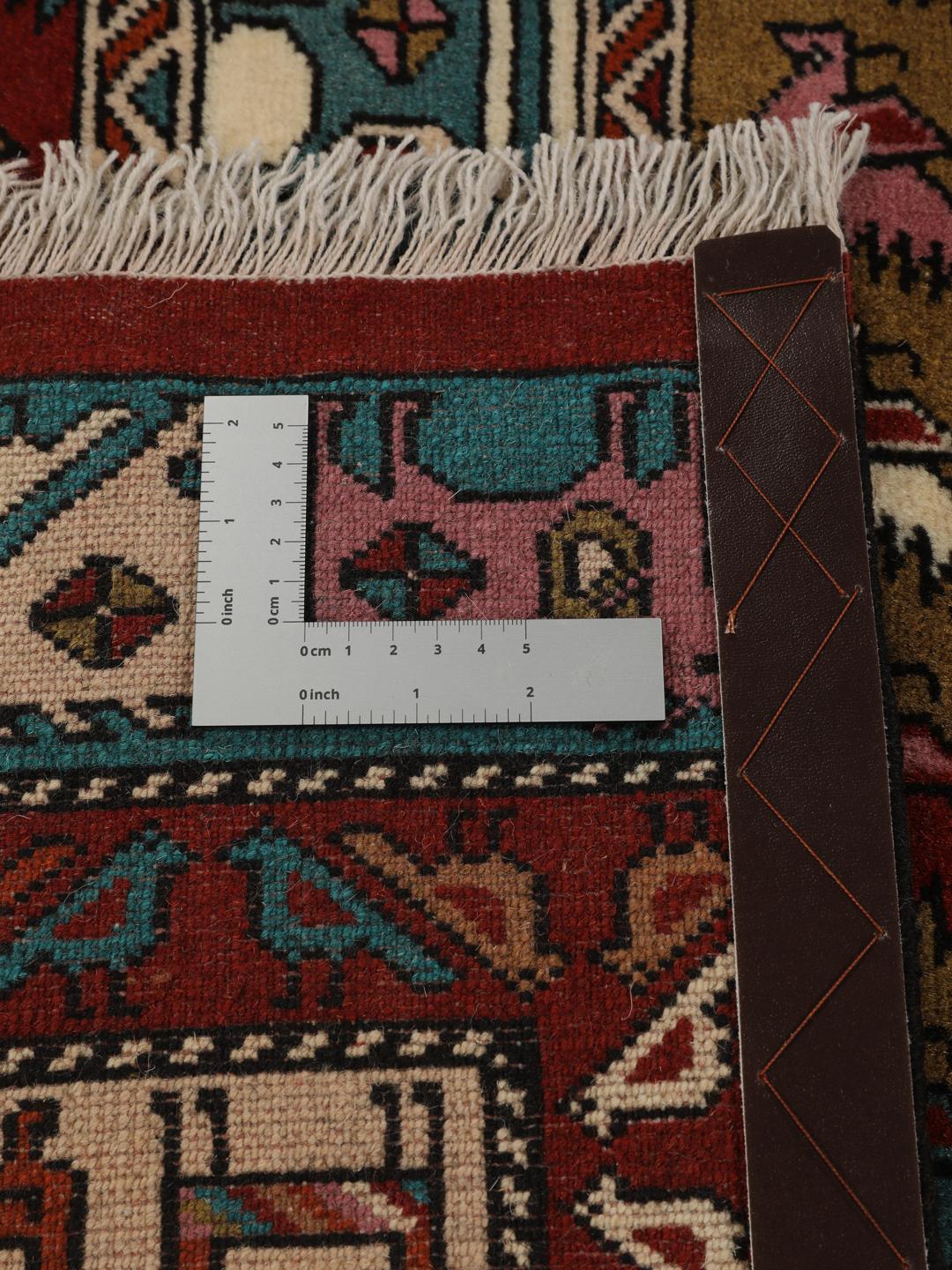
The term hand-knotted refers to the traditional method where individual strands of wool are tied around the foundation warps. This technique is the hallmark of quality in this region, as it allows for the creation of intricate, dense piles that are far more robust and lustrous than those produced by any other method. The time and skill invested in each knot are what make these rugs so highly valued.
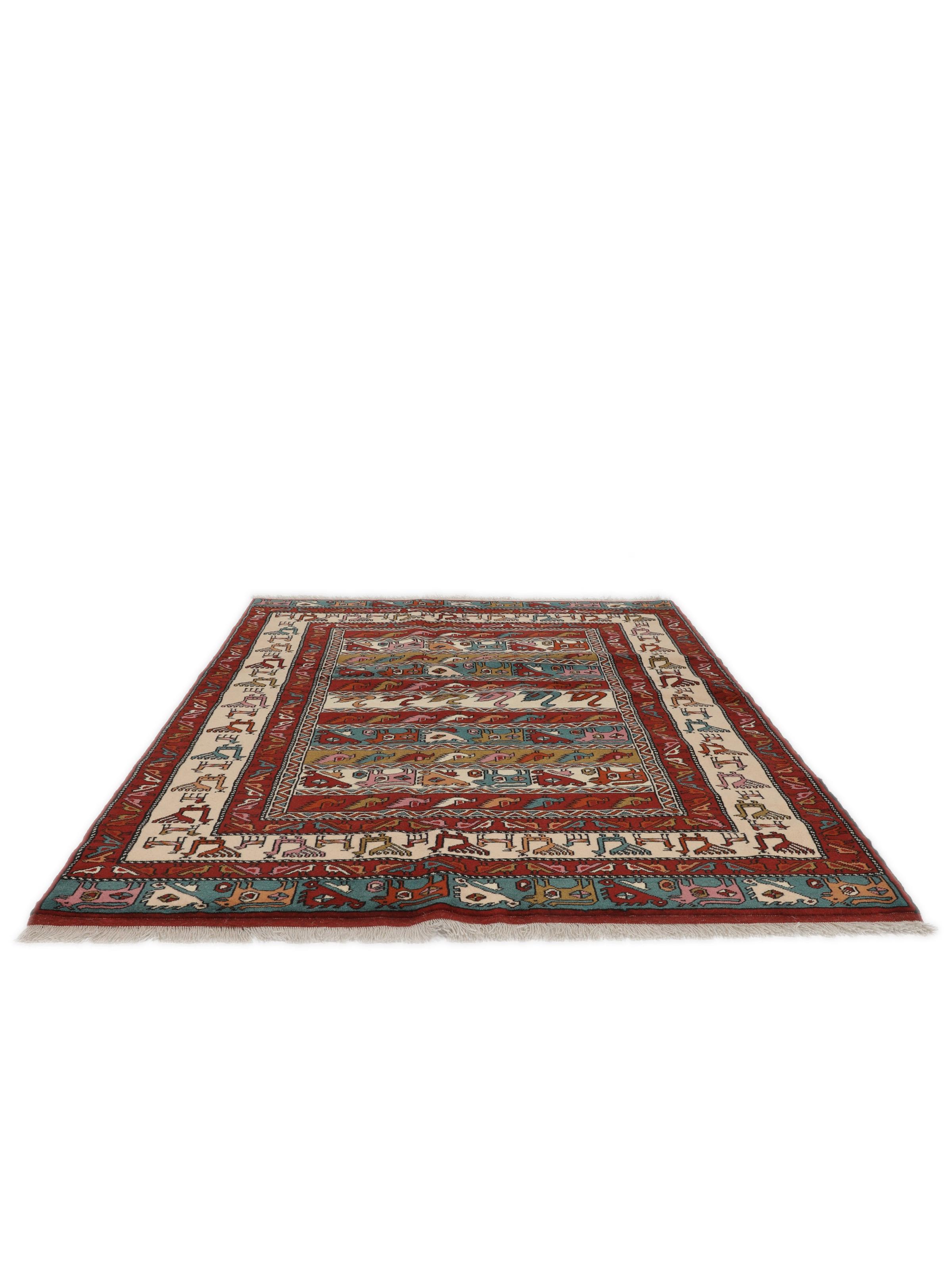
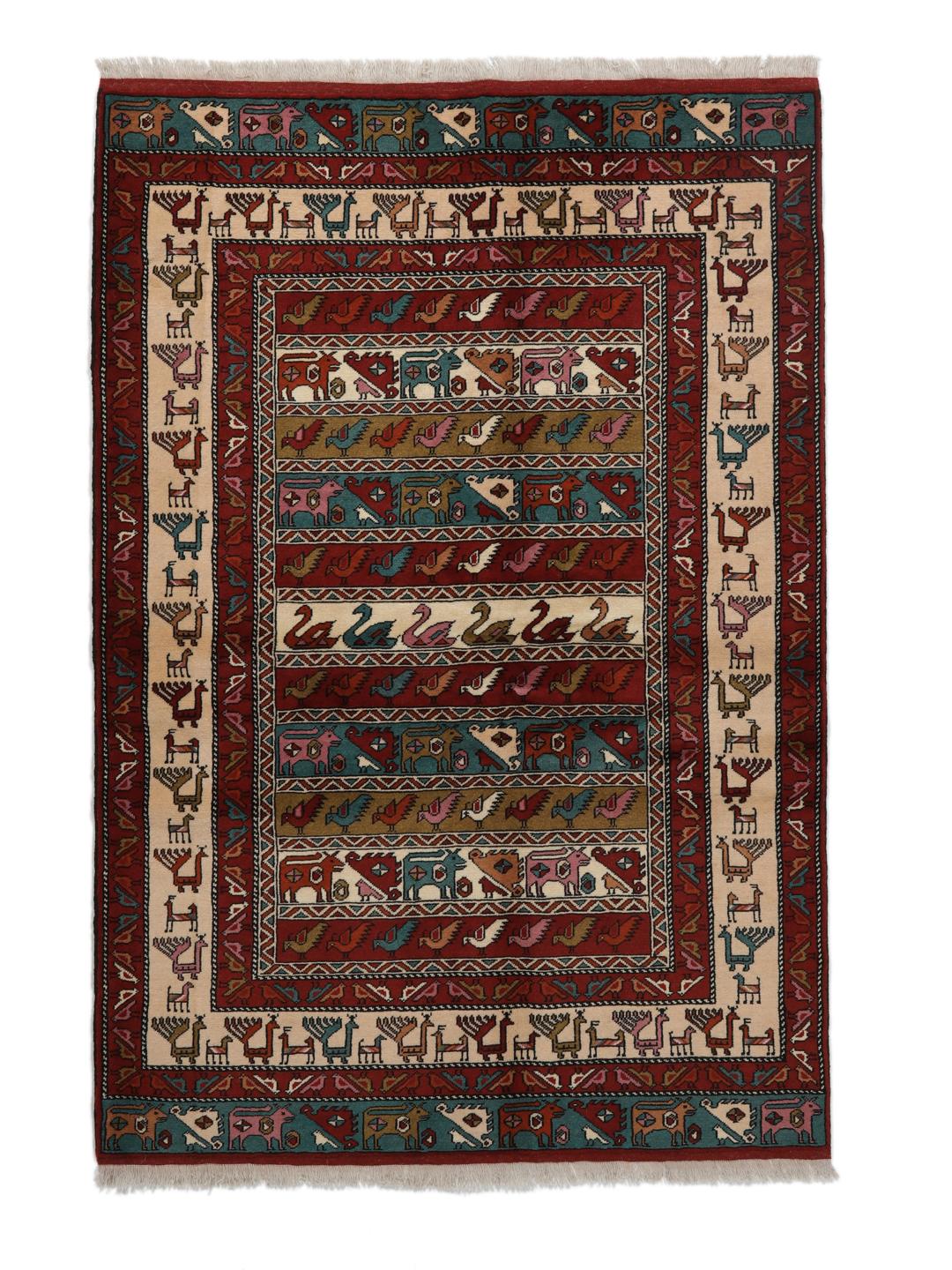
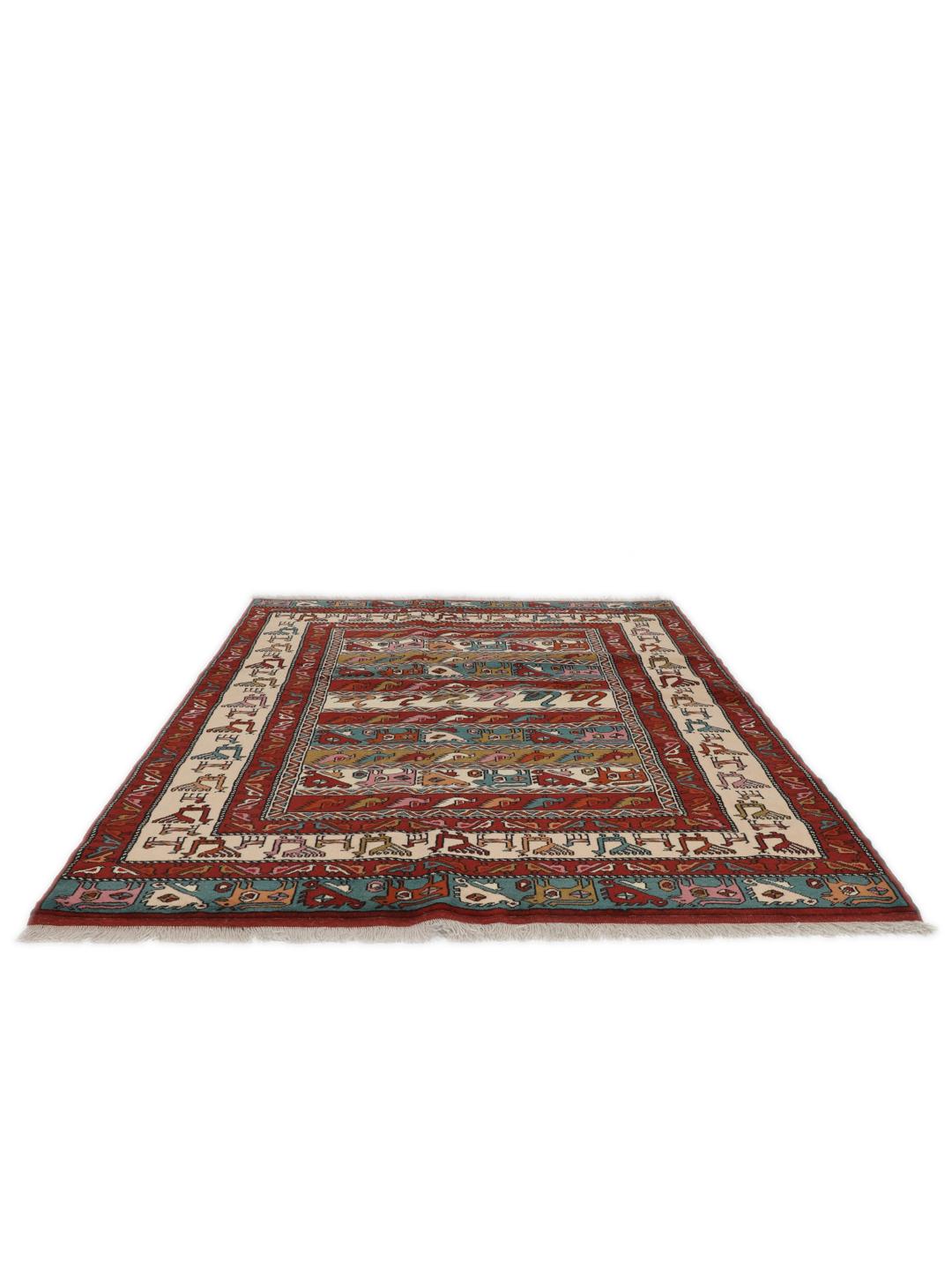
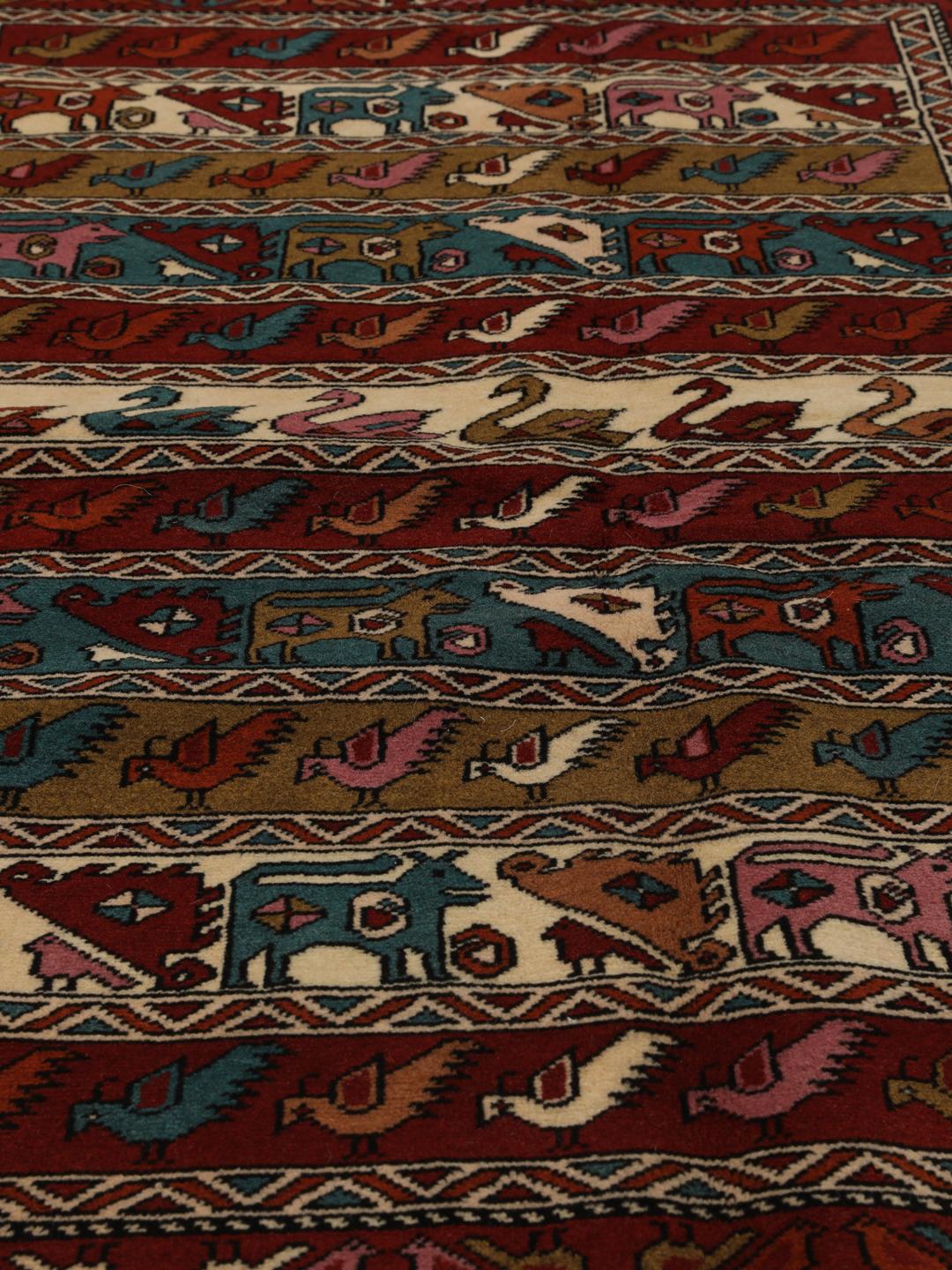
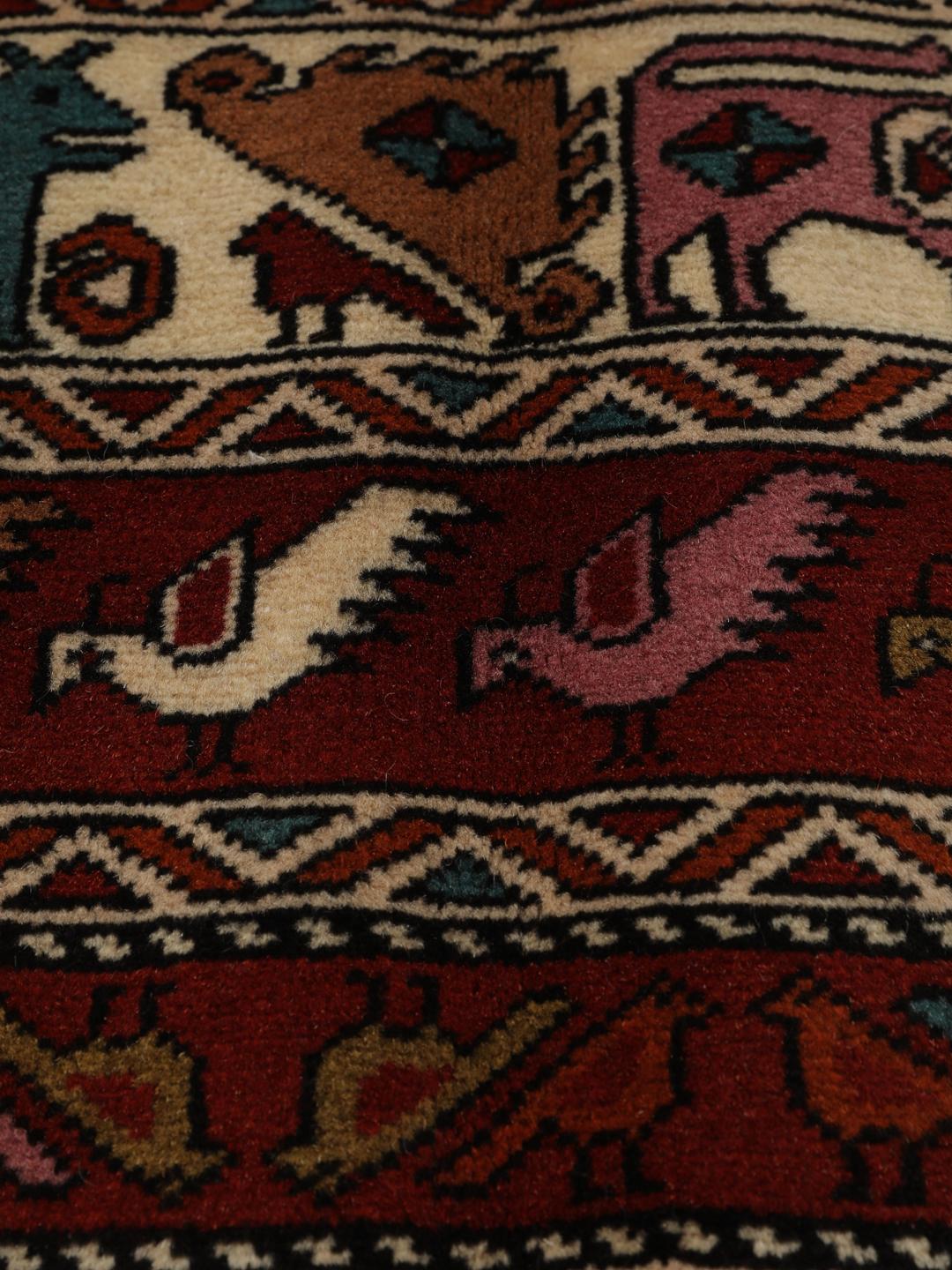
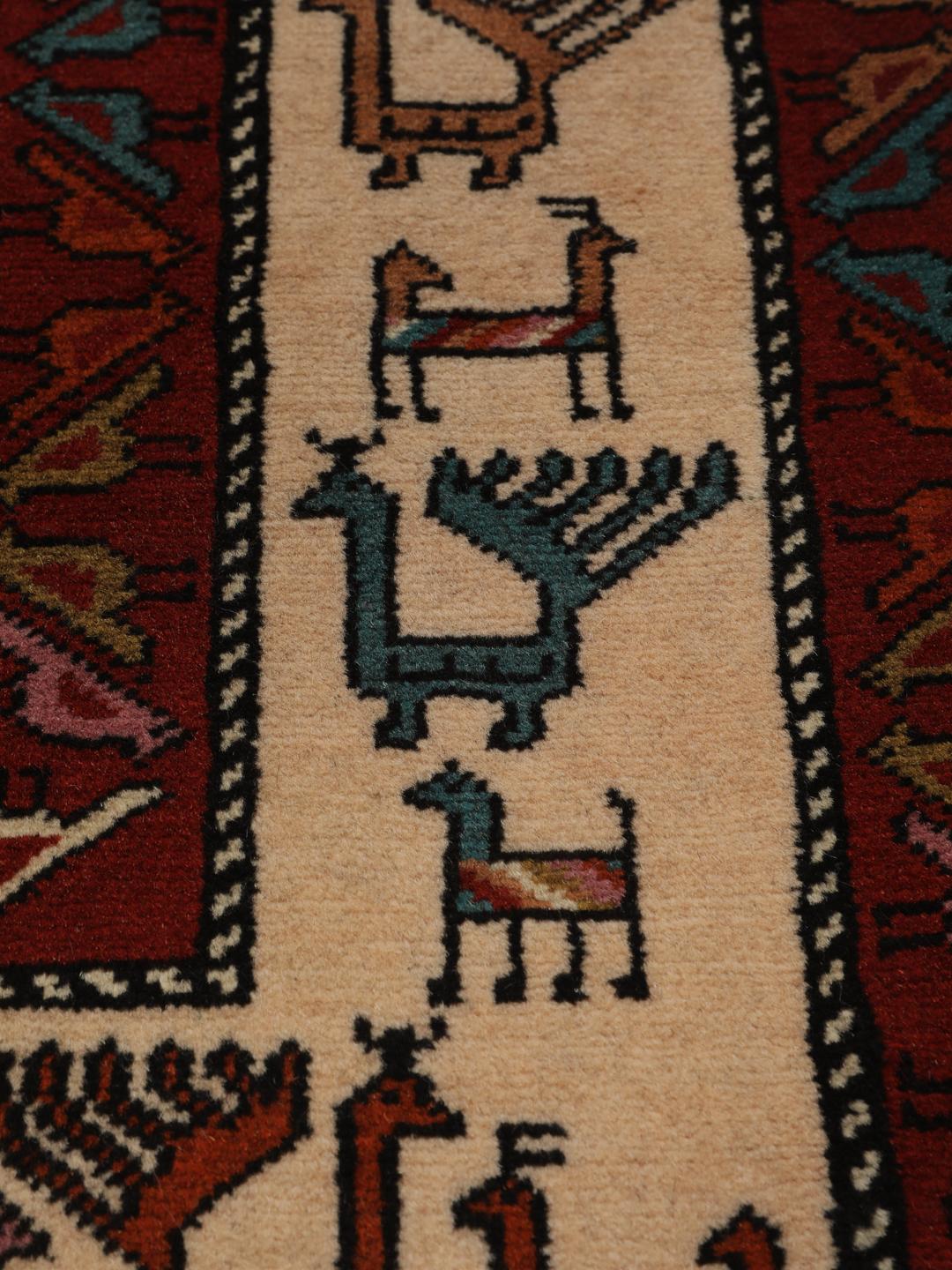
Visually, these rugs are often defined by their bold, symbolic motifs and a specific colour palette that frequently features deep reds as a base. The inclusion of pictorial motifs, such as the animals seen here, is a charming and distinctive variation that adds a narrative quality to the design, setting it apart from more common geometric patterns.
Owning a piece from this tradition is an act of preserving a cultural legacy. These rugs are collected not only for their beauty but for the incredible human skill they represent. They are tangible links to a long history of craftsmanship, turning any space into a gallery of tradition and authentic, handmade quality.