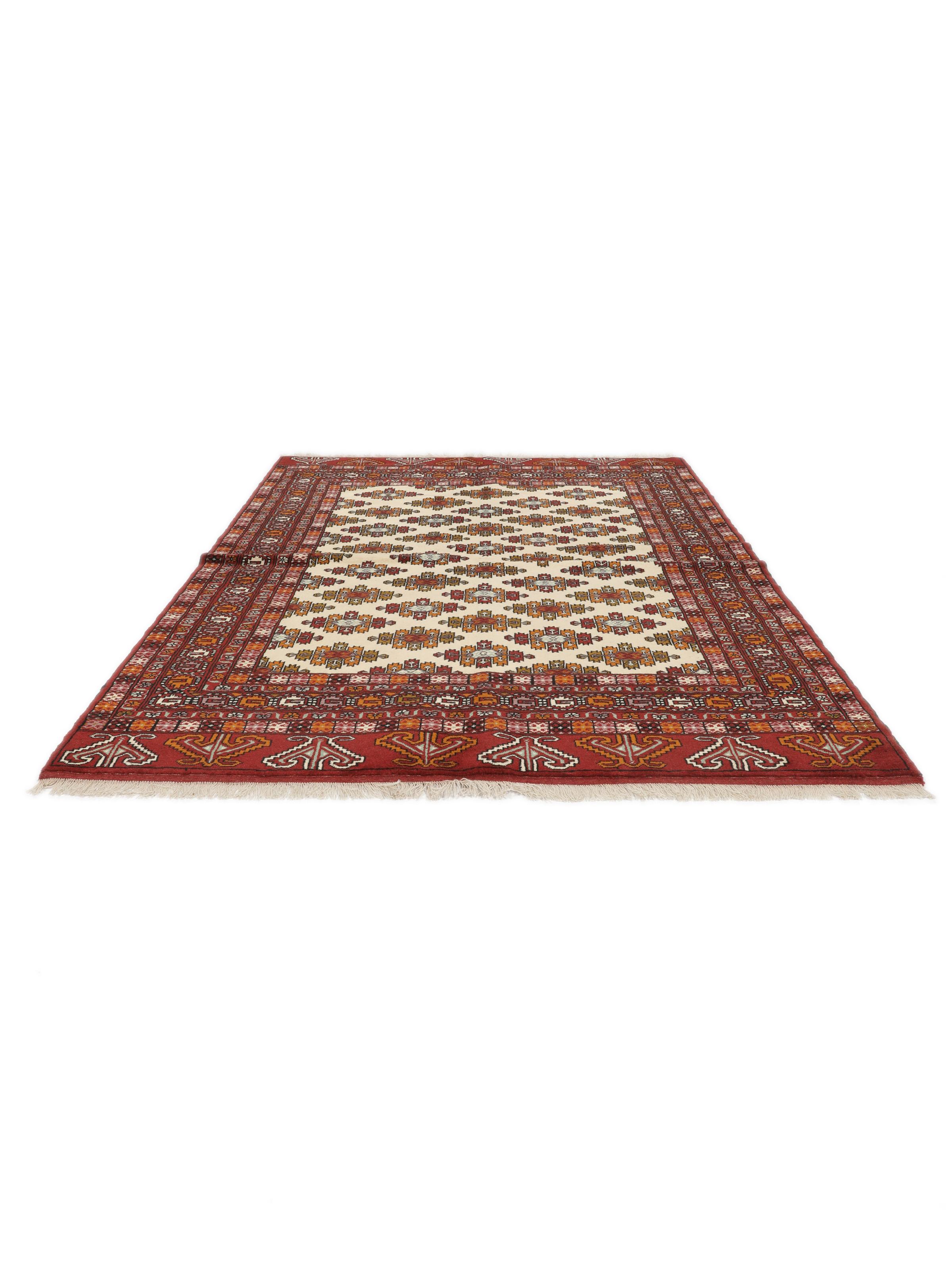
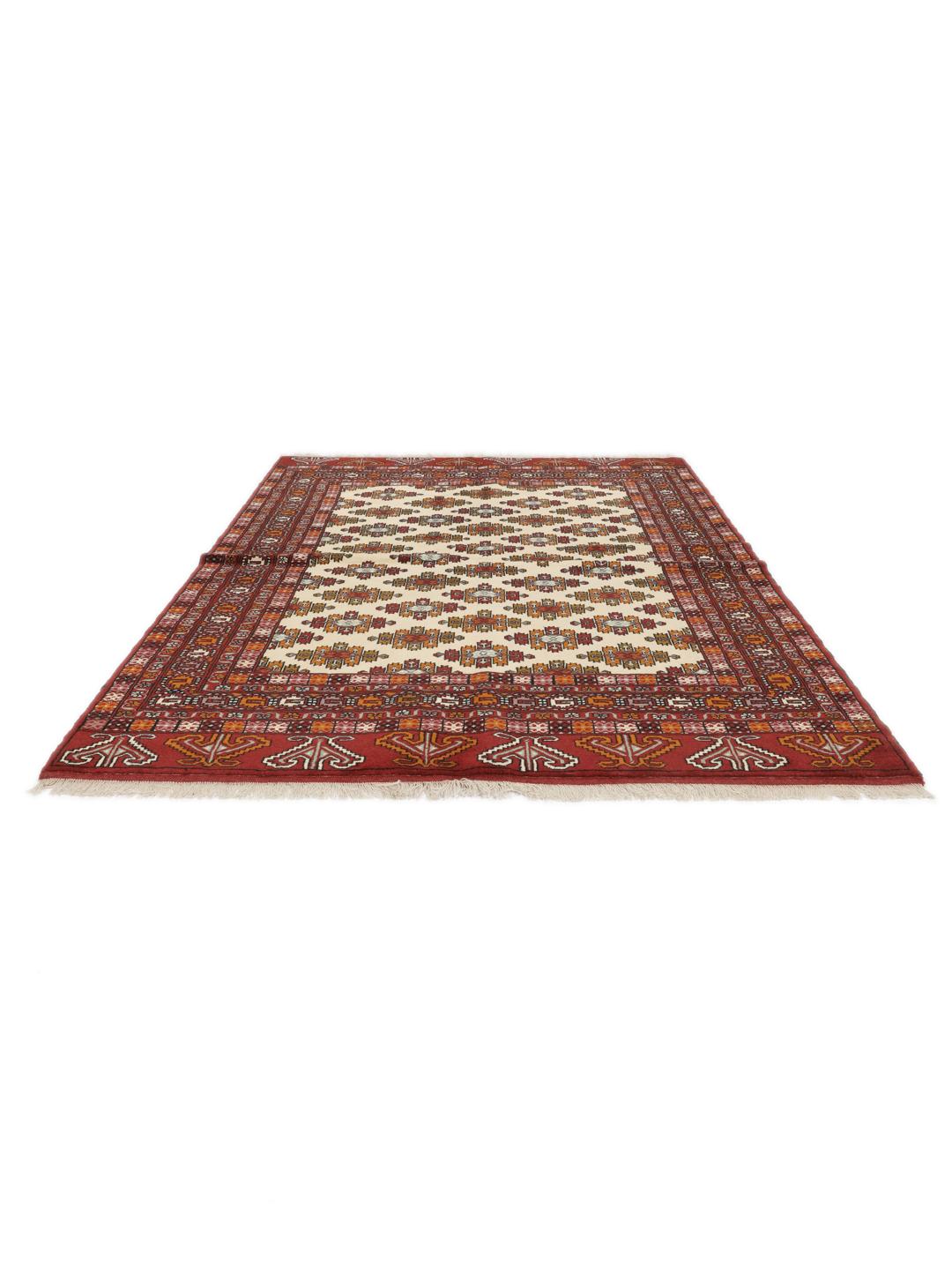
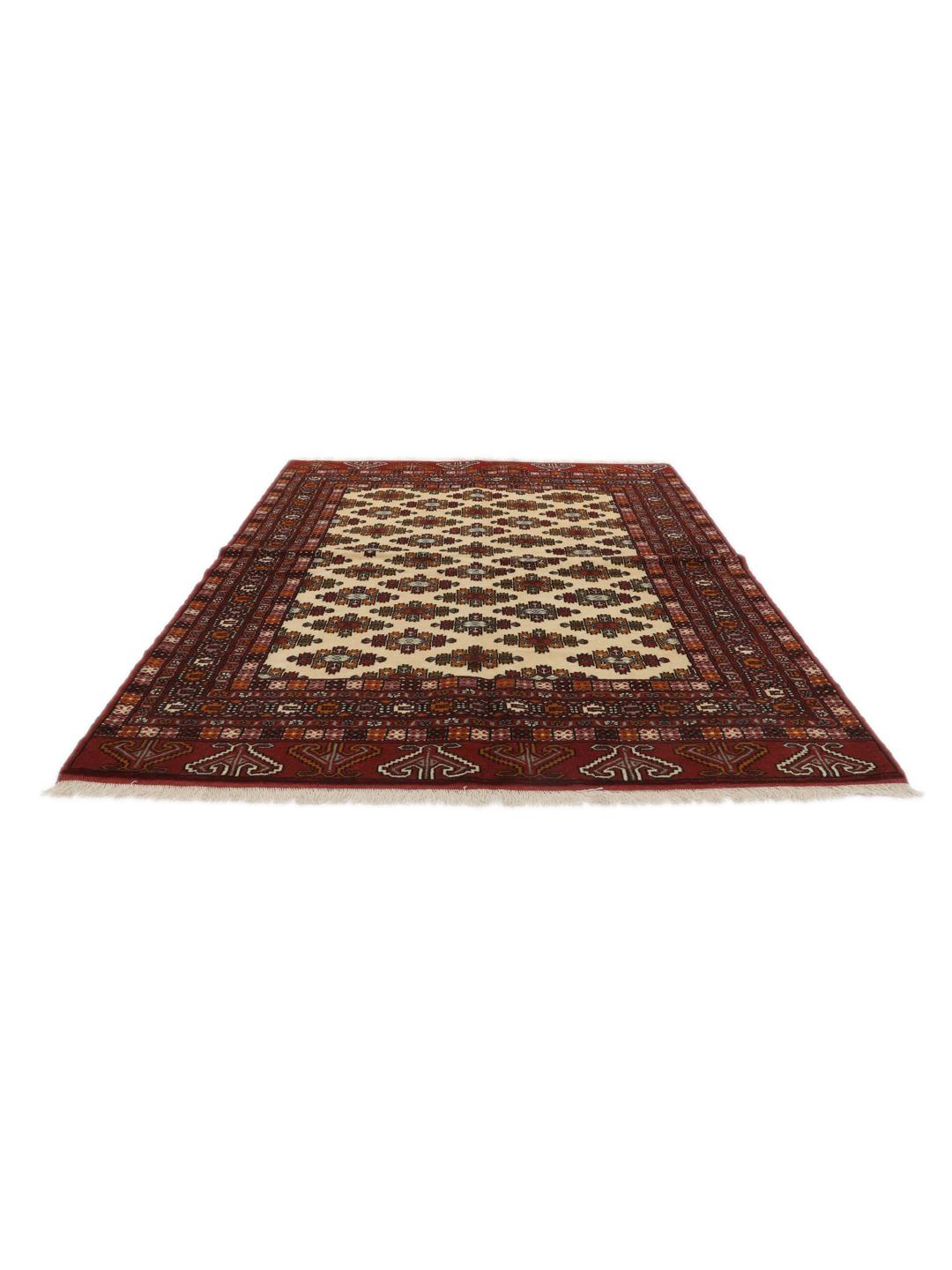
The Turkaman rug tradition stems from the nomadic tribes of Central Asia, where weaving was not merely a craft but a vital cultural language. Over centuries, these techniques migrated and evolved, finding a home in the workshops of the Middle East. This rug carries forward that ancient legacy, representing a style that has been refined through generations of tribal history.
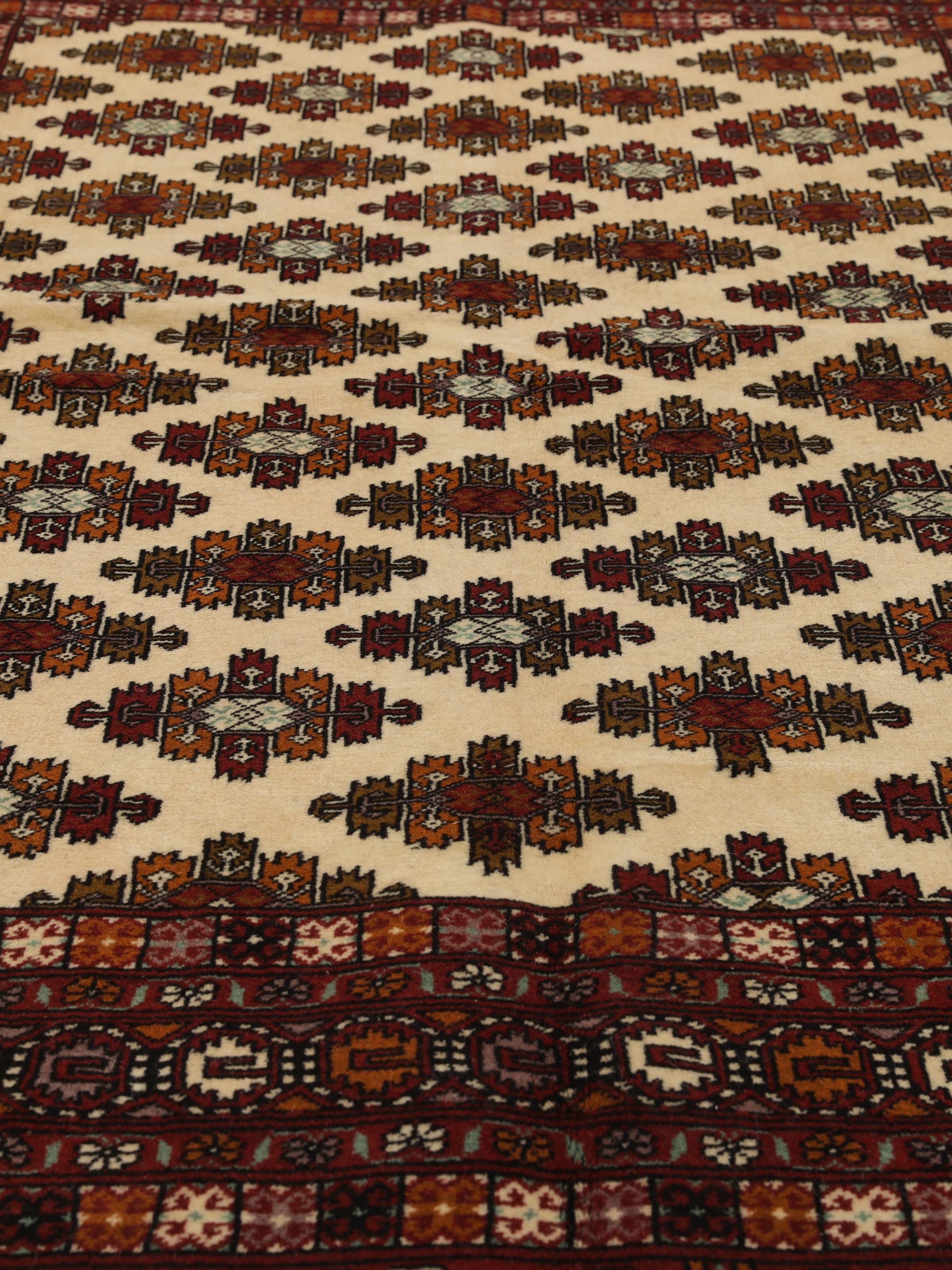
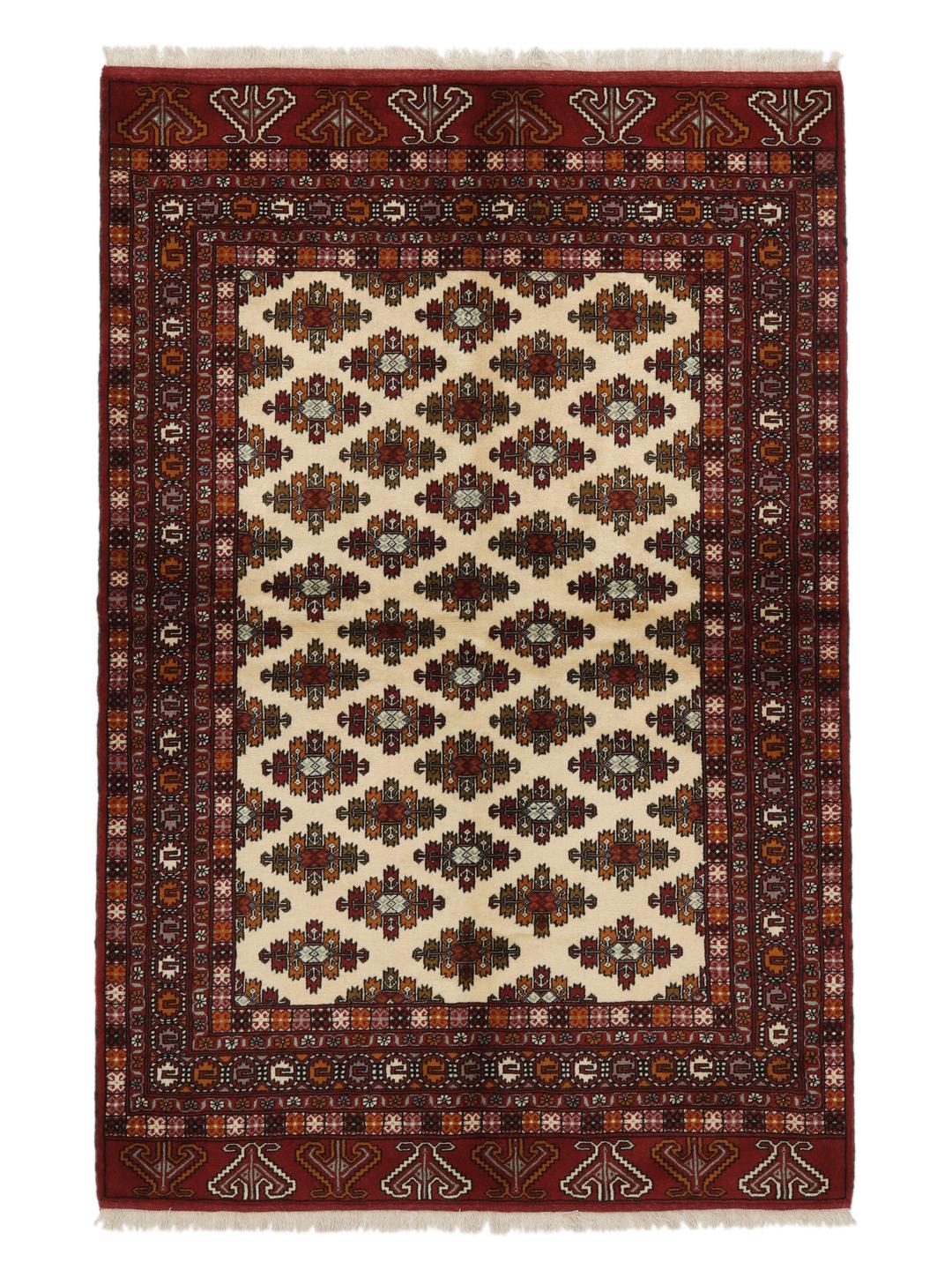
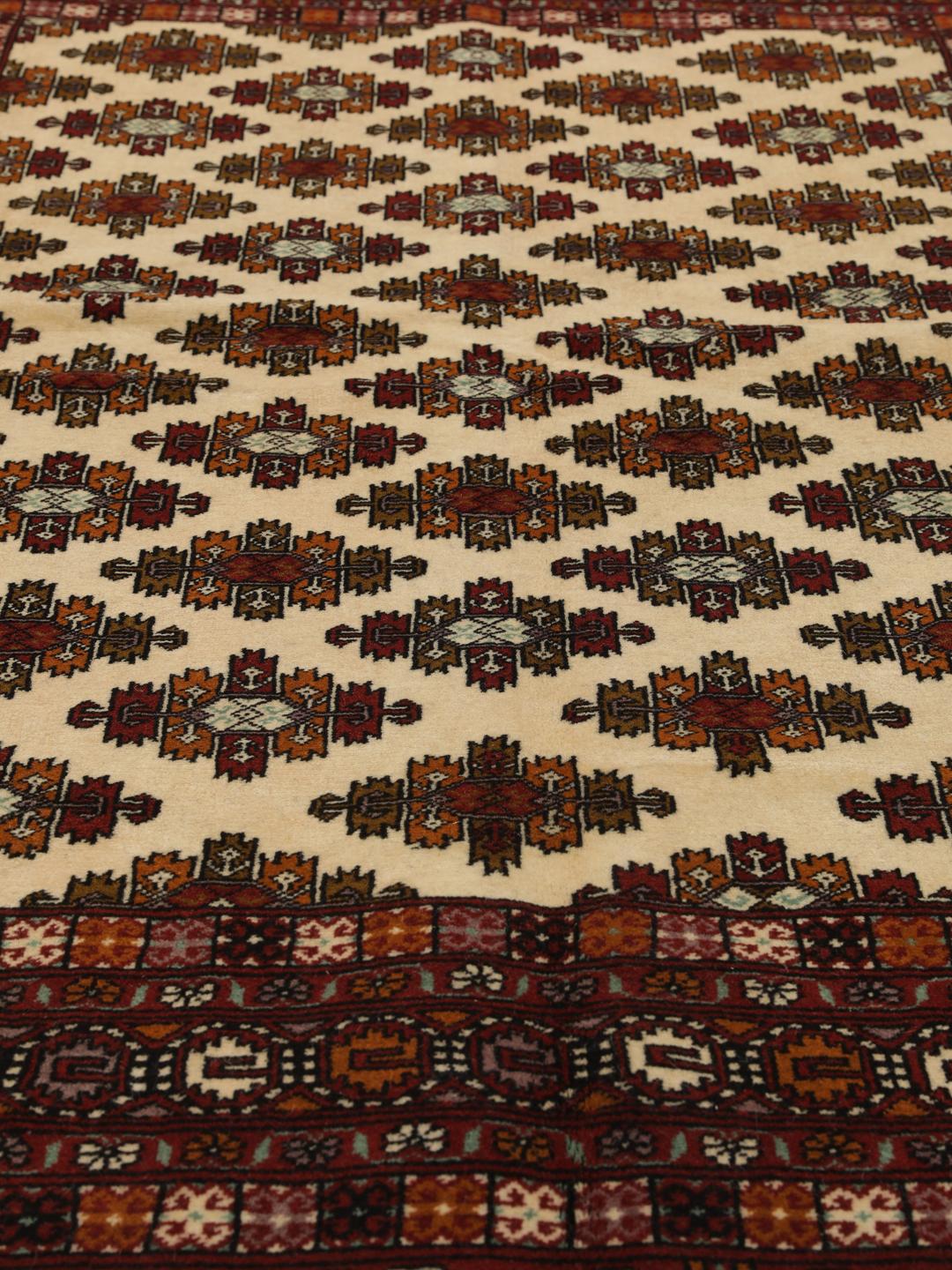
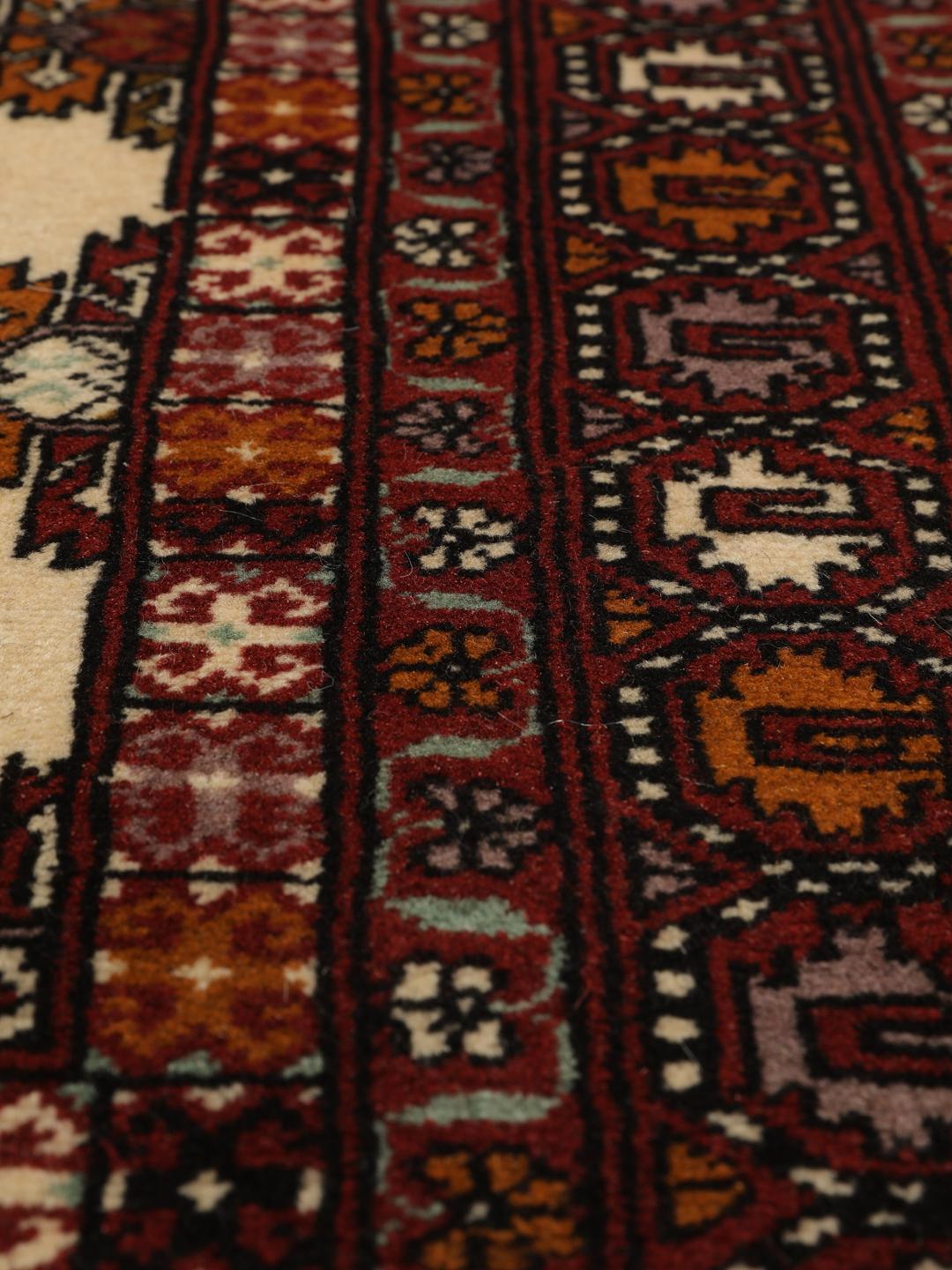
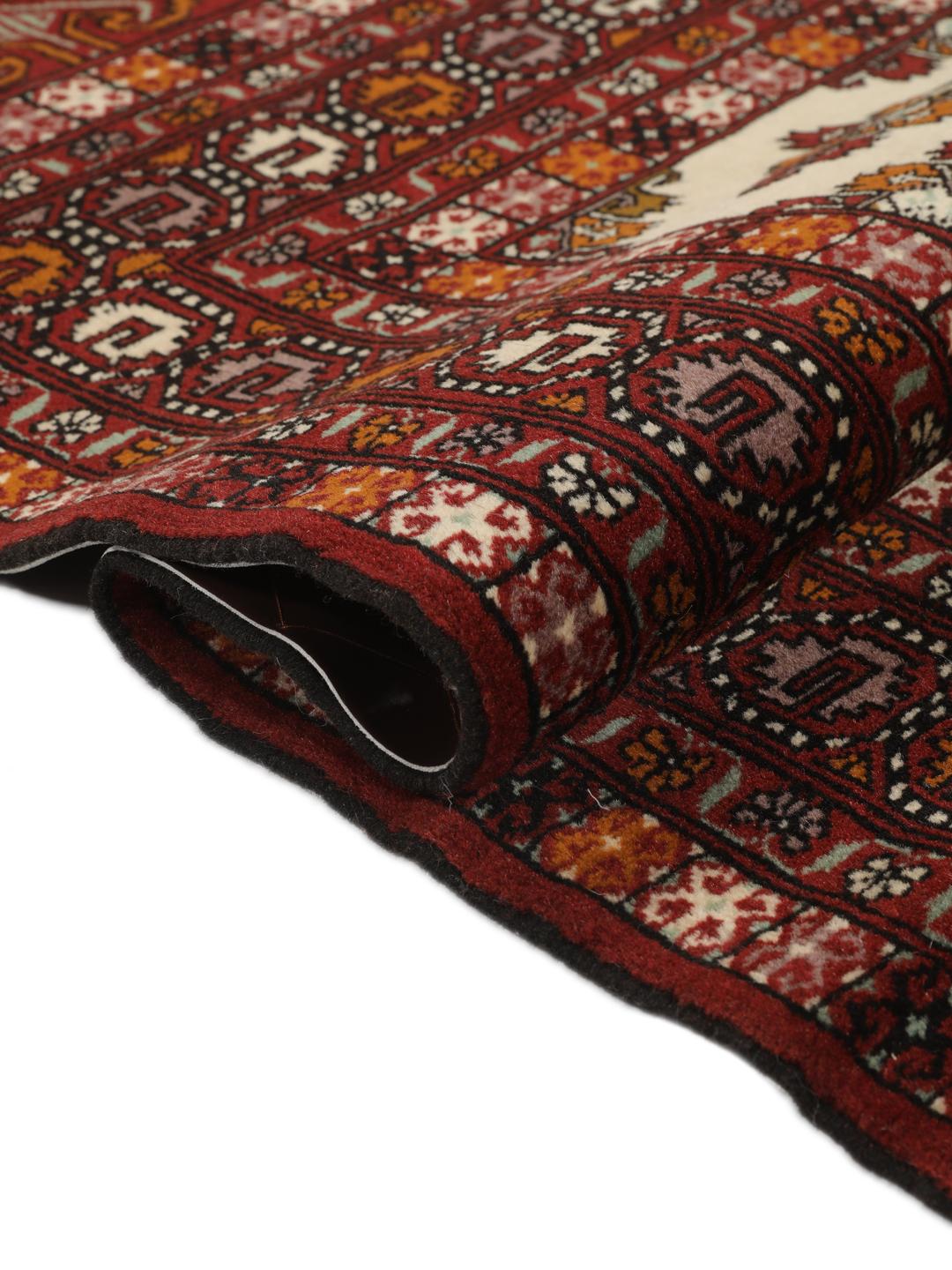
The term Turkaman refers to both the people and the distinct aesthetic of their weaving. These rugs are traditionally recognised for their precise, repeating motifs, known as guls. These medallions are often octagonal or diamond-shaped, reflecting a disciplined approach to design that prioritises symmetry and rhythm, ensuring the final piece feels balanced and harmonious.
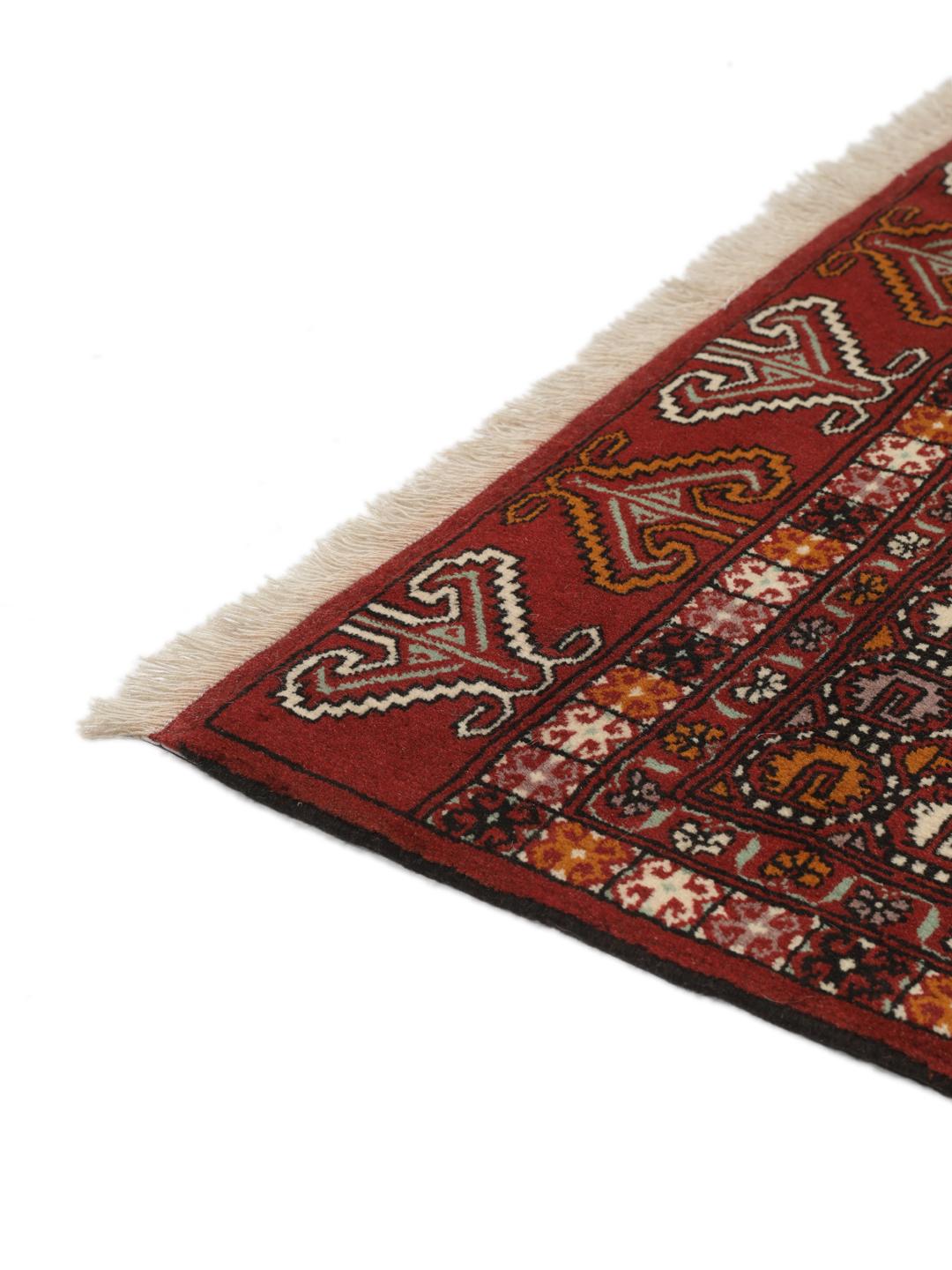
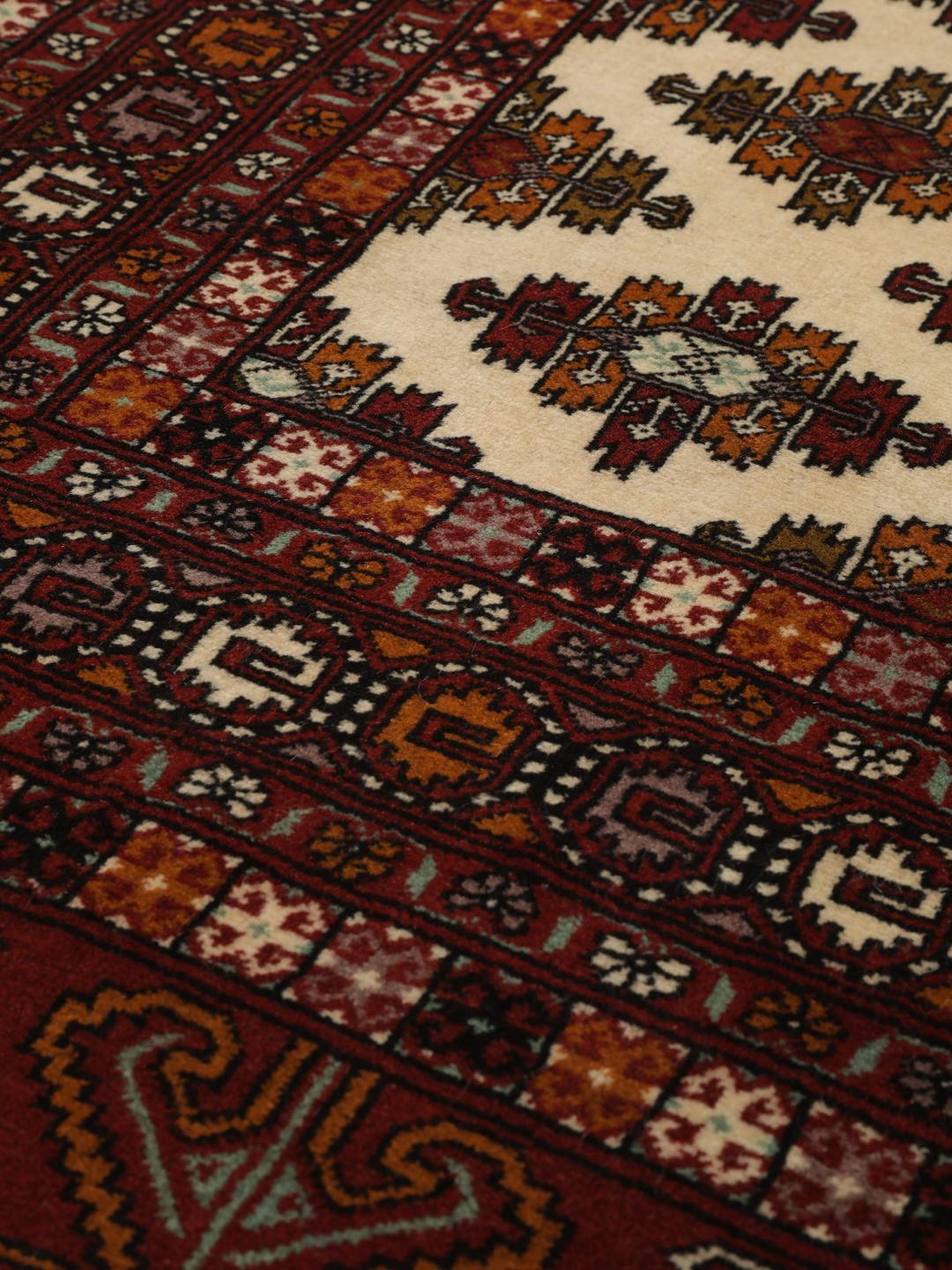
Visually, this tradition is defined by deep, warm palettes and formal, repetitive borders that frame the central field. The use of specific geometric motifs, such as the ones seen here, is a hallmark of the style. While many rugs follow traditional layouts, each weaver brings a subtle, personal touch to the execution, making every finished piece a unique expression within the broader tribal framework.
Collectors value Turkaman rugs for their remarkable durability and the way they age gracefully over time. Owning a piece like this is an investment in a storied craft tradition. It represents a connection to a long history of human skill and cultural expression, making it a meaningful addition to any home that values authentic, enduring design.