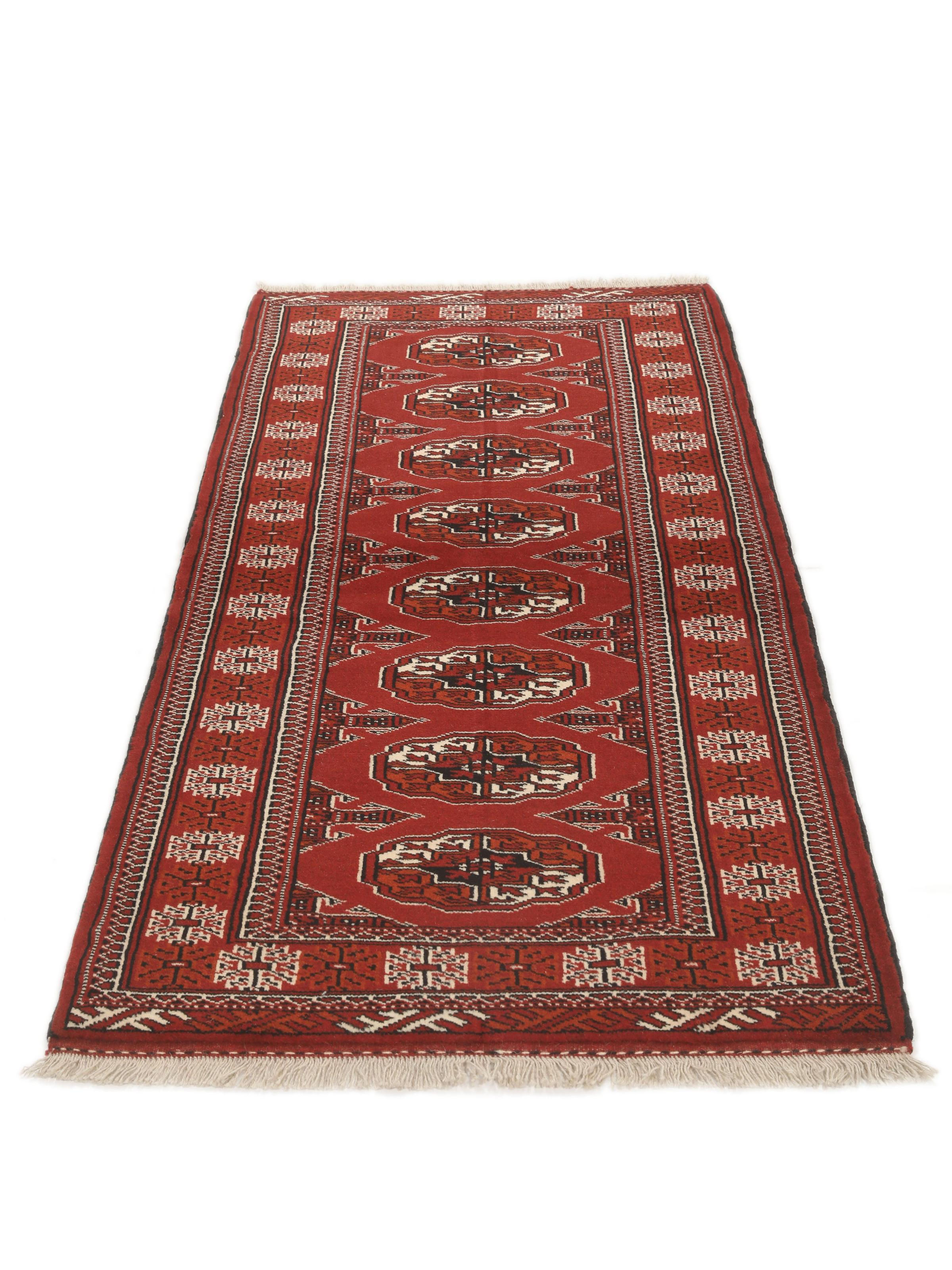
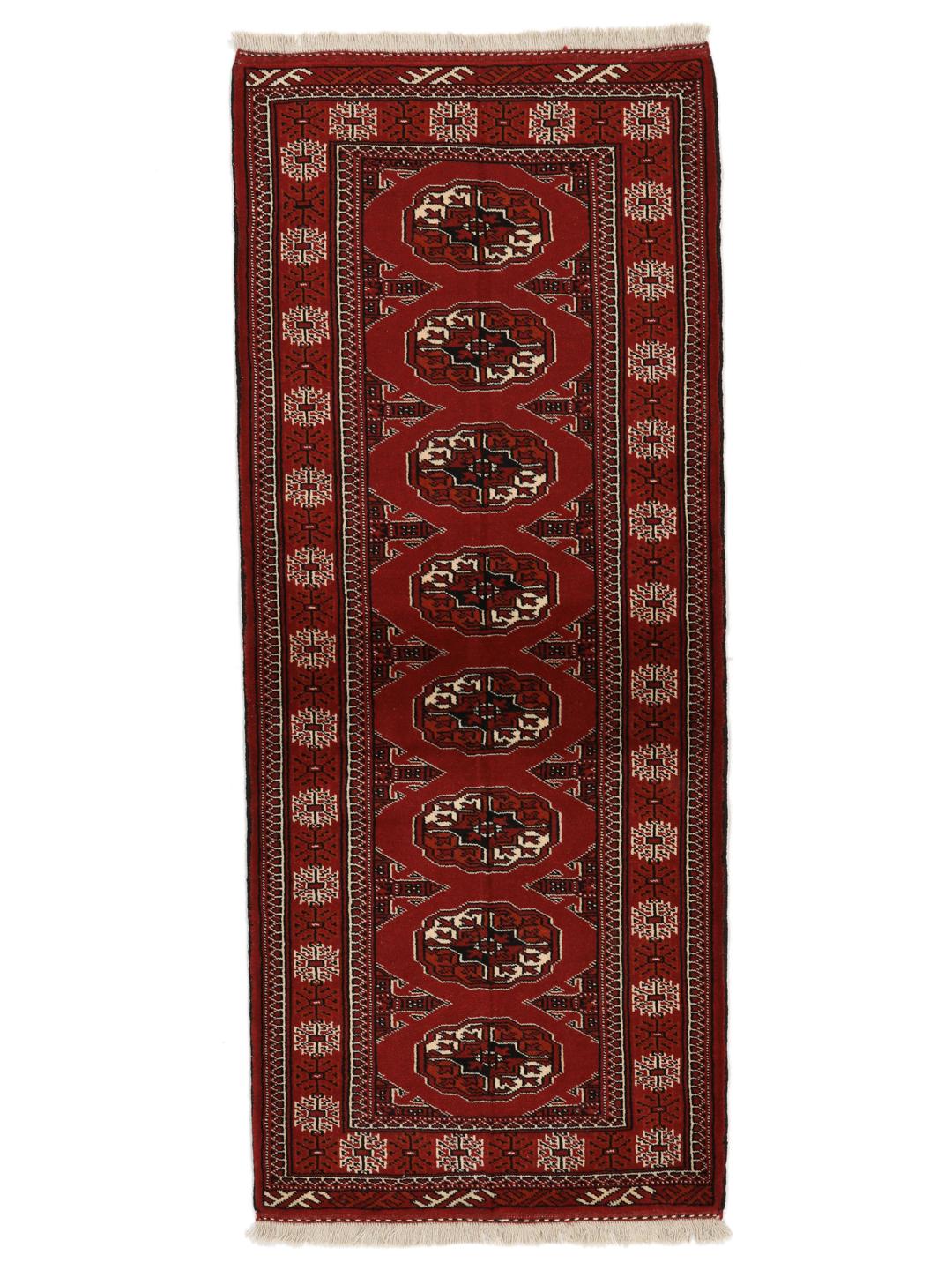
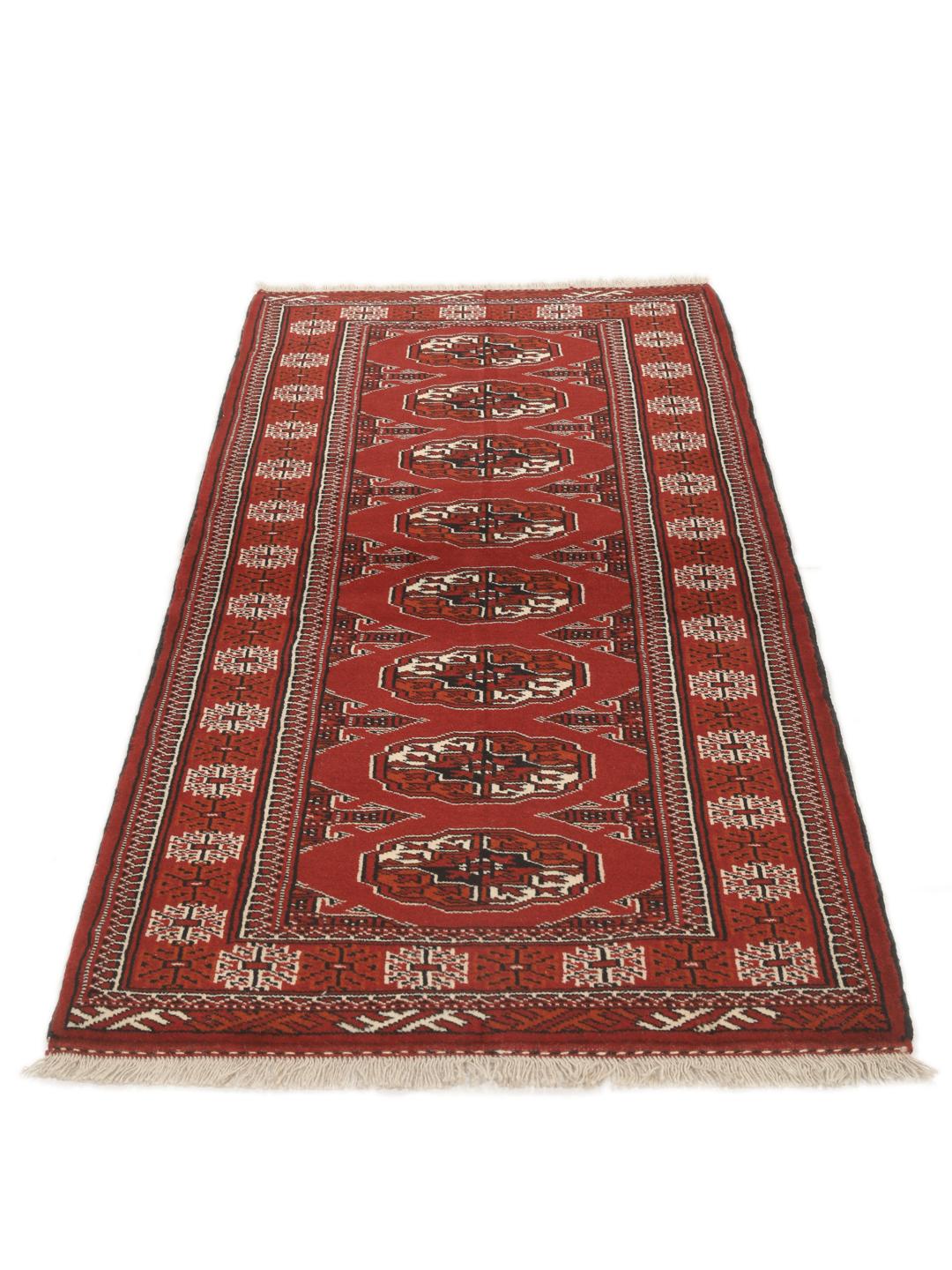
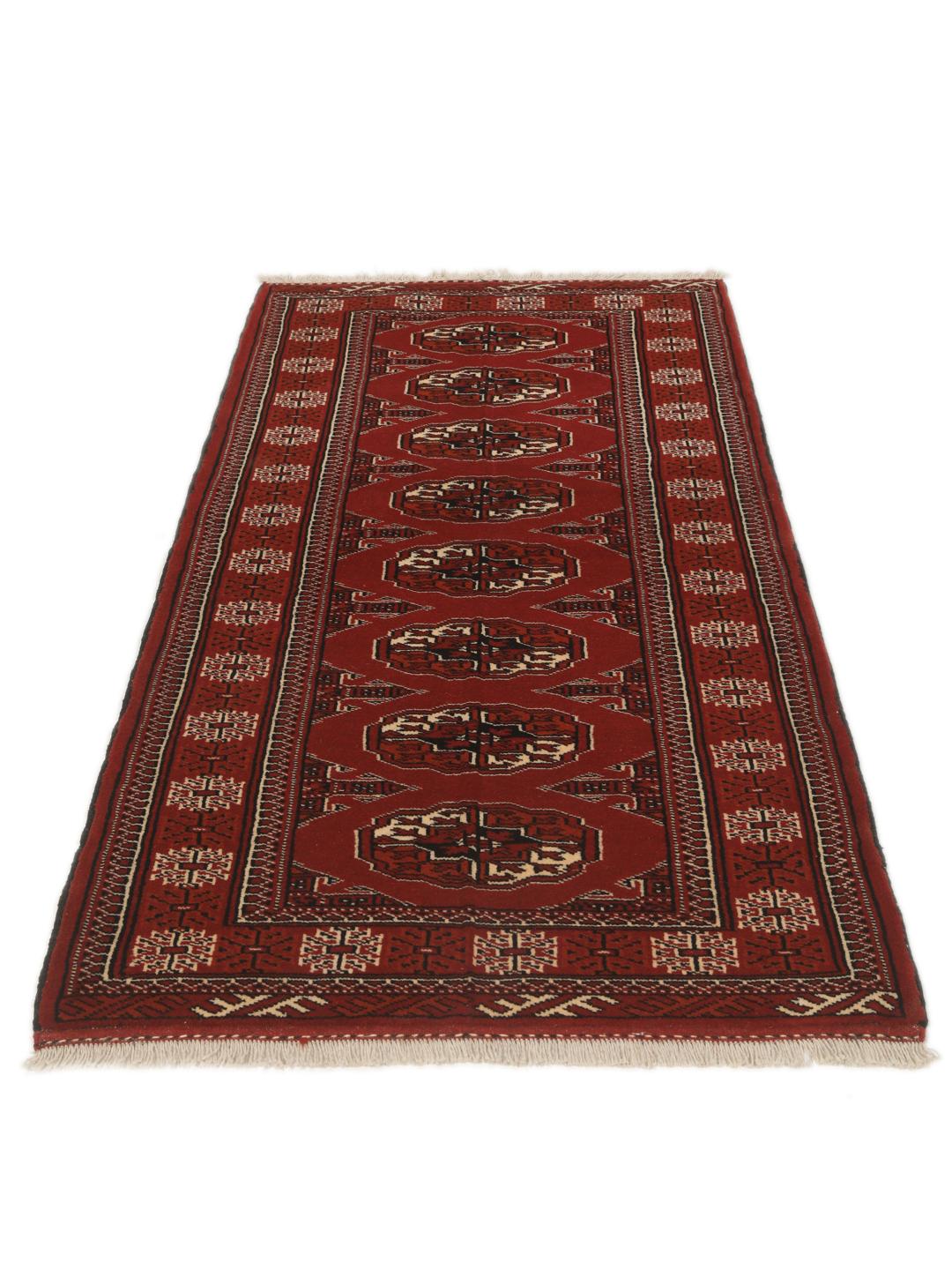
Turkaman rugs originate from the nomadic tribes of the Middle East and Central Asia, who developed a distinct weaving tradition based on their surrounding environment and cultural identity. These rugs were historically crafted to serve both practical and decorative purposes, often acting as floor coverings, tent partitions, or saddlebags within nomadic households.
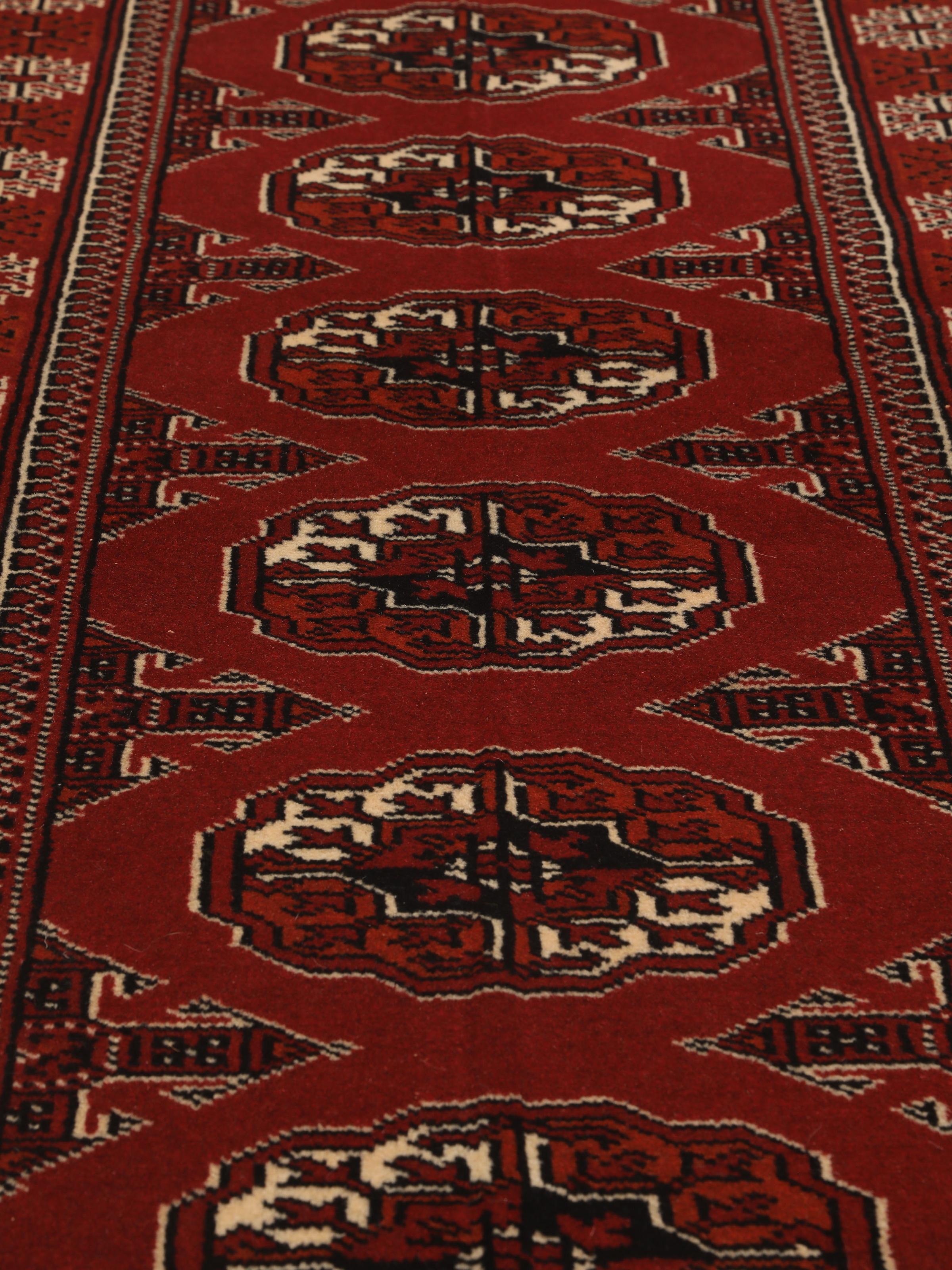
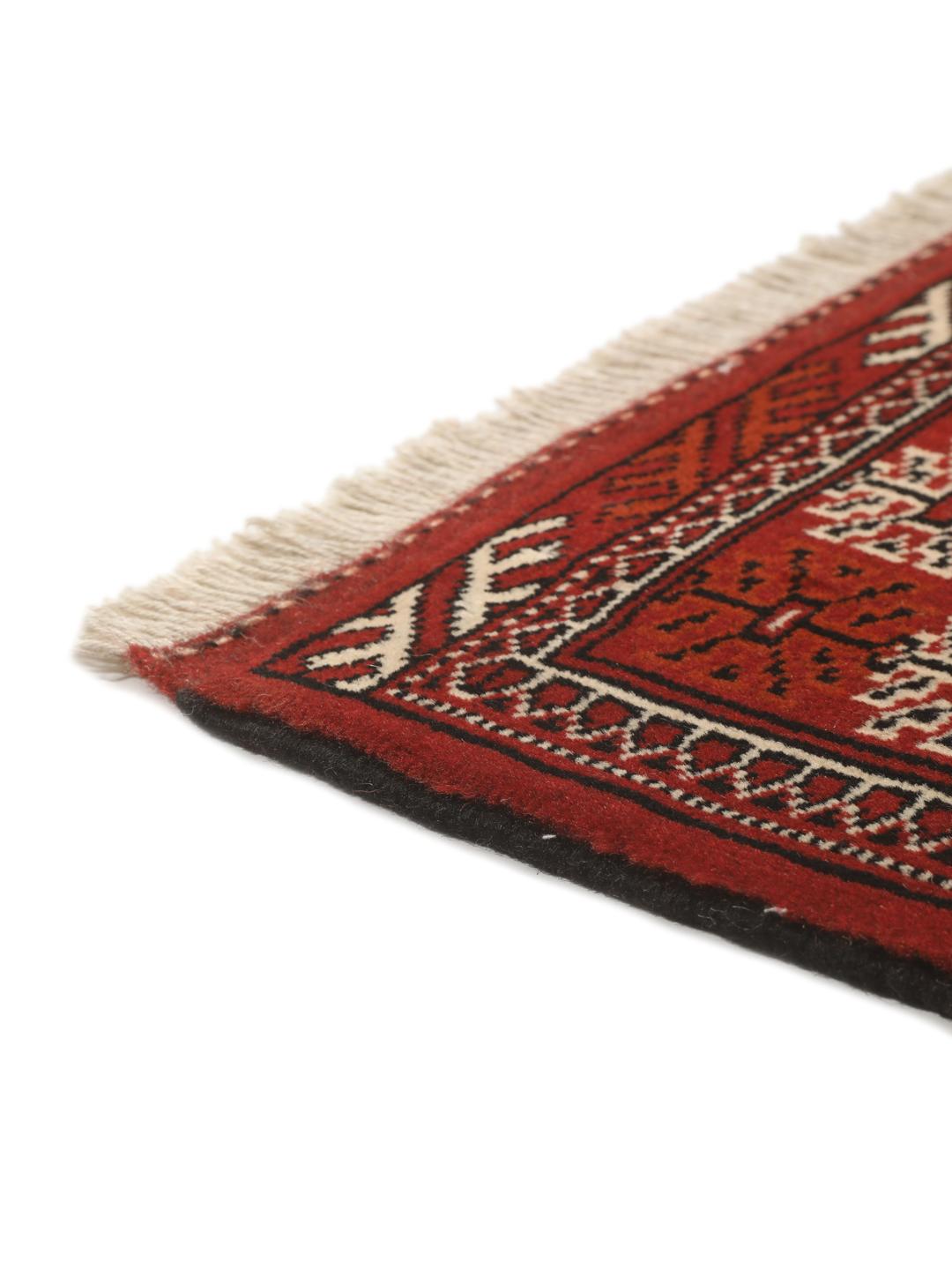
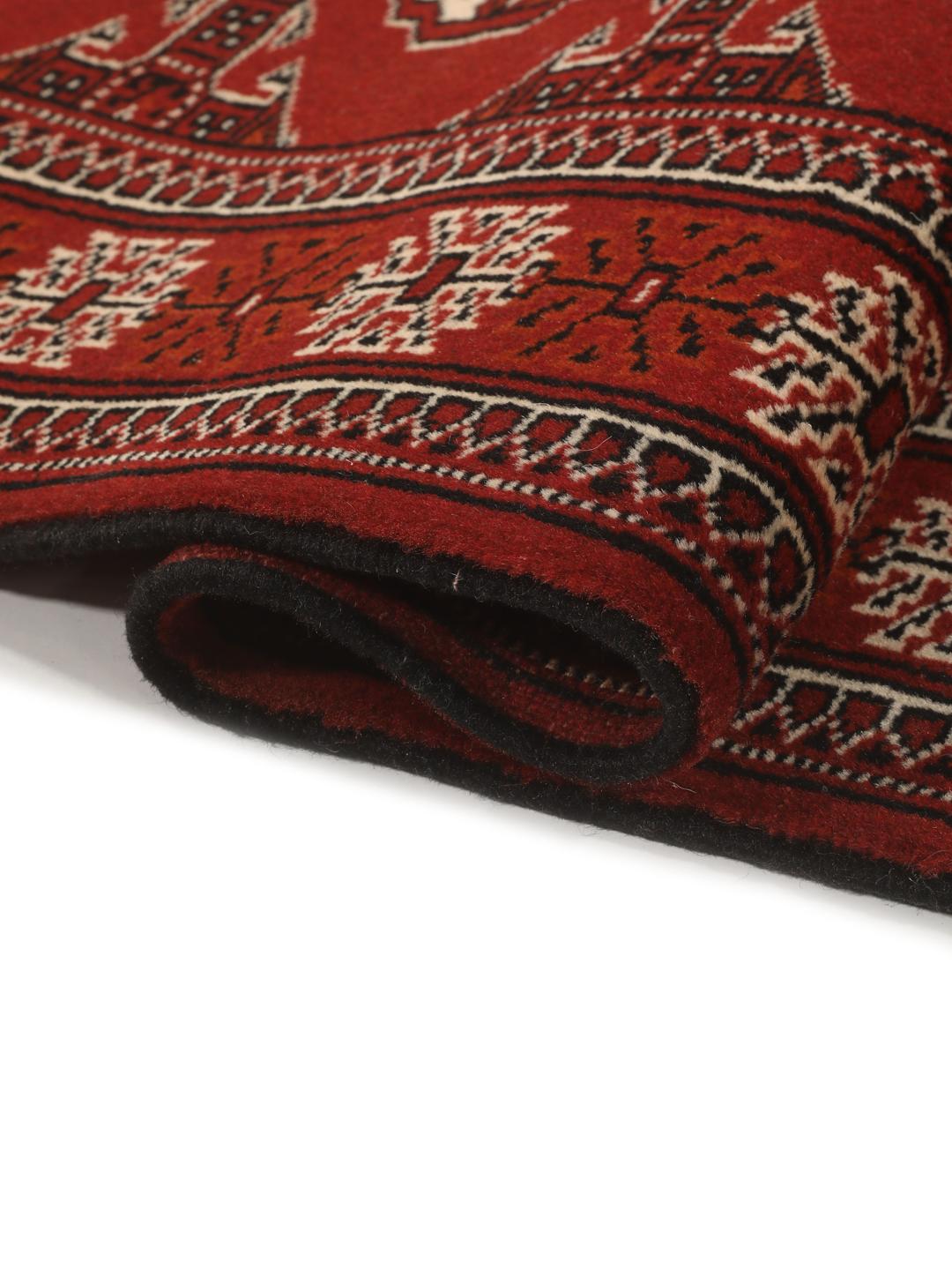
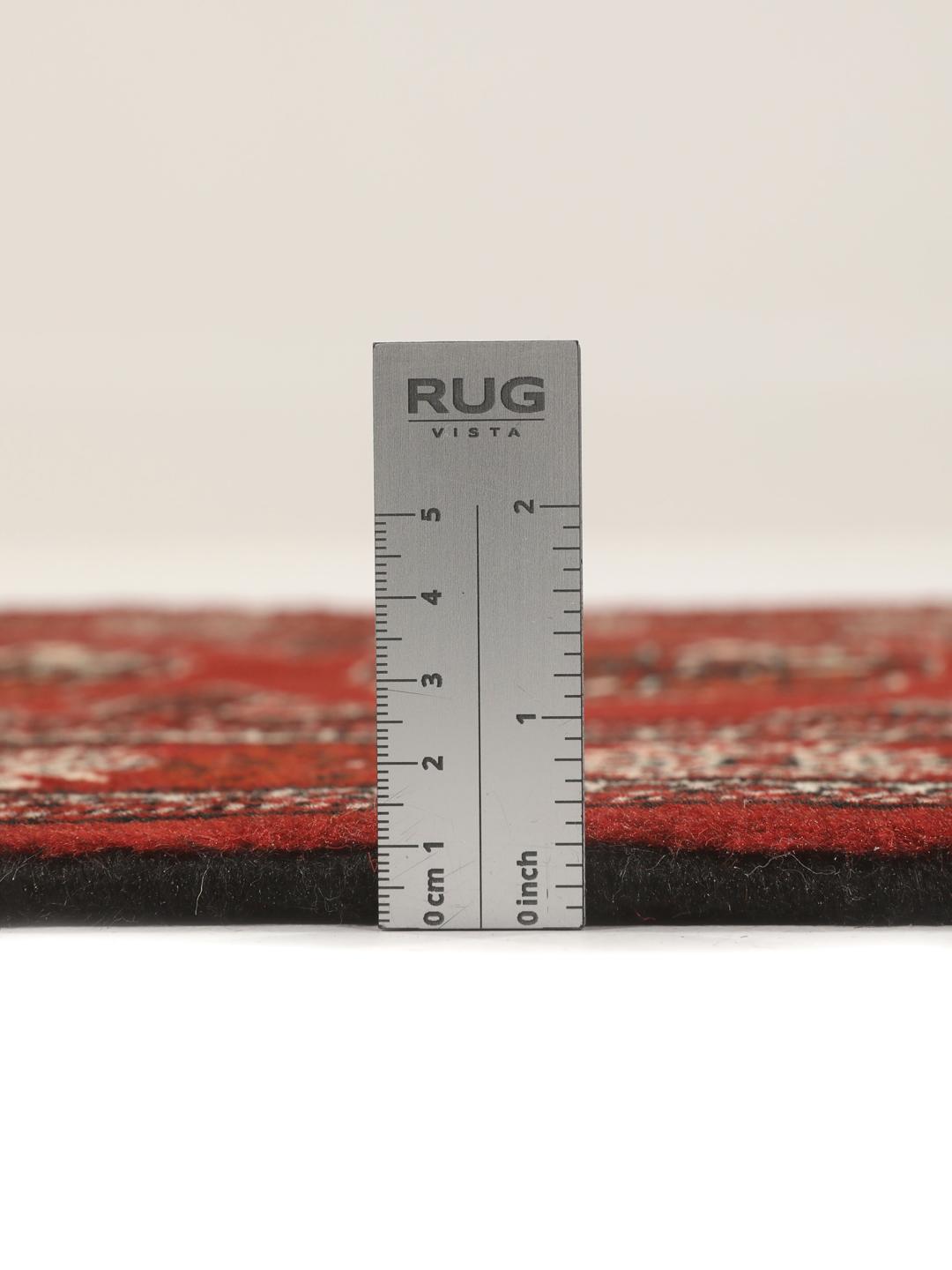
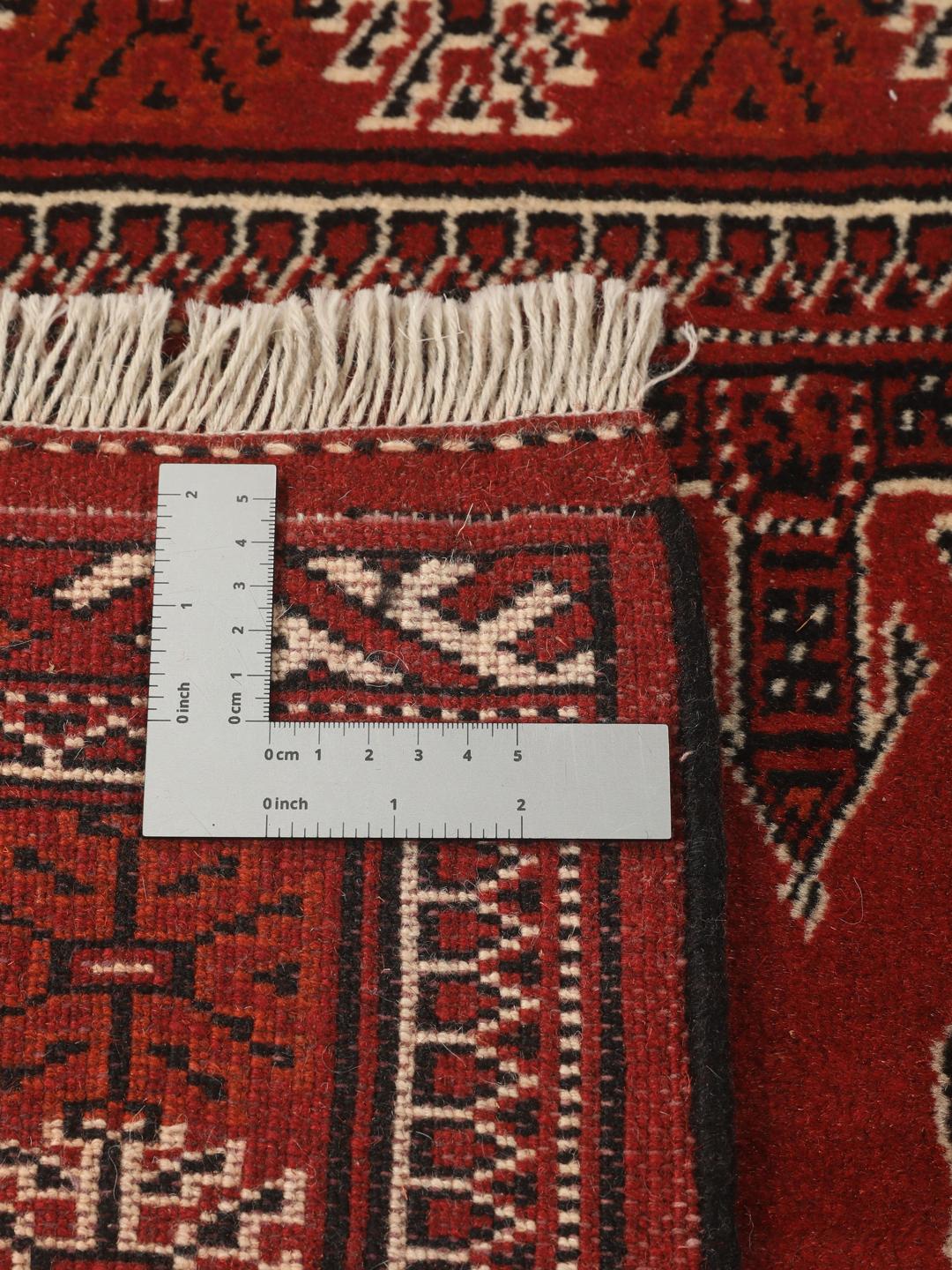
The technical mastery of these rugs is evident in their construction, which often features a focus on durability and tight, precise knotting. This tradition emphasises a sturdy foundation, ensuring the rugs could withstand the rigours of nomadic life while retaining their intricate patterns and vibrant colours for generations.
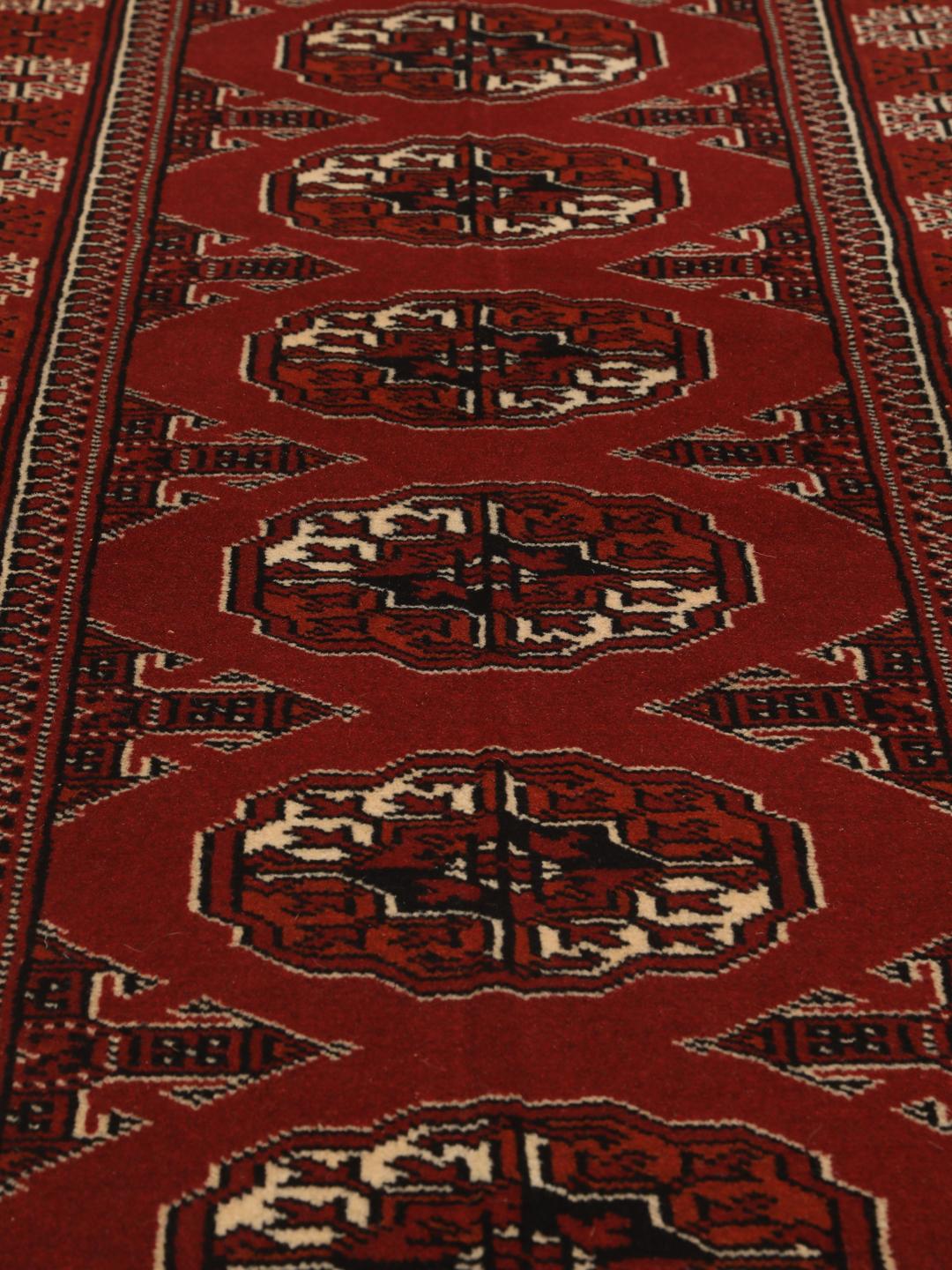
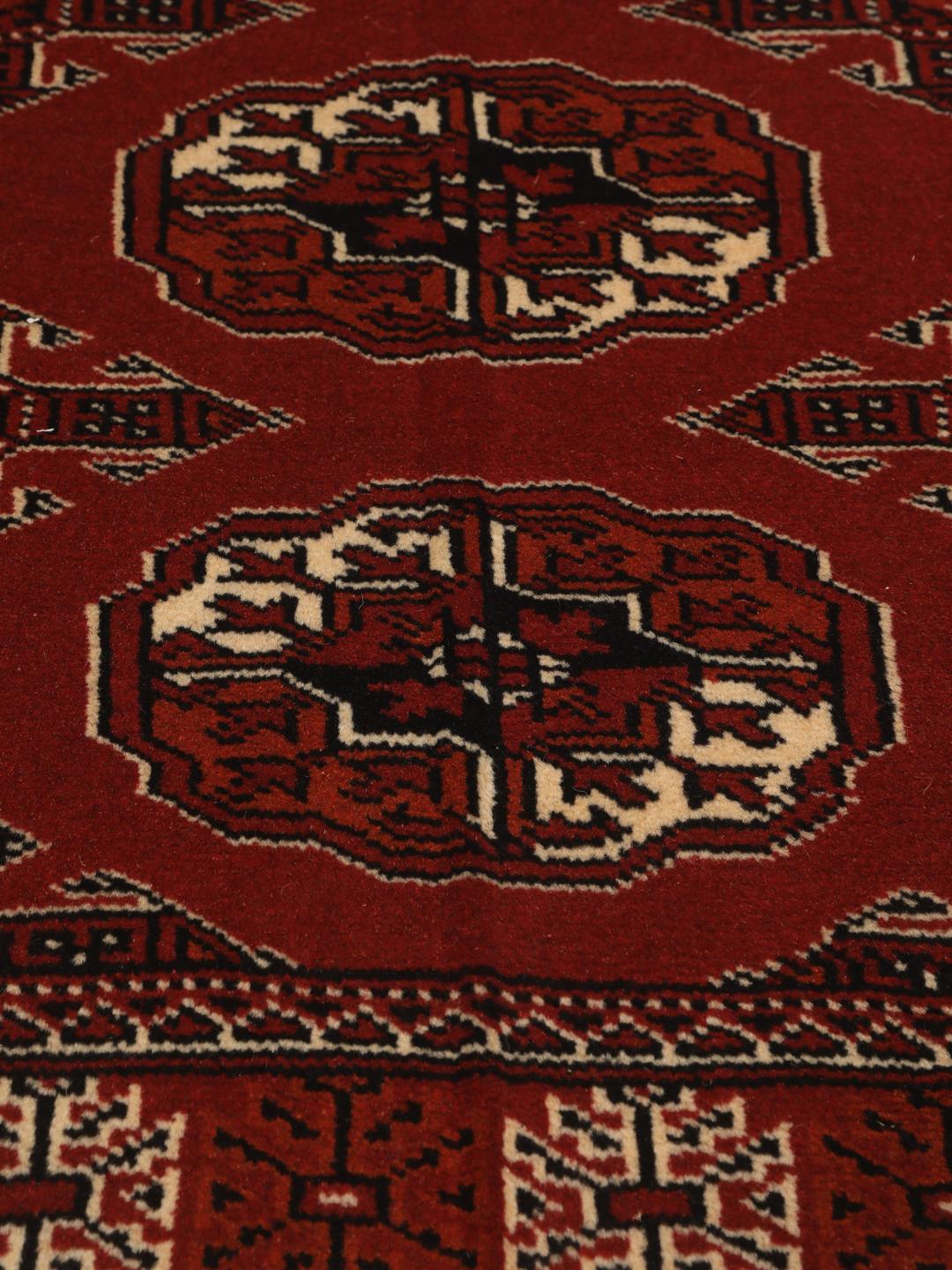
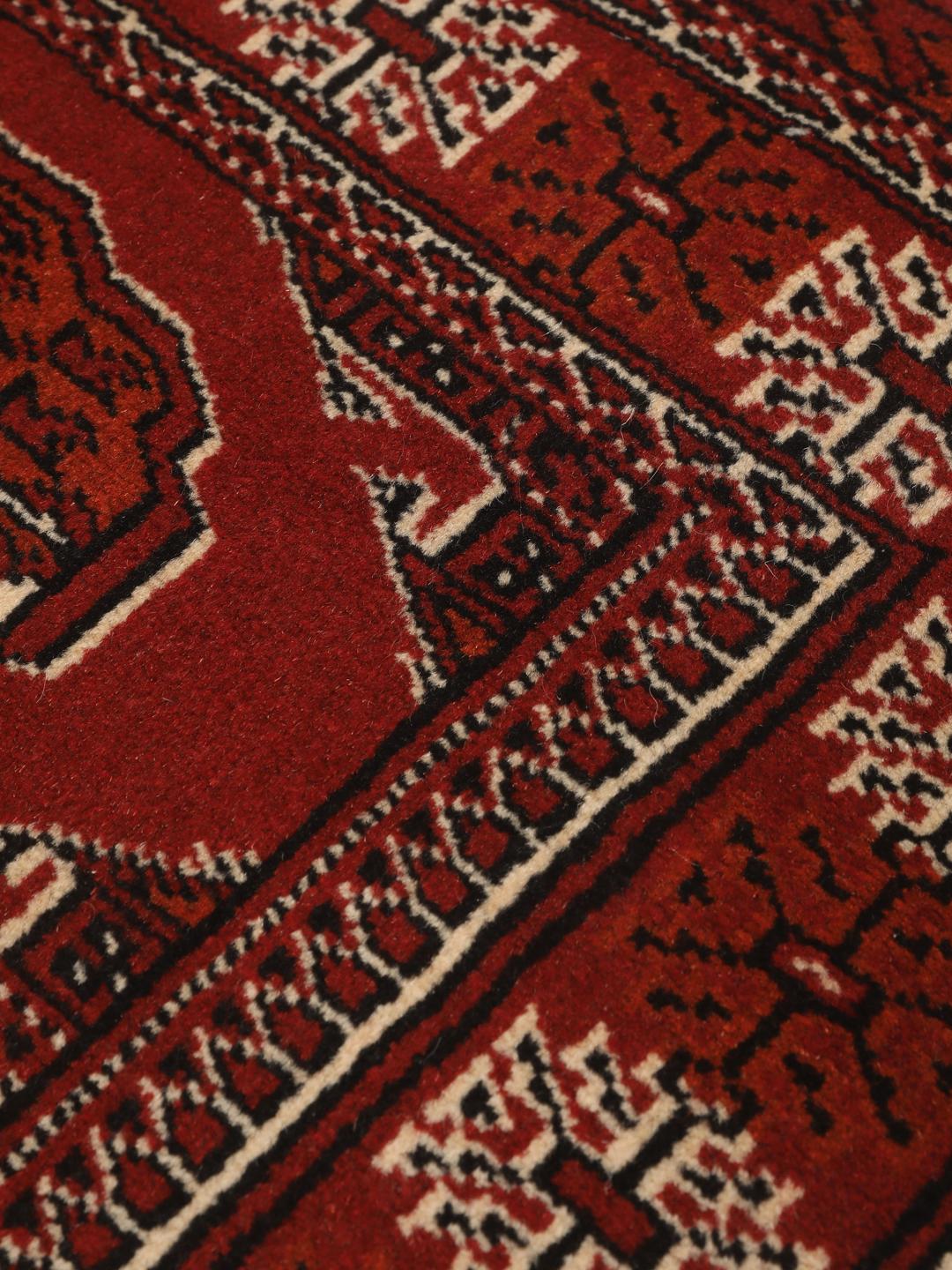
Signature design elements of the Turkaman style include the famous 'gul' motif, an octagonal or elephant-foot medallion that is repeated across the field. These patterns are typically arranged in formal, orderly rows, enclosed by complex, multi-layered borders that showcase a mastery of geometry and symmetrical balance.
Owning a piece from this tradition is an opportunity to connect with a rich heritage of skill and storytelling. These rugs are highly valued by collectors for their ability to maintain their character over time, representing a legacy of craftsmanship that has been passed down through centuries of tribal history.